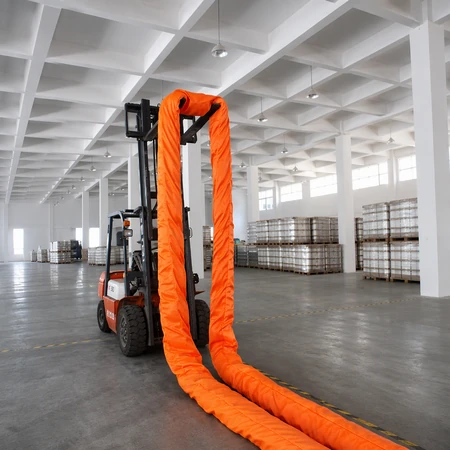
Gbe sling rigging ile gbejade Ailopin Yika Sling.
Endless Round Sling — Closed-Loop Sling, 1–1000 t
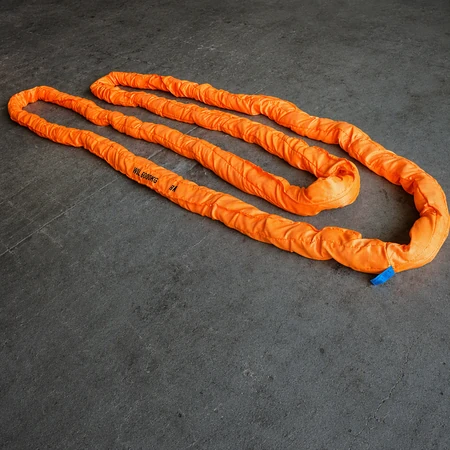
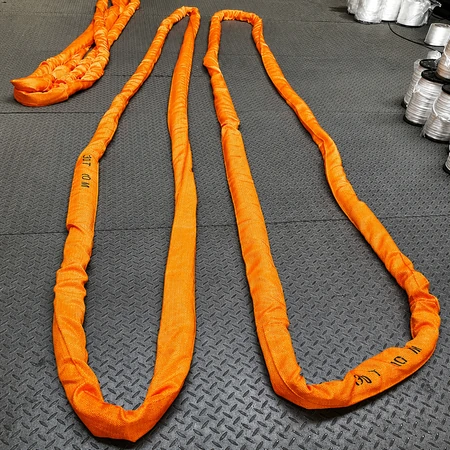
An ailopin yika sling is a closed loop: the core runs continuously inside the sleeve and is closed on itself, so there is no eye, ko si thimble, no hook and no stitching anywhere in the load path. It is made in high-tenacity polyester across 27 LFTEERS articles, lati 1,000 kg si 1,000,000 kg, in bodies from 0.5 m si 80 m. Because the loop has no ends it can be turned, re-reeved and re-oriented after a lift — which is why it is the usual choice for basket and choke work on plant that must not be marked.
- Iwọn fifuye ṣiṣẹ1,000 kg si 1,000,000 kg
- Ìwé ibiti oLFTEERS-1 to LFTEERS-1000, 27 awọn iwọn
- Awọn iwọn ara15 × 50 mm soke si 610 × 1,060 mm
- Gigun0.5–80 m, effective or circumference
- Iwọn ẹyọkan0.47 si 226 kg/m
- No metalNothing on the sling touches the load
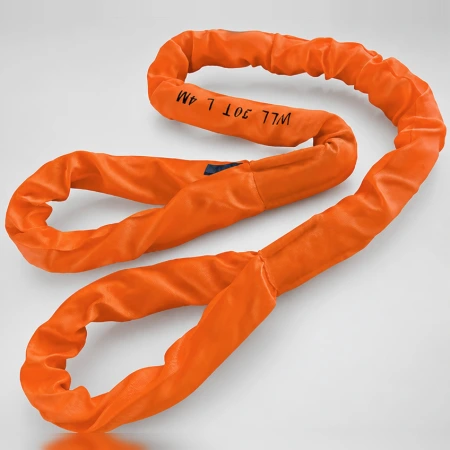
What “endless” changes for the rigger
Ailopin apejuwe awọn ikole ti lupu, ko awọn ipari ti awọn article. Nothing is spliced, sewn tabi ni ibamu si ọna fifuye, and four things follow on site.
- Lupu ko ni itọsọna. Mejeeji halves ni o wa kanna article, so the sling can be turned end for end and re-reeved after a lift. Ninu agbọn kan awọn ẹsẹ meji jẹ aami kanna, which is not true of a sling with an eye at one end and a fitting at the other.
- Wọ le tan kaakiri. Ojuami olubasọrọ n lọ bi sling ti wa ni yiyi pẹlu lupu, nitori naa a ko pa apo naa run ni aaye kan nigba ti iyoku ara jẹ tuntun.
- Ko si ohun ti ko baramu. No eye has to be offered to a hook of the right shape, and no fitting has to be rated with the sling. The hook goes through the loop, or the loop goes round the load.
- The sleeve is the whole inspection. Awọn mojuto ko le wa ni la ati ki o wo ni, nitorina apa aso ni window: ohun ti o fihan ni ohun ti mojuto ti nipasẹ.
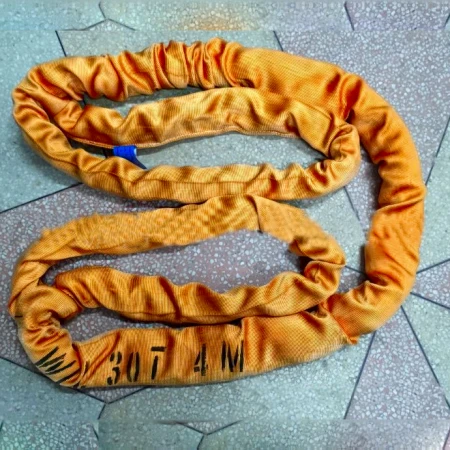
Endless Round Sling specifications
| Ọja | Ailopin yika sling - pipade-lupu polyester yika sling, 1 t lati 1000 t |
|---|---|
| Ikole | Tesiwaju ni afiwe filament mojuto ni a hun tubular apo, ni pipade sinu ohun ailopin lupu; ko si irin ko si si stitching ni awọn fifuye ona |
| Koju | High-tenacity polyester multifilament, ni afiwe dubulẹ, epo-eti; UHMWPE tabi aramid lati paṣẹ |
| Ọwọ | hun ga-tenacity poliesita, nikan Layer boṣewa; ė apo lati paṣẹ |
| Iwọn fifuye ṣiṣẹ | 1,000 kg si 1,000,000 kg, inaro ẹsẹ kan - 27 ìwé, LFTEERS-1 to LFTEERS-1000 |
| Fifọ fifuye | 7 × opin fifuye iṣẹ |
| Ailewu ifosiwewe | 7:1 bi bošewa; 5:1 lati paṣẹ fun awọn ọja ṣiṣẹ si ASME B30.9 |
| Ilọsiwaju ni WLL | Ni isunmọ 2–3 % |
| Iwọn otutu iṣẹ | -40 °C si +100 °C, poliesita mojuto |
| Gigun | 0.5 m si 80 m; minimum rises with the article, maximum is 80 m in every size |
| Àwọ̀ | Ọsan iṣura tabi buluu; IN 1492-2 capacity colour applied when the order asks for the standard code |
| Siṣamisi | Working load limit and length printed on the sleeve; aami sewn pẹlu WLL, ipari, nọmba ni tẹlentẹle ati bošewa |
| Idanwo | Ẹri ti kojọpọ ṣaaju fifiranṣẹ; igbasilẹ idanwo ti baamu si nọmba ni tẹlentẹle |
| Iṣakojọpọ | Coiled ni a poli apo, ike paali; pallet tabi crate lori ìbéèrè |
| HS koodu | 630790 - gbigbe awọn slings ti awọn ohun elo asọ |
| MOQ / OEM | MOQ kekere fun aṣẹ idanwo kan; OEM lori ipari, awọ apa aso, okun mojuto, aami akọkọ ati iṣakojọpọ |
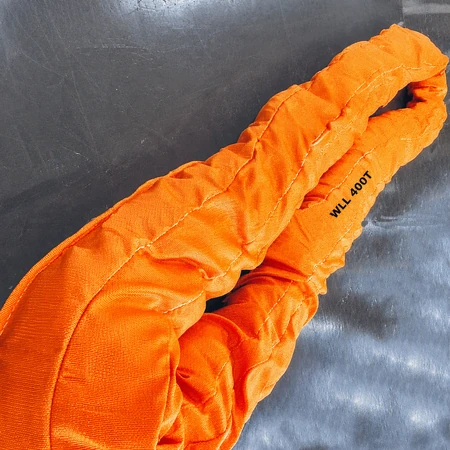
Ìwé ibiti o: yan awoṣe
The article number carries the capacity — LFTEERS-10 is the 10,000 kg sling, LFTEERS-100 the 100,000 kg ọkan. Sisanra ati iwọn ṣe apejuwe ara, the two length columns give the shortest and longest body made in that article, and the unit weight is what you add to the crane load.
| Art.No. | WLL (kg) | WLL (t) | Sisanra (mm) | Ìbú (mm) | Min (m) | O pọju (m) | Iwọn (kg/m) |
|---|---|---|---|---|---|---|---|
| LFTEERS-1 | 1,000 | 1 | 15 | 50 | 0.5 | 80 | 0.47 |
| LFTEERS-2 | 2,000 | 2 | 16 | 60 | 0.5 | 80 | 0.60 |
| LFTEERS-3 | 3,000 | 3 | 18 | 70 | 0.5 | 80 | 0.82 |
| LFTEERS-4 | 4,000 | 4 | 20 | 75 | 0.5 | 80 | 1.20 |
| LFTEERS-5 | 5,000 | 5 | 25 | 80 | 0.5 | 80 | 1.47 |
| LFTEERS-6 | 6,000 | 6 | 27 | 90 | 1.0 | 80 | 1.70 |
| LFTEERS-8 | 8,000 | 8 | 28 | 100 | 1.0 | 80 | 2.20 |
| LFTEERS-10 | 10,000 | 10 | 29 | 110 | 2.0 | 80 | 3.00 |
| LFTEERS-12 | 12,000 | 12 | 30 | 125 | 2.0 | 80 | 3.40 |
| LFTEERS-15 | 15,000 | 15 | 31 | 150 | 2.0 | 80 | 4.00 |
| LFTEERS-20 | 20,000 | 20 | 32 | 180 | 2.5 | 80 | 5.60 |
| LFTEERS-25 | 25,000 | 25 | 34 | 200 | 2.5 | 80 | 6.80 |
| LFTEERS-30 | 30,000 | 30 | 68 | 220 | 2.5 | 80 | 8.20 |
| LFTEERS-40 | 40,000 | 40 | 75 | 250 | 2.5 | 80 | 10.9 |
| LFTEERS-50 | 50,000 | 50 | 86 | 270 | 2.5 | 80 | 13.8 |
| LFTEERS-60 | 60,000 | 60 | 126 | 280 | 4.0 | 80 | 16.6 |
| LFTEERS-80 | 80,000 | 80 | 138 | 300 | 4.0 | 80 | 22.0 |
| LFTEERS-100 | 100,000 | 100 | 152 | 320 | 4.0 | 80 | 27.0 |
| LFTEERS-200 | 200,000 | 200 | 230 | 460 | 5.0 | 80 | 66.0 |
| LFTEERS-300 | 300,000 | 300 | 310 | 535 | 5.0 | 80 | 82.0 |
| LFTEERS-400 | 400,000 | 400 | 380 | 680 | 5.0 | 80 | 98.0 |
| LFTEERS-500 | 500,000 | 500 | 410 | 760 | 8.0 | 80 | 116.0 |
| LFTEERS-600 | 600,000 | 600 | 460 | 830 | 8.0 | 80 | 139.0 |
| LFTEERS-700 | 700,000 | 700 | 498 | 880 | 8.0 | 80 | 155.0 |
| LFTEERS-800 | 800,000 | 800 | 520 | 940 | 9.0 | 80 | 178.0 |
| LFTEERS-900 | 900,000 | 900 | 580 | 1,000 | 9.0 | 80 | 202.0 |
| LFTEERS-1000 | 1,000,000 | 1,000 | 610 | 1,060 | 9.0 | 80 | 226.0 |
The series code is shown as supplied on the factory sheet. In that sheet the 20,000 kg article carries the code LFTEERS-15 for a second time; it is shown here as LFTEERS-20 so that the code matches the capacity ladder. Thickness and width are the body dimensions specified for the article, and the minimum length is the shortest body that can be closed and sleeved at that capacity. If your price list uses a different prefix, replace it across the table — the rest of the code is the capacity.
Awọn agbara yipada pẹlu awọn hitch, kii ṣe pẹlu tonnage lori apo
Nọmba ti a tẹjade lori apa aso jẹ opin fifuye iṣẹ ti ẹsẹ kan ti o rọ ni inaro. It is the number the sling is proof loaded against, and the starting point of a lifting plan — not the tonnage it will pick up in the arrangement you are actually using. Apply the factor for the hitch, and remember that a set of legs is calculated on fewer legs than it has, because a real load never sits perfectly symmetrically.
| Eto | Okunfa | 5 t sling | 20 t sling |
|---|---|---|---|
| Kanna kan, inaro | × 1.0 | 5.0 t | 20.0 t |
| Kanna kan, fun pa | × 0.8 | 4.0 t | 16.0 t |
| Kanna kan, basket 0–7° | × 2.0 | 10.0 t | 40.0 t |
| Kanna kan, basket 7–45° | × 1.4 | 7.0 t | 28.0 t |
| Kanna kan, basket 45–60° | × 1.0 | 5.0 t | 20.0 t |
| Ẹsẹ meji, 0–45° lati inaro | × 1.4 | 7.0 t | 28.0 t |
| Ẹsẹ meji, 45-60° lati inaro | × 1.0 | 5.0 t | 20.0 t |
| Ẹsẹ mẹrin, 0–45° lati inaro | × 2.1 | 10.5 t | 42.0 t |
| Ẹsẹ mẹrin, 45-60° lati inaro | × 1.5 | 7.5 t | 30.0 t |
Two lines in that table settle most orders. Ni akọkọ, meji 5 t slings ko ṣe kan 10 t ṣeto: ni 0-45 ° lati inaro wọn gbe 7 t papọ, ati ti o ti kọja 45 ° ti won gbe 5 t. Keji, a four-leg set is worked on three legs, ti o jẹ idi ti awọn ifosiwewe jẹ 2.1 ati ki o ko 2.8. Ibi ti awọn agbara jẹ sunmo si iye to, otitọ idahun jẹ maa n kan gbígbé tan ina rather than a bigger sling — keeping the legs vertical recovers the factor that an open leg angle has just spent.
Gigun: effective length or circumference
Sling ailopin ko ni opin, nitori naa ipari rẹ ni a le sọ ni ọna meji, ifosiwewe ti meji yato si. This is the most common ordering error on a round sling and the most expensive to correct, nitori pe sling ni lati tun ṣe kuku ju atunṣe.
| Ti sọ bi | Ohun ti o gba | Ti a lo fun | Apeere |
|---|---|---|---|
| Munadoko ṣiṣẹ ipari | Idaji ayipo - kio si isalẹ lati fifuye ati ṣe afẹyinti | Inaro ati choked gbe soke, nibiti a ti mọ giga ikele | 4 m EWL = 8 m lupu |
| Ayika | Awọn ni kikun lupu ipari | Agbọn gbe soke, ibi ti awọn girth ti awọn fifuye iwakọ awọn ipari | 8 m loop = 4 m EWL |
On the slings we supply the figure printed on the sleeve is the doko ipari, nitorina titẹ ati asọye nigbagbogbo gba. Fun agbọn, wọn awọn girth ti awọn fifuye, fi awọn headroom to kio, ati sọ nọmba yẹn: ara gba ọna pipẹ yika ẹru, and a sling that only just reaches forces the legs wide — the same as buying a smaller sling.
Where an endless loop earns its place
- Precast nibiti ati Afara apa picked in a basket at each end, where the sleeve protects the formed face and the chamfer.
- Irin coils sitting in a basket, where the doubled body gives twice the vertical capacity and follows the curve of the coil instead of bearing on one line.
- Ayirapada, generators and machine beds with small trunnions and painted surfaces — nothing metal touches the load.
- Molds ati ki o ku whose lifting holes are drilled, ko apẹrẹ fun a ibamu, so a soft loop threaded through the hole is the whole method.
- Skids, awọn fireemu ati ti ilu okeere agbọn choked at each corner with 6–12 m bodies, the sleeve taking the corner abrasion so the core does not.
- Stage and studio work around truss and set pieces where a scratch is a re-spray.
Ailopin, eye-eye or flat webbing
| Apejuwe | Ailopin yika sling | Oju-oju yika sling | Alapin ailopin webbing sling |
|---|---|---|---|
| Kan si pẹlu fifuye | Yika ara, conform to ekoro ati igun | Yika ara pẹlu meji kojọpọ oju | Oju alapin jakejado, ntan titẹ lori agbegbe kan |
| Gigun | Ṣeto nipasẹ lupu; boya àpéjọpọ le ti wa ni sọ | Ti o wa titi laarin awọn oju | Ṣeto nipasẹ awọn sewn lupu |
| Ona fifuye | Tesiwaju, ko si ifopinsi | Tesiwaju mojuto, eyes formed by the sleeve | Sewn da ni lupu |
| Reeving | Le ti wa ni yipada ki o si tun-reeved lẹhin ti a gbe soke | Iṣalaye kan nikan | Le yipada, but the join takes the wear |
| Ti o dara ju fun | Agbọn ati choke iṣẹ, àìrọrùn ọgbin, gun ara | Tun gbe soke lori kanna meji ojuami | Gbooro, alapin ati irọrun samisi èyà |
None of the three replaces another. For a fixed length and two known pick-up points see the oju-oju yika sling; for a wide face and a visible load path see the ailopin alapin webbing sling. Both round sling forms are built from the same core and sleeve, so the choice is a rigging decision rather than a capacity one. For hard service the ė apo yika sling afikun kan keji yiya Layer ni kanna Rating, for weight-critical work there is a UHMWPE yika sling mojuto, and for hot loads an aramid yika sling.
Inspection and retirement
Awọn mojuto ko le ṣee ri, nitorina apa aso jẹ igbasilẹ ohun ti sling ti kọja. Ṣayẹwo ṣaaju lilo gbogbo, ati ni deede ni aarin akoko ijọba rẹ nbeere.
- Ṣayẹwo ipari ipari ti apo fun awọn gige, snags, glazing, melts ati kemikali idoti, ki o si ṣii apo ni asopọ ti ohunkohun ba dabi aṣiṣe.
- Ka titẹ ati aami naa. Ti opin fifuye ṣiṣẹ tabi ipari ko le ka mọ, kànnàkànnà ko le wa ni wadi ati ki o ba jade ti iṣẹ.
- Rilara fun grit inu apo; o abrades awọn mojuto lati laarin gun lẹhin àgbàlá ti a ti gbo.
- Ifẹhinti lori eyikeyi gige tabi iho ti o ṣafihan mojuto, ooru glazing, mojuto ti o ti lọ lile tabi lumpy, kẹmika kolu, tabi aami ti o padanu.
- Itaja coiled ati pa awọn pakà, kuro ni oju-ọjọ ati kuro ninu ooru, olomi ati weld spatter. Maṣe ṣafipamọ sling tutu ninu apo pipade kan.
- Má ṣe fa kànnàkànnà tí a kó lọ́wọ́ sí ẹ̀gbẹ́, ati ki o ko gbe soke lori kan bajẹ apo.
Awọn ibeere ti a beere nigbagbogbo
Kini iyato laarin ailopin yika sling ati ki o kan yika sling pẹlu oju?
Sling yika ailopin jẹ lupu pipade ti ko si ifopinsi: mojuto gbalaye continuously inu awọn apo ati ohunkohun ti wa ni spliced tabi sewn sinu fifuye ona. A yika sling pẹlu oju has two defined eyes at a fixed distance, so its length is set by the eyes and it works in one orientation.
Ṣe ipari ni ayipo tabi ipari ti o munadoko?
Both are used and they differ by a factor of two. Ipari to munadoko jẹ idaji lupu - kio si isalẹ lati fifuye ati ṣe afẹyinti. Ayika ni kikun lupu. A 4 m doko ipari jẹ ẹya 8 m lupu, nitorina apejọ naa ni lati sọ lori aṣẹ naa.
Elo ni agbara ti sọnu ni choker kan?
A choked ailopin yika sling ti wa ni won won ni 0.8 ti awọn oniwe-inaro ṣiṣẹ fifuye iye, bẹ a 5 t sling yoo fun 4 t. Agbọn kan gbe nọmba naa soke si 2.0 ni 0-7 °, 1.4 ni 7-45 ° ati 1.0 ni 45-60 °. A four-leg set is calculated on three legs, giving 2.1 at 0–45° from vertical and 1.5 ni 45-60 °.
What does LFTEERS-10 mean?
Nọmba nkan jẹ opin fifuye ṣiṣẹ ni awọn tonnu: LFTEERS-10 is 10,000 kg inaro, LFTEERS-100 is 100,000 kg and LFTEERS-1000 is 1,000,000 kg. Ibiti o tẹle awọn 1-2-3-4-5-6-8-10-12-15-20-25-30-40-50-60-80-100-200-300-400-500-600-700-800-900-1000 àkàbà, so there is no 7 t, 9 t tabi 11 t article.
How heavy is a long endless sling?
The last column of the article table is the weight per metre: 0.47 kg/m at LFTEERS-1, 3.00 kg/m at LFTEERS-10 and 226 kg/m at LFTEERS-1000. Multiply by the loop length and add the label and packing to get the figure to put against the crane. Where that number is a problem, a UHMWPE core gives the same capacity at a fraction of the weight.
Le kanna kànnànkànnà wa ni lo ninu agbọn ati choke?
Bẹẹni, ati awọn ti o jẹ ọkan ninu awọn idi fun awọn ailopin fọọmu: kanna article lọ yika awọn fifuye boya ọna. Awọn ayipada wo ni nọmba iṣẹ, nitorina iwọntunwọnsi ni lati tun ṣe iṣiro fun hitch ti a lo nitootọ.
Bawo ni sling ni idanwo ati ki o ni akọsilẹ?
Sling kọọkan jẹ ẹri ti kojọpọ ṣaaju fifiranṣẹ ati igbasilẹ idanwo ti baamu si nọmba ni tẹlentẹle lori aami ti a ran.. Fifọ fifuye ni 7 × opin fifuye iṣẹ, and the factor can be varied to order where the market requires it.
Beere fun arosọ sling yika ailopin
Firanṣẹ fifuye fun ẹsẹ kan, the hitch and the leg angle, the distance between pick-up points and the headroom to the hook — plus the length convention and any marking or documentation your site requires. A yoo jẹrisi agbara, ipari ati apa aso, ati sọ factory-taara pẹlu iyaworan, a proof-load record and a sample. Wo awọn full round sling range for the rest of the series.