

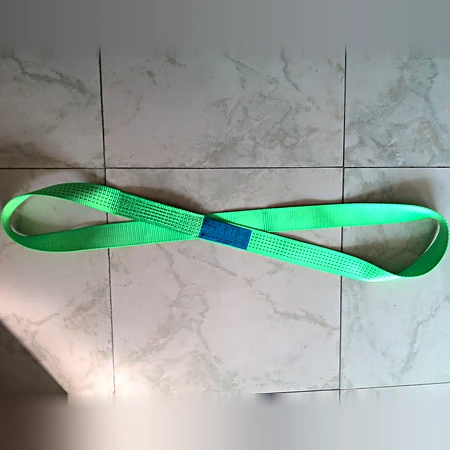
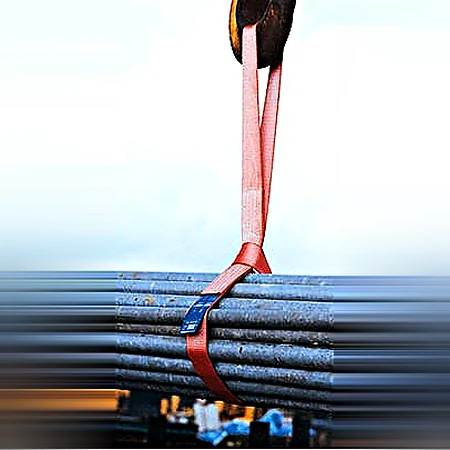
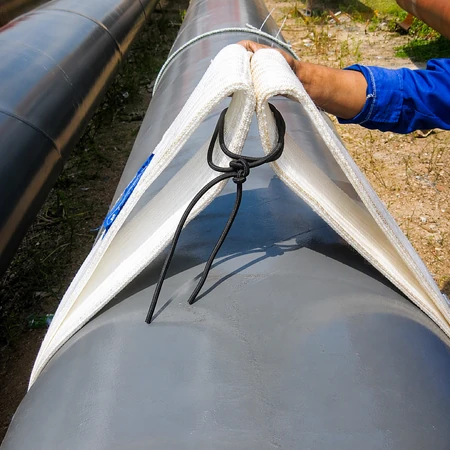
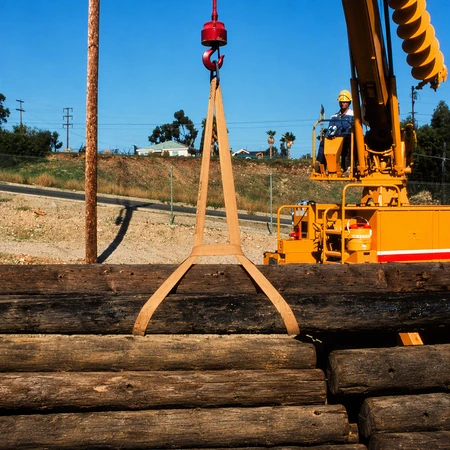
Lift sling rigging company produce Flat Lifting Sling.
Alapin Gbígbé Sling
Flat Woven Webbing Slings to EN 1492-1 — Polyester, Nylon or Polypropylene, 1-30 t, Eye and Eye or Endless
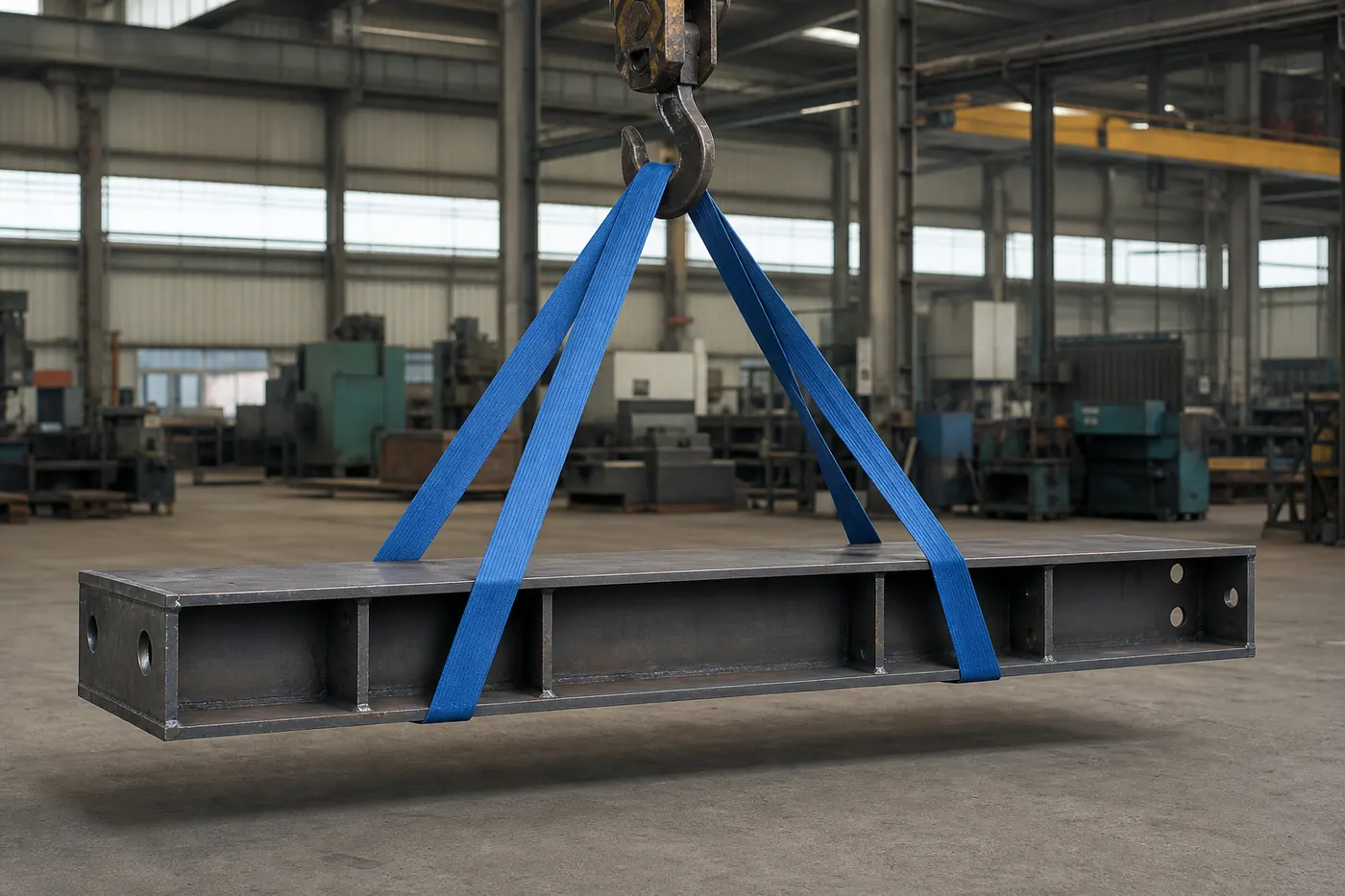
A alapin gbígbé sling is defined by one thing and one thing only: its cross-section. The load-bearing element is a band of woven webbing with a rectangular section, so it bears on the load across a broad, flat face rather than a line. That single property is what everything else follows from — a flat band lies against a flat face and does not concentrate the load, it wraps a section without creasing, it needs no fittings because its ends can be formed from the webbing itself, and it can be coiled, folded and carried by one person at capacities where a steel sling would need two. “Alapin” says nothing about the fibre, the ends or the capacity; those are three separate decisions, and this page takes them in turn. Get the cross-section right and you have chosen the family. Get the okun wrong and you will still fail — heat, acid, alkali and shock are what actually destroy a flat sling, and each fibre answers a different one.
- Broad, flat bearing — spreads the load over a face instead of a line
- No fittings on the load path — the ends are formed from the webbing itself
- Three fibres, three duties - poliesita, nylon and polypropylene answer different hazards
- Light and safe to handle — a fraction of the weight of the steel it replaces
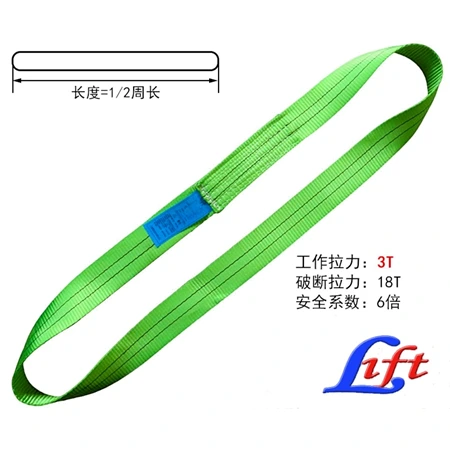
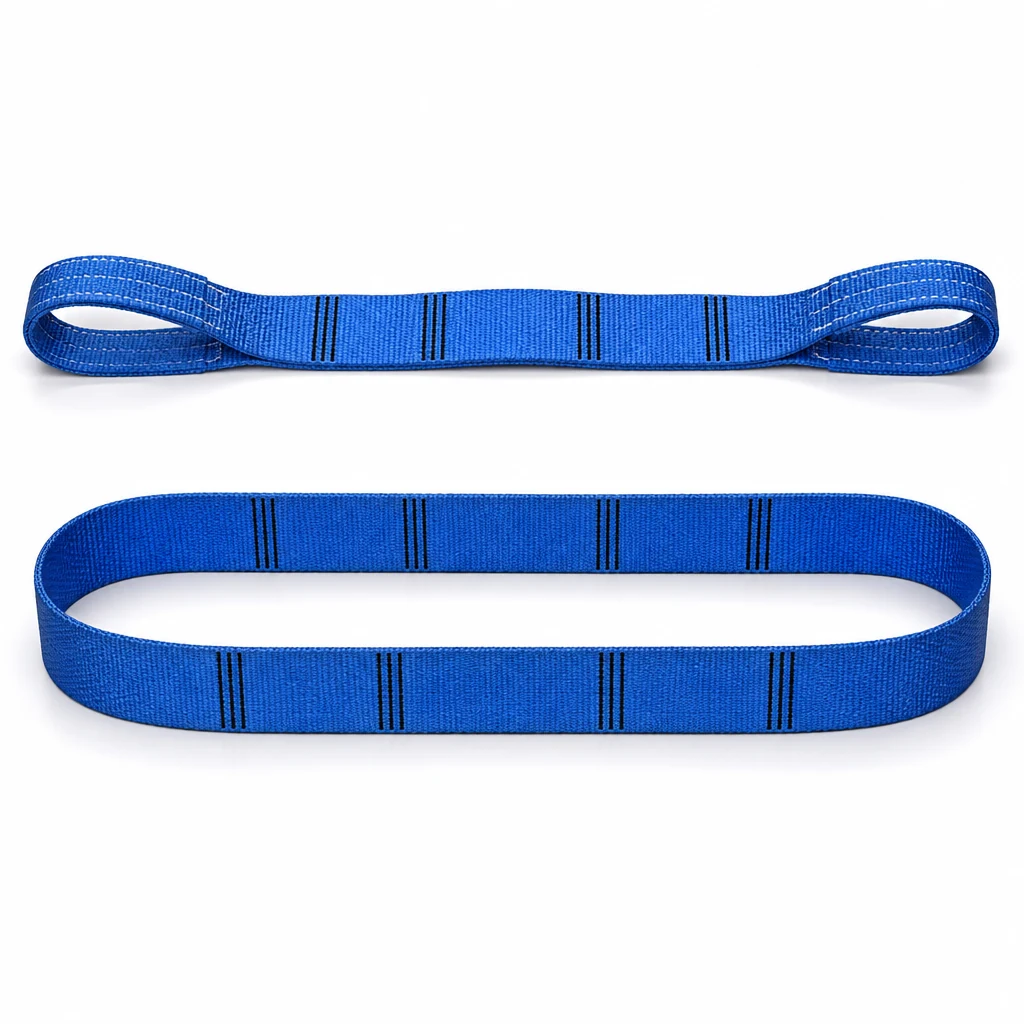
Key Awọn ẹya ara ẹrọ
A Face, Not a Line
A flat band spreads the load across its whole width. That is why a flat sling will pick up a crate, a machine base or a section and leave it unmarked where a wire rope would cut in.
Ends Made From the Webbing
There is no hardware on the load path. The webbing is folded back on itself and stitched, so nothing can be lost, seized or distorted — and the construction sits on the outside, nibiti o ti le ṣe ayẹwo.
Rirọ Lodi si fifuye
Woven webbing conforms instead of biting. Ya, coated, polished and powder-coated surfaces survive a flat sling that a chain or wire rope would mark.
Imọlẹ, and Kind to Your Crew
A flat sling of a given capacity weighs a fraction of the steel it replaces, and a shock load is not stored in it and released back into the lift.
Will Not Rust, Will Not Rot
Synthetic webbing is unaffected by water and does not corrode or support rot or mildew, which is why flat slings dominate yards, ports and wash-down environments.
Ti kii-Conductive
With no metal in the load path, a flat sling does not conduct — an advantage anywhere near live plant or overhead lines.
Kini “Alapin Gbígbé Sling” Covers — and What It Does Not
Buyers reach this family through several words, and the words do not mean the same thing. Sorting them out takes a minute and saves a wrong order.
| Ọrọ naa | What it actually names | What it leaves open |
|---|---|---|
| Alapin gbígbé sling | The cross-section — a band with a rectangular section | Awọn okun, the ends and the capacity |
| Webbing sling / flat woven sling | The same article, named after the material it is woven from | Everything above |
| Strap / belt / ẹgbẹ | The webbing itself, as a material with a width and a weave | Whether it is rated for lifting at all — a strap is a material, not a specification |
| Nylon sling / polyester sling | Awọn okun | The section, the ends and the capacity |
| Sling yika | A different family — a parallel fibre core in a tubular sleeve | Not a flat sling at all, whatever colour the sleeve is |
The Three Types You Can Buy
The cross-section is fixed by the family. What varies is how the article is finished — and that decides how the load enters it, and therefore what you can and cannot do with it.
| Iru | Kini o jẹ | The load enters at | Yan fun |
|---|---|---|---|
| Oju ati oju | A flat band with a formed, folded and stitched eye at each end | Two defined points, one at each end | Any lift where the pick-up points must be known and repeated, and where a defined length is part of the method |
| Ailopin (iyika) alapin sling | The same flat band, closed into a continuous loop with no ends and no eyes | Wherever the band happens to bear, and through the loop itself | Choked gbe soke, awọn edidi, and any job where one sling has to serve several different rigs — the loop can also be turned to move the wear |
| Sleeved or padded | Either of the above with an extra protective layer at the bearing areas | Bi loke, but through a sacrificial layer | Coated or finished loads, abrasive loads, and any bearing point where the webbing must not touch the load directly |
Choosing the Fibre — Polyester, Nylon or Polypropylene
This is the decision that actually decides whether your sling survives, and it is the one buyers most often make by accident. The three fibres look much the same in a photograph, carry the same capacity ladder and are distinguished on the article only by the colour of the sewn label. They behave very differently against heat, acid, alkali, shock and stretch.
| Okun | Label colour | Typical temperature range | Na | Chemicals | Yan nigbati |
|---|---|---|---|---|---|
| Polyester (PES) | Buluu | -40 °C si +100 °C | Low — around 3% ni opin fifuye ṣiṣẹ | Good against most acids; attacked by strong alkalis | The general-purpose answer, and the default. Lowest stretch for its strength, best all-round value, and the fibre most of the standard capacity ladder is published in. |
| Polyamide / ọra (PA) | Alawọ ewe | Typically to about +90 °C | High — it stretches further before it breaks | Attacked by acids; better than polyester against alkalis | Ikojọpọ mọnamọna, and where the load must be caught rather than held rigidly. It gives where polyester would pass the load straight on. Also the better choice in very cold conditions. |
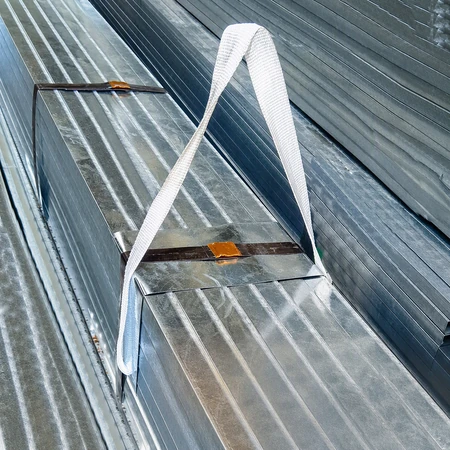
| Polypropylene (PP) | Brown | Typically to about +80 °C | Déde | Good against both acids and alkalis | Chemical and coating environments. It is the lightest of the three and it floats, which makes it the fibre of choice for wet and chemical duty — and for the large-tonnage white belts used on coated products. |
Agbara, Àwọ̀, Width and Ply — Reading the Ladder
Labẹ EN 1492-1 awọn colour of the webbing certifies the capacity band, in straight lift, ati nkan miran. Alongside it the band carries one black transverse stripe per tonne, so the two markings can be cross-checked against each other.
| WLL (gígùn gbe soke) | Webbing awọ | Awọn ila dudu | Iwọn itọkasi | Ti parun (× 0.8) | MBL ni 7:1 |
|---|---|---|---|---|---|
| 1 t | Awọ aro | 1 | Confirm | 0.8 t | 7 t |
| 2 t | Alawọ ewe | 2 | 50 mm | 1.6 t | 14 t |
| 3 t | Yellow | 3 | 75 mm | 2.4 t | 21 t |
| 4 t | Grẹy | 4 | 100 mm | 3.2 t | 28 t |
| 5 t | Pupa | 5 | 125 mm | 4.0 t | 35 t |
| 6 t | Brown | 6 | 150 mm | 4.8 t | 42 t |
| 8 t | Buluu | 8 | 200 mm | 6.4 t | 56 t |
| 10 t | ọsan | 10 | 250 mm | 8.0 t | 70 t |
| 30 t | Ko si koodu awọ | 30 | Confirm | 24.0 t | 210 t |
Loke 10 t awọ ko si ohun to man sling, so the working load limit printed on the sewn label governs. Ka aami naa, kii ṣe awọ.
Width and ply — why two slings of the same capacity are not the same sling
Two flat slings can carry exactly the same working load limit and still be different articles, because the same capacity can be built at different widths and in different numbers of layers.
- Ìbú decides the bearing area. A wider band spreads the same load over more of the load’s surface, which matters wherever the surface must not be marked.
- Ply decides stiffness and edge tolerance. A single-layer band is lighter and more flexible; a ile oloke meji or double-layer band is stiffer, sits flatter under a load, and lasts longer where the band runs over an edge.
- Sisanra matters in the hook. A very thick band occupies more of the hook bowl, which can limit how many slings you can gather onto one hook.
The Formed Eye — Where the Load Enters
On a flat sling with ends, the load enters at the eyes. The webbing is folded back on itself and closed with several dense parallel rows of stitching, and that fold is the one place in the whole article where the load passes through a made connection rather than through continuous weave.
- The construction sits on the outside. That is the flat sling’s quiet advantage over a sleeved round sling: everything that carries the load — the weave and the stitches — is on the surface, where you can see it.
- The eyes are fixed wear points. Unlike an endless loop, an eye and eye sling always wears at the same two places — the eyes and the two bearing points. When they wear out, the sling is spent even if the rest of the band is sound.
- Protect the eye at the hook. A rough hook bowl or an undersized hook will abrade the eye far faster than the load will. Check the hook as well as the sling.
- Awọn oju ti a fi agbara mu are available where the same eyes are repeatedly hooked or the hook bowl is rough.
Hitches and Mode Factors
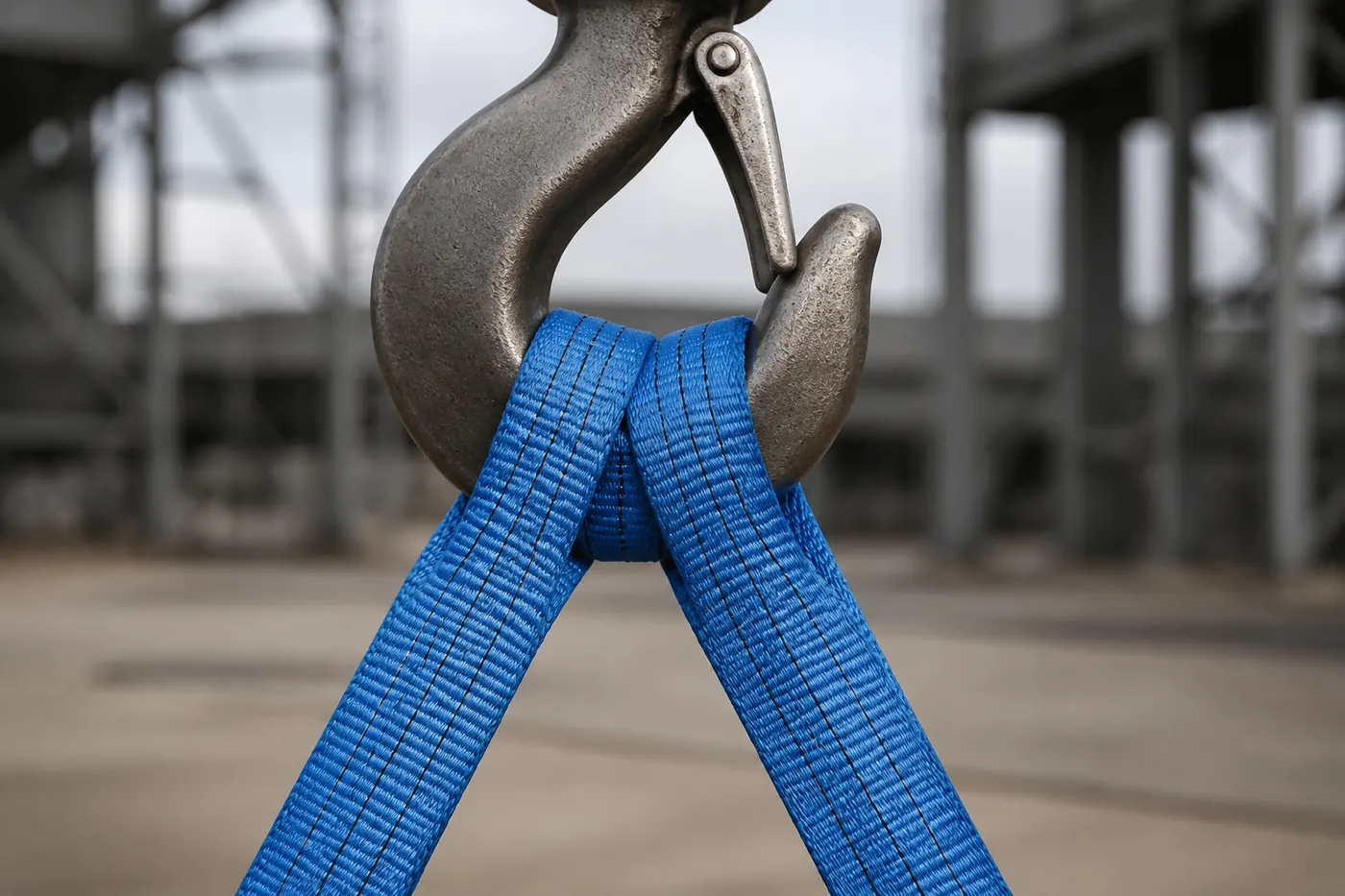
The label figure is the gígùn gbe soke igbelewọn. Every other hitch is derived from it by a mode factor.
| Hitch or mode | Mode factor M | Ohun ti o tumo si |
|---|---|---|
| Straight lift | 1.0 | The label figure. Both parts of the sling hang to the hook. |
| Ti parun | 0.8 | The band passes round the load and back through itself so it grips as it takes the weight. |
| Agbọn, 0–7° | 2.0 | The band passes under the load with both legs on the hook, legs within 7° of vertical. |
| Agbọn, 7–45° | 1.4 | As the legs open out, ẹdọfu ni kọọkan ga soke ati awọn nkan elo agbara ṣubu. |
| Agbọn, 45–60° | 1.0 | Ni yi itankale agbọn yoo fun ko siwaju sii ju kan ni gígùn gbe soke. |
| Angled choke ni 45° | 0.7 | Ti parun, ati awọn ẹsẹ lẹhinna ṣii kuro lati inaro. A choke gbe taara pẹlẹpẹlẹ awọn kio ntọju 0.8. |
| Angled choke ni 60° | 0.5 | The most heavily reduced arrangement in common use — check it before the lift, kii ṣe lẹhin. |
Two flat-specific habits, neither of which applies to a round sling: keep the band flat and untwisted in the hitch, because a flat band twisted into a rope concentrates the load on one edge and loses the contact area that is its whole advantage; ati protect the band at edges, because on a sheared or machined edge a flat sling fails at the edge long before it fails at the load.
Technical Specifications and How to Specify
| Orukọ ọja | Alapin gbígbé sling / alapin webbing sling / flat woven webbing sling / webbing lifting sling |
|---|---|
| Iru | Flat woven webbing sling to EN 1492-1; eye and eye or endless (iyika) fọọmu |
| Okun | Polyester (blue label) bi bošewa; polyamide / ọra (green label); polypropylene (brown label) |
| Iwọn fifuye ṣiṣẹ | 1 t lati 30 t ninu akaba atejade, and intermediate capacities to order |
| Ailewu ifosiwewe | 7:1 meji ỌKAN 1492-1 bi bošewa; 5:1 to ASME B30.9 ati 8:1 si AS 1353 itumọ ti lati paṣẹ |
| Ply | Nikan Layer bi bošewa; duplex and double layer on request |
| Ìbú | Matched to the capacity and the load surface — the reference series is 2 t = 50 mm, 3 t = 75 mm, 4 t = 100 mm, 5 t = 125 mm, 6 t = 150 mm, 8 t = 200 mm, 10 t = 250 mm; final width on the order acknowledgement |
| Gigun | Manufactured to order; state the length between the bearing points of the eyes, or the length that suits your rig |
| Ilọsiwaju | O pọju 3% at the working load limit for polyester; o pọju 10% ni fifuye fifọ |
| Iwọn iwọn otutu | -40 °C si +100 °C fun awọn boṣewa poliesita Kọ; nylon and polypropylene differ — see the fibre table |
| Idaabobo | Protective sleeves, wọ paadi, edge protectors and reinforced eyes on request |
| Siṣamisi | IN 1492-1 capacity colour with one black stripe per tonne; sewn label carrying the straight-lift WLL, okun, itọkasi bošewa, olupese, awọn ipari ati ki o kan traceability koodu |
| Idanwo | Batch ni idanwo; ijẹrisi idanwo ti a pese fun ipele kọọkan lori ibeere |
| MOQ & OEM | MOQ kekere fun awọn aṣẹ idanwo; OEM ni kikun - agbara, okun, igboro, ply, pari, awọ, aami akọkọ ati iṣakojọpọ |
How to specify one — in this order
- Awọn fifuye, and its shape. The shape decides whether a flat band can lie against it at all, or whether you need a round section instead.
- The hitch you will actually rig. Not the one in the method statement — the one the crew will use. Then apply the mode factor and size the capacity from that figure.
- Ayika. Ooru, acid, alkali, omi, grit. This decides the fibre, and getting it wrong is the failure you will not see coming.
- Awọn dada. Whether the load may be marked decides the width and whether you need a sleeve or a pad.
- Awọn ipari. Eye and eye if the pick-up points must be defined; endless if the sling must serve many rigs and you want to rotate the wear.
- Awọn ipari, the marking and the standard. Length between bearing points; the label layout and language your market needs; ati awọn boṣewa ati ibi oja awọn sling gbọdọ wa ni itumọ ti si.
Mimu, Ayewo ati Idiwọn
A flat sling is the easiest of all the synthetic slings to inspect, because the load path is on the surface. Inspect in this order.
- The eyes first. Every stitch row across the fold, the webbing immediately behind the eye, and the fold itself. Baje, ọlẹ tabi fa stitching lẹbi awọn sling.
- Awọn aaye gbigbe. Where the band has wrapped the load — cuts, abrasion, glazing or a worn edge.
- The whole band. Ẹgbẹ alapin kan gbe ẹru naa kọja gbogbo iwọn rẹ, ki a ge nibikibi ọrọ. Run it through your hands.
- Edges and ends. Cuts from the load’s own corners are the classic flat sling failure.
- Glazing ati lile. A band gone shiny or stiff has met heat or sustained friction, and the fibre is not what it was.
- Kokoro. Acid or alkali attack leaves little visible on the outside and destroys the fibre within. If the sling has been exposed, take it out of service and ask.
- An eye and eye sling cannot be rotated. Its wear points are fixed for life. This is the honest trade-off against an endless sling, and if you find yourself condemning slings while the middle of the band is still sound, that is the signal to move to the endless form.
- Keep it flat, keep it off edges, keep it off heat. Those three account for most premature failures.
- Maṣe ṣe atunṣe sling. Ko si aranpo, ko si splicing, ko si knotting. A knot in a webbing sling can lose half its capacity.
- Store it clean, gbẹ ati ki o jade ti orun, and never on a concrete floor where it can pick up grit.
- Ṣe igbasilẹ rẹ. Log the lifts, the hitches, awọn èyà ati eyikeyi bibajẹ.
Awọn ohun elo
- Ohun ọgbin, ẹrọ, skids, dies and castings — anywhere the surface must not be marked
- Structural steel sections, beams and welded fabrications, choked or in a basket
- Crates, awọn igbaduro, pallets ati boxed de
- Precast concrete units where a broad bearing is wanted
- Ti a bo, painted and powder-coated products — the large-tonnage white polypropylene band is used on coated work exactly for this reason
- Bundles of tube, pipe and sections
- Kemikali, wet and wash-down environments, where polypropylene is the fibre of choice
- Cold stores and cold-climate sites, where nylon keeps its composure
- Awọn àgbàlá, awọn ibudo, depots and site work where one sling has to serve many different lifts
Isọdi ati OEM Service
A flat sling is built to order more often than it is bought off a rack, nitori awọn ipari, the width and the fibre all follow from the lift.
- Agbara - 1 t lati 30 t ninu akaba atejade, and intermediate capacities
- Okun - poliesita, nylon or polypropylene, chosen against heat, chemical or shock duty
- Width and ply — matched to the load surface and the edge condition, nikan tabi ė Layer
- Ipari — eye and eye or endless; reinforced eyes where the hook duty is hard
- Gigun — to your rig, stated between the bearing points of the eyes
- Idaabobo — sleeves, pads and edge protectors
- Siṣamisi — the EN 1492-1 capacity colour and stripes, tabi ero ti ara rẹ nibiti ọja gba laaye; your label layout, ede ati isiro
- Iṣakojọpọ — coiled, bagged or baled; aṣa okeere packing
Iṣakoso didara
Every length of webbing is checked for weave, width and colour before it is cut. Every formed eye is checked on its fold and on the number and continuity of its stitch rows. Every finished sling is checked on its length, its capacity marking, its label and its traceability code before packing, and each batch is tested. A ti ṣelọpọ slings, webbing ati okun awọn ọja fun ise, ailewu ati okeere onibara fun sunmo si meta ewadun, ati pe a jẹ ki ilana naa han: on request we supply the webbing certificate, awọn isiro idanwo ipele ati sling apẹẹrẹ fun ọ lati mu ati idanwo ṣaaju iṣelọpọ iwọn didun bẹrẹ.
Awọn ibeere Nigbagbogbo
What is a flat lifting sling?
A flat woven webbing sling: a rated lifting sling whose load-bearing element is a band of woven webbing with a rectangular cross-section, itumọ ti si EN 1492-1. It is called flat to describe that cross-section, not the fibre, the ends or the capacity — a flat sling can be polyester, nylon or polypropylene, can have a formed eye at each end or be closed into an endless loop, and can be built from 1 t lati 30 t. Its defining advantage is that it bears across a broad, flat face rather than a line, and that it needs no fittings on the load path.
Is a flat lifting sling the same as a webbing sling?
Effectively yes — flat sling and webbing sling name the same family from two directions. “Webbing” names the material it is woven from; “alapin” names the shape of its cross-section. Both distinguish it from a round sling, which is a different family: a parallel fibre core inside a tubular sleeve, with a circular section.
Should I choose a flat sling or a round sling?
Choose flat when the band can lie flat against the load and the load has a wide face or edges — plate, awọn apakan, apoti, ẹrọ, boxy and flat things. Choose round when the load is round, tightly curved or awkward, where a flat band cannot lie flat and would crease or bear on a single corner. The flat form also has the inspection advantage: everything that carries the load is on the outside, where you can see it.
Polyester, nylon or polypropylene — which should I buy?
Polyester unless you have a reason not to: it has the lowest stretch for its strength and is the best all-round value, and it is what most of the capacity ladder is published in. Nylon if the sling will be shock-loaded or has to stretch to catch a load, and it also behaves better in very cold conditions. Polypropylene if the environment is wet, chemical or both, because it resists acids and alkalis better than either of the others. The fibre is identified by the colour of the sewn label, not by the colour of the webbing.
How do I know what a flat sling will lift in a choke or a basket?
The label gives the straight-lift working load limit. A choke din o si 0.8 igba ti isiro. A basket at a narrow angle increases it to 2 igba, ja bo si 1.4 igba laarin 7 ati 45 iwọn ati ki o si 1 igba laarin 45 ati 60 awọn iwọn. An angled choke is reduced further, si 0.7 ni 45 iwọn ati ki o 0.5 ni 60 awọn iwọn. A 4 t fifuye ni a choker nilo a 5 t sling, nitori 4 ÷ 0.8 = 5.
Why are two flat slings of the same capacity different prices?
Because capacity is only one of four dimensions. The same working load limit can be built at different widths, in different numbers of layers, and in three different fibres. A wider band spreads the bearing over more of the load; a double-layer band is stiffer and lasts longer over an edge; nylon and polypropylene cost more than polyester. When you compare two quotations for “a 5 t flat sling”, compare the width, the ply and the fibre as well.
Ṣe “double buckle” mean the sling has a metal buckle?
Almost certainly not. In this trade buckle and double buckle are normally names for an end formed by folding the webbing back on itself and stitching it — the same construction as any other formed eye, with no metal anywhere. It is the commonest misreading in the whole flat sling family, so if a quotation says buckle, ask which it is before the goods ship.
Can I get a custom capacity, okun, igboro, ipari ati siṣamisi?
Bẹẹni. A kọ lati 1 t lati 30 t in the published ladder and in intermediate capacities, ninu polyester, nylon or polypropylene, at the width and ply your load and edges require, in eye and eye or endless form, to the length your rig needs, pẹlu EN 1492-1 capacity colour and stripes or your own marking scheme where the market allows. So fun wa eru, awọn hitch, the environment and the destination market and we will work the specification out with you.
Request a Quote for Flat Lifting Slings
Fi ẹru ati apẹrẹ rẹ ranṣẹ si wa, the hitch you will actually rig, the environment the sling will work in, whether the surface may be marked, the length your rig needs, ati awọn boṣewa ati ibi oja awọn sling gbọdọ wa ni itumọ ti si. We will come back with a fibre, ibú kan, a ply, ipari kan, a ayẹwo ati ki o kan factory-taara owo.
Jẹmọ Products
- The Whole Catalogue, Sorted by Fibre, Fọọmu, Ends and Capacity
- Endless Type Webbing Sling — the flat band with no ends
- Steel Pipe Lifting Strap — wide bands and sleeves for pipe
- Sling Webbing giga otutu - fun awọn ẹru gbigbona
- Aramid Webbing Sling — the cut-resistant option
- Round Slings — the round-section family