

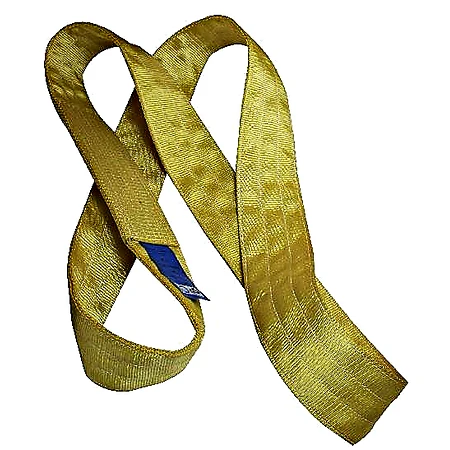
Lift sling rigging company produce Endless sling.
Sling ailopin
An ailopin sling is a sling closed into a continuous loop with no ends, ko si oju ati pe ko si awọn ohun elo irin. Nothing off the shelf has an end to line up, a fitting to lose or a thimble to inspect: the article is one loop, and that is the entire point of the shape. Lift Sling Rigging Company builds the endless sling in both textile families — the ailopin yika sling meji ỌKAN 1492-2, ati awọn ailopin alapin webbing sling meji ỌKAN 1492-1 - lati 1 t lati 1000 t, in our own mill in Taizhou, Jiangsu, where we have been making rigging since 1985.
This page exists because “endless sling” is the most overloaded term in the lifting trade. Two completely different articles answer to it, they are built to two different standards, they behave in opposite ways on the same load, and in one market the word means one of them while in another market it means the other. Buying the wrong one is the most common ordering mistake in this family — and it is removed by one word added to the enquiry.

“Endless Sling” Means Three Different Articles — Which One Do You Need?
Before anything else, pin down which article is actually being asked for. There are three, they are not interchangeable, and only two of them are textile slings at all.
| What is meant | Standard | Abala | Ohun ti o jẹ gangan | Where it is the usual meaning |
|---|---|---|---|---|
| Ailopin yika sling | IN 1492-2 | tube yika | A parallel fibre core inside a woven tubular sleeve, closed into a loop. The load-bearing core is continuous — there is no joint in it at all. | Yuroopu, and most export catalogues. This is what “endless sling” most often means in a lifting catalogue outside North America. |
| Ailopin alapin webbing sling | IN 1492-1 | Alapin iye | A flat woven band closed into a loop by lapping its two ends over one another and stitching them — the endless type A flat woven webbing sling. | ariwa Amerika, where standard web sling type 5 is the endless type. Also common wherever “webbing sling” is the everyday word. |
| Ailopin grommet waya kijiya ti sling | Wire rope standards | Steel rope | A rope grommet closed on itself — a completely different material with a different set of rules, inspection criteria and discard standards. | A legitimate third reading, and worth checking if the load or the site rules rule out textiles. Wo okun waya sling. |
Tabili 1 — The three things buyers mean by “endless sling”. If your enquiry or your quotation does not say which, it is worth one question before the goods ship.
Key Features of an Endless Sling
- No ends at all. Nothing has an end to line up, a fitting to lose or a thimble to inspect. The article is one closed loop.
- Rotate it and the wear moves. Pẹlu ko si awọn opin ti o wa titi, aaye gbigbe, the hook contact point and the closure can all be turned around the loop. Worn in one spot is not the same as worn out — if you rotate it.
- Loop kan, four hitches. Straight, fun pa, basket and double wrap all come from the same loop, so one size on the rack covers the whole job.
- Never too long to reach. A loop has no fixed pick-up points, so it can be taken up by another turn. One endless sling often covers two fixed-length slings.
- Both families, one source. We build the round sling from 1 t lati 1000 t and the flat webbing sling across the EN 1492-1 band ladder — so whichever the load asks for, it comes from the same factory and the same test house.
- Tested in house. Tiwa yàrá ati a 1000 t petele igbeyewo ẹrọ, with CNAS and CE certification, so the figure on the label is a figure we have pulled.
The Two Textile Families
Endless Round Sling — for round, te ati ki o àìrọrùn èyà
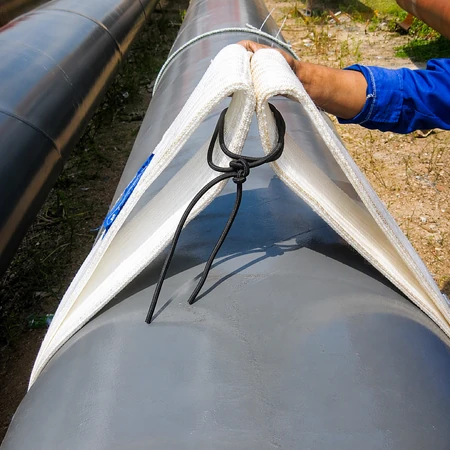
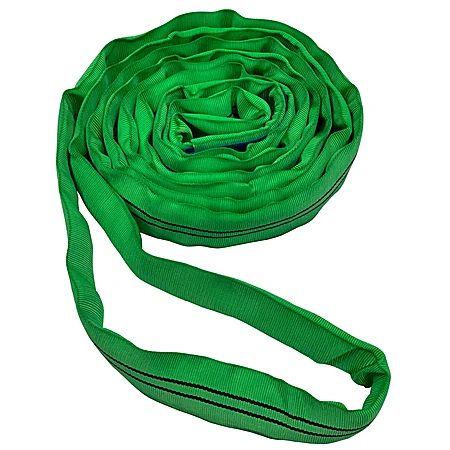
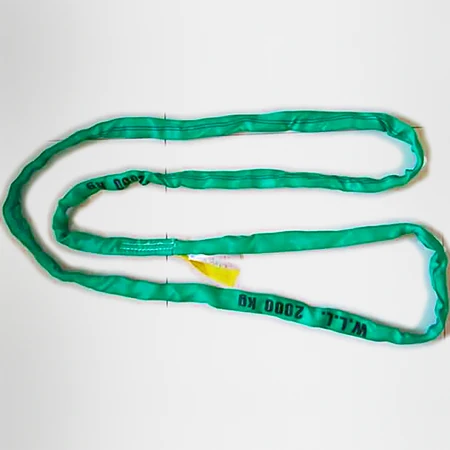
Awọn ailopin yika sling is a parallel fibre core — the part that carries the load — hidden inside a woven tubular sleeve. The sleeve does not carry the load; it protects the core and it carries the colour and the capacity marking. Because the core is continuous, the loop is genuinely without a joint, and because the sleeve is round, the sling sits into a round load instead of fighting it.
- Tesiwaju mojuto, no joint — the load path is unbroken round the whole loop.
- A round section that conforms — it wraps pipe, coils, yipo, curved castings and awkward shapes closely, without creasing.
- Capacity far beyond webbing — we build round slings from 1 t lati 1000 t.
- Rirọ, flexible and kind to surfaces — the classic choice for finished, coated and machined work.
- The trade-off you must know — the load-bearing core is inside the sleeve, so a sound-looking sleeve does not prove a sound core.
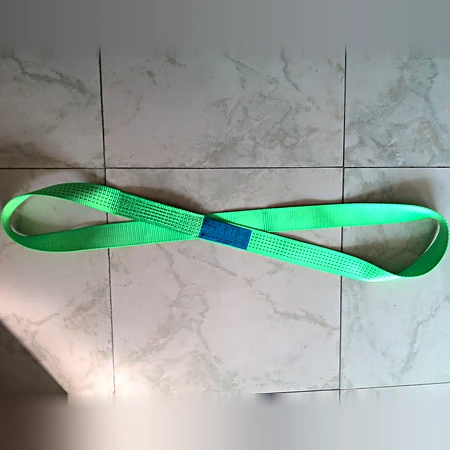
Endless Flat Webbing Sling — for flat faces and edges
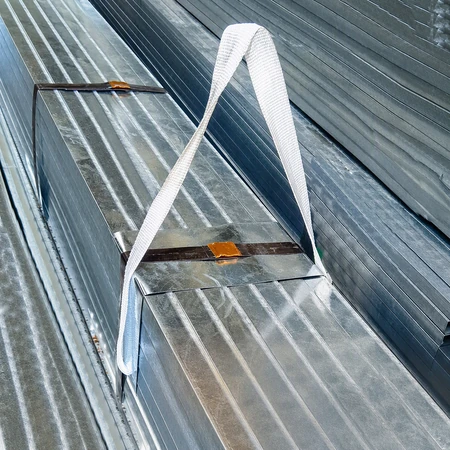
Awọn alapin webbing sling is the band itself. It carries the load across its whole width, so it bears on the load over a broadly spread contact patch — which is why it leaves a steel plate or a crate unmarked where a round section would concentrate the pressure. Labẹ EN 1492-1 the endless type is made by lapping the two ends of the band over one another and stitching the lap, so unlike the round sling it does have exactly one joint. See the dedicated ailopin ayelujara sling page for the full treatment.
- Broad flat bearing — the load is spread across the full band width.
- One joint, and you can see it — the lapped and stitched closure, made as a full-strength lap and closed by dense parallel rows of stitching.
- Everything that carries the load is on the outside — the quiet inspection advantage over the round sling.
- Awọn EN 1492-1 capacity ladder — 1 t lati 30 t ninu awọn boṣewa iye, and to order beyond.
- Keep it flat — a flat band twisted into a rope loses the contact area that is its whole advantage.
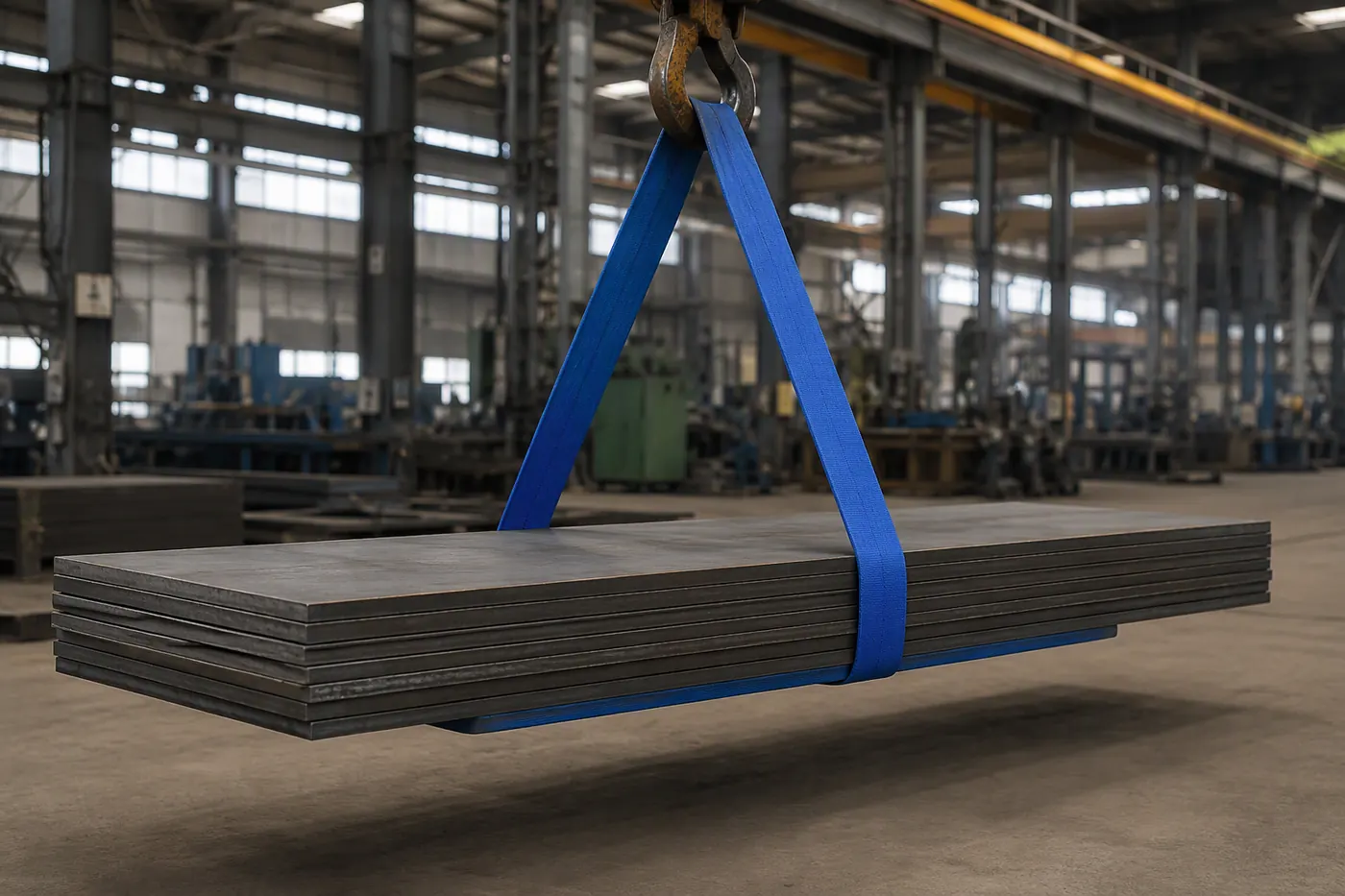
Round or Flat? The Decision
| Ohun ini | Ailopin yika sling | Ailopin alapin webbing sling |
|---|---|---|
| Standard | IN 1492-2 | IN 1492-1 |
| Abala | tube yika, iyika | Alapin iye, onigun merin |
| Ohun ti o gbe ẹrù | A lemọlemọfún ni afiwe okun mojuto inu awọn apo | Alapin hun webbing ara |
| Apapọ | Ko si ni mojuto - o jẹ lemọlemọfún | Isọpo kan ti o la ati ti a dì ti pa lupu naa |
| Yika ati ki o te èyà | O tayọ - ibamu ati ki o dimu awọn ìsépo | Fair — a Building band jẹ kere dun ni ayika ju ekoro |
| Alapin, igboro èyà | Otitọ - awọn ti nso concentrates lori kan dín ila | O tayọ - dubulẹ alapin ati ki o tan awọn ti nso kọja awọn iwọn |
| Ti nso titẹ lori fifuye | Ti o ga julọ - laini olubasọrọ dín | Isalẹ - a ọrọ olubasọrọ alemo |
| Capacity range we build | 1 t lati 1000 t | 1 t lati 30 t ninu awọn boṣewa iye |
| Ojuami ayewo akọkọ | Awọn apo lori gbogbo lupu, nitori awọn mojuto ti wa ni pamọ | Isẹpo itan ati awọn aaye gbigbe, nitori ohun gbogbo han |
| Ti a ba ge | A ge apa aso han, but the core behind it may also be damaged and cannot be seen | Immediately visible and immediately serious — the load path is the band you are looking at |
| Ti o dara ju fun | Paipu, coils, yipo, curved castings, machined and finished parts, and anything above the webbing ladder | Awo, awọn apakan, box girders, apoti, awọn igbaduro, ẹrọ, and any flat or boxy load with edges |
Tabili 2 — The two are not better and worse — they are good at different shapes. Baramu apakan si fifuye ati iyokù tẹle.
Ifilelẹ fifuye ṣiṣẹ, Awọ ati Aabo ifosiwewe
Both families are marked in colour, but the two ladders are not the same and the colours do not mean the same things across them. Read the label rather than the colour, and read the standard as well as the band.
The flat webbing ladder — EN 1492-1
| WLL (gígùn gbe soke) | Webbing awọ | Awọn ila dudu | Iwọn itọkasi | Ti parun (× 0.8) |
|---|---|---|---|---|
| 1 t | Awọ aro | 1 | Jẹrisi lori ibere | 0.8 t |
| 2 t | Alawọ ewe | 2 | 50 mm | 1.6 t |
| 3 t | Yellow | 3 | 75 mm | 2.4 t |
| 4 t | Grẹy | 4 | 100 mm | 3.2 t |
| 5 t | Pupa | 5 | 125 mm | 4.0 t |
| 6 t | Brown | 6 | 150 mm | 4.8 t |
| 8 t | Buluu | 8 | 200 mm | 6.4 t |
| 10 t | ọsan | 10 | 250 mm | 8.0 t |
Tabili 3 — The EN 1492-1 flat webbing ladder. Awọ webbing jẹri iye iwọn fifuye ṣiṣẹ ni gbigbe taara; the black stripes give the tonne figure so the two markings can be cross-checked. Loke 10 t awọ ko si ohun to man sling, so the WLL printed on the sewn label governs.
The round sling ladder — EN 1492-2
Round slings are colour coded to the same capacity bands, but the sleeve colour is a coding applied by the maker: the sleeve does not carry the load and its colour is not a material indication. The core inside is what is rated. We build round slings from 1 t lati 1000 t, which is where the heavy end of the whole business sits — beyond the webbing ladder entirely.
Imọ paramita
| Ohun ini | Ailopin yika sling | Ailopin alapin webbing sling |
|---|---|---|
| Awọn orukọ ọja | Endless round sling · circular round sling · endless lifting sling | Sling Ailopin · Sling Webing Ailopin · Irufẹ Ailopin Apẹrẹ hun webbing Sling · circular webbing Sling · type 5 ayelujara sling |
| Iru | Round sling to EN 1492-2 — a continuous parallel fibre core inside a woven tubular sleeve | Iru ailopin A alapin hun webbing sling to EN 1492-1 — a band lapped back over itself and stitched to close the loop |
| Fifuye-ara eroja | The parallel fibre core, continuous round the loop | Alapin hun webbing ara |
| Apapọ | None in the core | One lapped and stitched closure |
| Ohun elo | Ga-tenacity poliesita mojuto (PES) bi bošewa; other fibres on request | 100% poliesita ti o ga (PES) bi bošewa; polyamide (ọra) ati polypropylene tun wa |
| Iwọn fifuye ṣiṣẹ | 1 t lati 1000 t | 1 t lati 30 t ninu EN 1492-1 band akaba; awọn ẹgbẹ agbedemeji ati awọn agbara ti o ga julọ lati paṣẹ |
| Ailewu ifosiwewe | 7:1 meji ỌKAN 1492-2 bi bošewa; miiran ifosiwewe lati paṣẹ | 7:1 meji ỌKAN 1492-1 bi bošewa; 5:1 to ASME B30.9 ati 8:1 si AS 1353 itumọ ti lati paṣẹ |
| Ikole | Parallel core in a woven sleeve; single or double sleeve on request | Nikan Layer bi bošewa; ė Layer (ile oloke meji) lori ìbéèrè |
| Ìbú / opin | Matched to the capacity; confirmed on the order acknowledgement | Matched to the band — published reference series 2 t = 50 mm, 3 t = 75 mm, 4 t = 100 mm, 5 t = 125 mm, 6 t = 150 mm, 8 t = 200 mm, 10 t = 250 mm |
| Gigun | 1 m si 12 m bi bošewa, gun lori ìbéèrè; sọ nipa ayipo tabi nipa munadoko iṣẹ ipari | 1 m si 12 m bi bošewa, gun lori ìbéèrè; sọ nipa ayipo tabi nipa munadoko iṣẹ ipari |
| Ilọsiwaju | Kekere; confirmed on the order acknowledgement | O pọju 3% ni opin fifuye ṣiṣẹ; o pọju 10% ni fifuye fifọ |
| Iwọn iwọn otutu | -40 °C si +100 °C fun awọn boṣewa poliesita Kọ | -40 °C si +100 °C fun awọn boṣewa poliesita Kọ |
| Awọ ati siṣamisi | Capacity-coded sleeve; sewn label carrying the WLL, itọkasi bošewa, olupese, awọn ipari ati ki o kan traceability koodu | IN 1492-1 agbara awọ pẹlu ọkan dudu ifa adikala fun tonne; sewn label carrying the straight-lift WLL, ohun elo, itọkasi bošewa, olupese, awọn ipari ati ki o kan traceability koodu |
| Idanwo | Batch ni idanwo; ijẹrisi idanwo ti a pese fun ipele kọọkan lori ibeere | Batch ni idanwo; ijẹrisi idanwo ti a pese fun ipele kọọkan lori ibeere |
| Iṣakojọpọ | Coiled ati apo, ike paali; aṣa okeere packing | Coiled ati apo, ike paali; aṣa okeere packing |
| MOQ ati OEM | MOQ kekere fun awọn aṣẹ idanwo; OEM kikun | MOQ kekere fun awọn aṣẹ idanwo; full OEM — band, ply, igboro, ipari, okun, awọ, aami akọkọ ati iṣakojọpọ |
Tabili 4 — Technical specifications. Both families are produced to order — the section, the capacity, the length and the marking are all specified against your lift.
How the Length of an Endless Sling Is Specified
Sling ailopin ko ni opin, so there is nothing to measure end to end. It is quoted in one of two ways, ati the two differ by about a factor of two — which is the most common cause of an endless sling arriving at the wrong length, in either family.
- Ayika — the total perimeter of the loop: the length of material in the finished sling.
- Munadoko ṣiṣẹ ipari — the usable height you actually get, which is roughly idaji ayipo, nitori awọn lupu ti wa ni ti ilọpo meji nigbati o kọorí.
| Circumference ordered | Isunmọ. effective working length | Aṣoju lilo |
|---|---|---|
| 2 m | 1 m | Chokes and short lifts, tight rigging |
| 4 m | 2 m | The general-purpose size |
| 6 m | 3 m | Basket lifts on plant and fabrications |
| 8 m | 4 m | Awọn apakan gigun, bundles and pipework |
| 10 m | 5 m | Structure and large plant |
| 12 m | 6 m | Standard longest; gun lati paṣẹ |
Tabili 5 — Length conventions. Illustrative — the relationship is the point. The exact figure depends on the section, awọn ply, the wall thickness and the bend radius, so state which convention your figure is in and we will confirm it on the order acknowledgement. If you would rather, just tell us how far the hook will be from the load — that is the figure you actually care about, and we will size the loop to it.
Rigging the Loop — Hitches and Mode Factors
The label figure is the gígùn gbe soke igbelewọn. Gbogbo eto miiran jẹ yo lati ọdọ rẹ nipasẹ ifosiwewe ipo, and these factors apply to both families.
| Hitch or mode | Mode factor M | Ohun ti o tumo si |
|---|---|---|
| Straight lift | 1.0 | The label figure. The loop hangs as a U with both parts on the hook. |
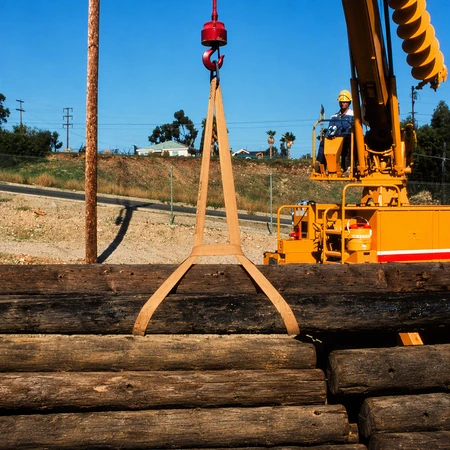
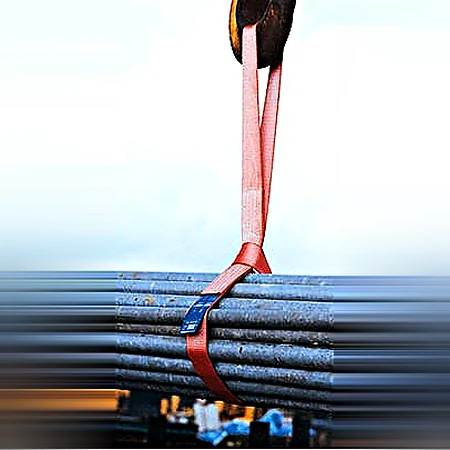
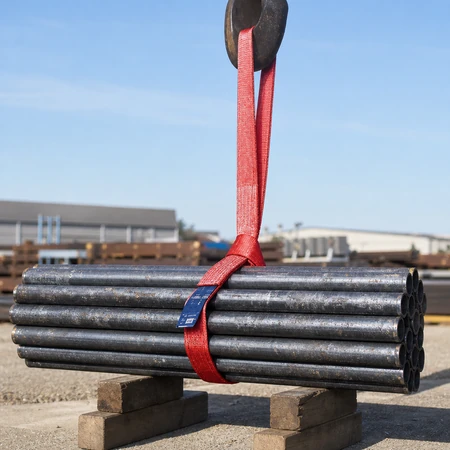
| Ti parun | 0.8 | The loop passes round the load and back through itself so it grips as it takes the weight. The natural way to pick up a section or a bundle — and it costs a fifth of the rating. |
| Agbọn, 0–7° | 2.0 | The loop passes under the load with both legs on the hook, legs within 7 degrees of vertical. |
| Agbọn, 7–45° | 1.4 | As the legs open out, ẹdọfu ni kọọkan ga soke ati awọn nkan elo agbara ṣubu. |
| Agbọn, 45–60° | 1.0 | Ni yi itankale agbọn yoo fun ko siwaju sii ju kan ni gígùn gbe soke. |
| Angled choke ni 45° | 0.7 | Ti parun, ati awọn ẹsẹ lẹhinna ṣii kuro lati inaro. A choke gbe taara pẹlẹpẹlẹ awọn kio ntọju 0.8. |
| Angled choke ni 60° | 0.5 | Eto ti o dinku pupọ julọ ni lilo wọpọ - ṣayẹwo nọmba yii ṣaaju gbigbe, kii ṣe lẹhin. |
Tabili 6 - Ipo ifosiwewe nipasẹ hitch tabi mode. Igun naa jẹ igun ẹsẹ si inaro.
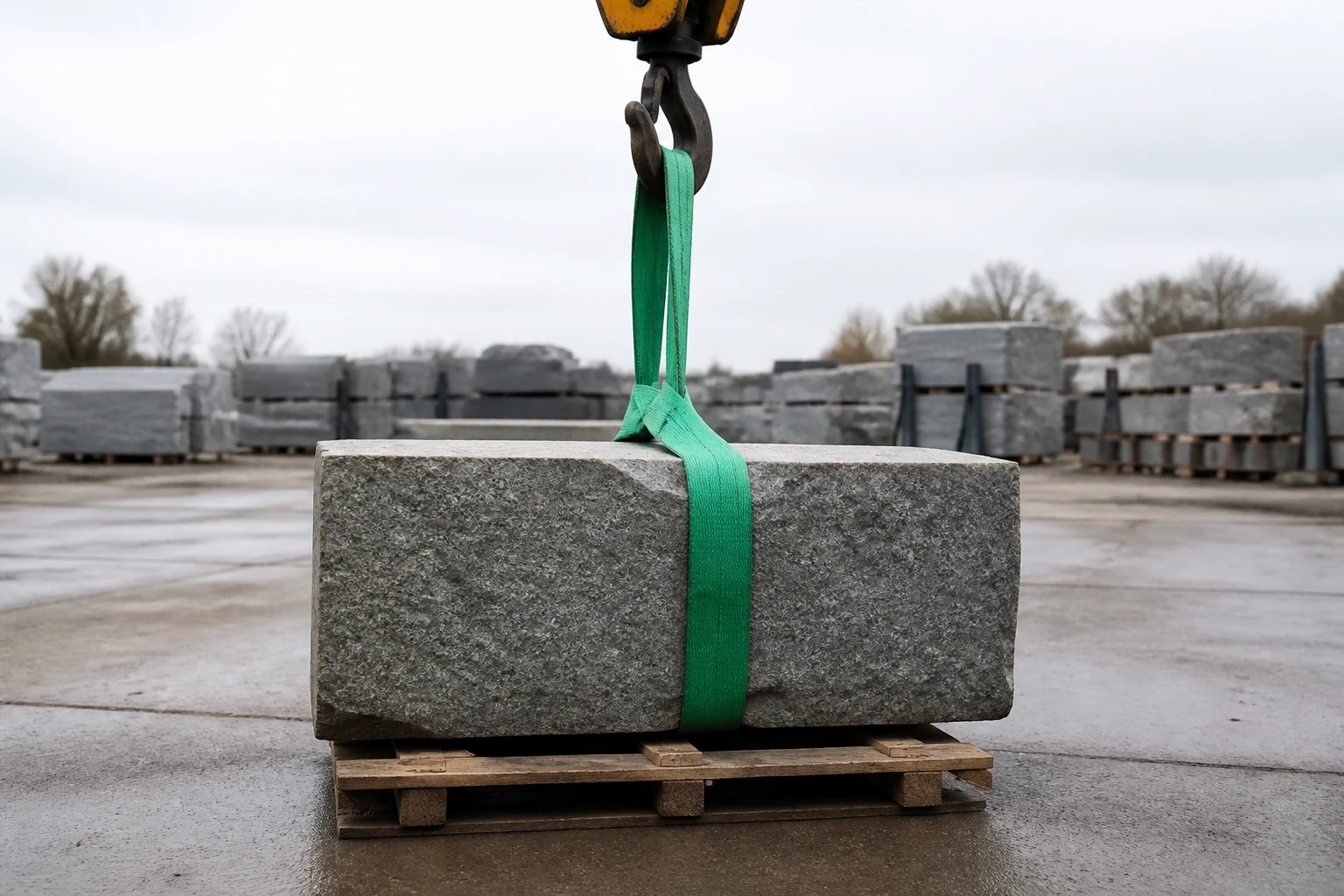
One habit applies to both families and is the cheapest thing you can do for sling life: rotate the loop after every lift, so that the section that was in the hook and the section that bore on the load move to new positions. Lori sling pẹlu awọn opin eyi ko ṣee ṣe. On an endless sling it costs nothing — and it is the single habit that decides whether the sling lasts one season or three.
Awọn ohun elo
- Awọn slings yika — pipe and pipeline work, coils and rolls, curved castings, machined and finished parts, pressure vessels, and any lift above the webbing capacity ladder.
- Flat webbing slings — plate, igbekale ruju, box girders, apoti, awọn igbaduro, ẹrọ, precast units and any flat or boxy load with edges.
- Bundles of tube, pipe and sections, choked or double wrapped.
- Agbala gbogbogbo, ibi ipamọ, ibudo ati ise ojula ibi ti ọkan sling ni o ni lati sin ọpọlọpọ awọn oriṣiriṣi gbe soke.
- Work where the same sling keeps wearing out at the same two points — the reason to move to an endless article in the first place.
- Cold stores and cold-climate work, down to −40 °C.
- tutu, damp and wash-down conditions, where a rust-free and rot-resistant sling is wanted.
- Export consignments and single-use shipments, where the sling travels with the cargo — see the nikan lilo ailopin webbing sling ati awọn ona kan sling ibiti o.
Edge Protection, Handling and Limitations
Edge damage destroys synthetic slings faster than load does, and it is preventable when it is specified rather than discovered. Ibi ti awọn fifuye ni o ni kan didasilẹ igun, ètè machined, a burr, a weld spatter tabi a ti o ni inira simẹnti ara, either the article is sleeved and the sleeve is part of it, tabi igun naa ni aabo pẹlu paadi ti o rin irin-ajo pẹlu sling. Fun iṣẹ paipu ni pato wo wa irin paipu gbígbé okun; where the figure is large and the band heavy, wo na eru ojuse ailopin gbígbé ayelujara slings.
Inspection — the two families are checked in opposite ways
Ailopin alapin webbing sling
- Apapọ ipele akọkọ. Gbogbo ila aranpo kọja gbogbo ipele, webbing ni igbese ni kọọkan opin ti awọn ipele, ati pe awọn fẹlẹfẹlẹ meji ti wa ni ṣi eke alapin ati ki o ni afiwe. Baje, ọlẹ tabi fa stitching lẹbi awọn sling.
- Awọn aaye gbigbe - gige, abrasion, glazing tabi a wọ eti ibi ti awọn iye ti a we èyà.
- Aaye olubasọrọ kio, ati ibi ti webbing agbo lori ara rẹ.
- Awọn iyokù ti awọn iye. Ẹgbẹ alapin kan gbe ẹru naa kọja gbogbo iwọn rẹ, ki a ge ni eyikeyi ojuami ọrọ.
- Awọn egbegbe — cuts from the load’s own corners are the classic flat webbing failure.
- Glazing ati lile - ẹgbẹ kan ti o danmeremere tabi lile ti pade ooru tabi ija ti o duro.
Ailopin yika sling
- Start with the sleeve, and accept its limits. Wa awọn gige, iho, abrasion, glazing and any place where the sleeve has worn thin enough to expose or threaten the core.
- Feel for the core. Run the loop through your hands looking for a lump, a flat spot, a soft section or a bulge — a sign the core has been damaged where you cannot see it.
- Look for a bulge at the ends of the sleeve and for any displacement of the core inside it.
- Check the label for legibility of the working load limit, the standard and the traceability code.
- Yiyi bi eto imulo, kii ṣe bi atunṣe. Yipada lupu lẹhin gbigbe kọọkan ki aaye gbigbe, the hook point and the closure keep moving. Turning it only once it is worn is too late.
- Keep the band flat and untwisted where you are using a flat webbing sling, and keep a lap joint out of the bearing area where the geometry allows.
- Protect against edges with webbing, and against heat with both.
- Maṣe ṣe atunṣe sling. Ko si aranpo, ko si splicing, ko si knotting. A knot in a webbing sling can lose half its capacity.
- Itaja mọ, gbẹ ati ki o jade ti orun, and never on a concrete floor where it can pick up grit.
- Ṣe igbasilẹ rẹ. Log the lifts, the hitches, awọn èyà ati eyikeyi bibajẹ, so a wear pattern is visible before it becomes a failure.
Akiyesi aabo: gbígbé mosi ni o wa inherently lewu. Nigbagbogbo tẹle awọn ilana ti olupese ẹrọ, iṣe ti ẹgbẹ alakoso orilẹ-ede rẹ, ati ikẹkọ ti o ti gba. Never exceed the working load limit for the configuration you are using — a straight lift, a choke ati agbọn ni o wa meta o yatọ si-wonsi lori kanna sling. A sound-looking sleeve on a round sling does not prove a sound core, and a bond that looks intact on a webbing lap does not prove the stitches are. Ti o ko ba ni idaniloju boya sling kan yẹ fun lilo, tabi eyi ti article jẹ ọtun fun fifuye rẹ, beere lọwọ wa ṣaaju ki o to gbe - ati pe ti o ba ni iyemeji, mu kuro ninu iṣẹ.
Isọdi, OEM ati Iṣakoso Didara
- Abala — the round sling, the flat webbing sling, or both for the same lift.
- Agbara — round slings 1 t lati 1000 t; alapin webbing slings 1 t lati 30 t ninu awọn boṣewa iye, and beyond to order.
- Gigun — by circumference or by effective working length, 1 m si 12 m bi bošewa ati ki o gun lori ìbéèrè.
- Fibre and construction - poliesita bi bošewa; polyamide for low temperature and shock loading; polypropylene for wet or mildly aggressive environments; nikan tabi ė Layer.
- Idaabobo - awọn oluṣọ eti, wọ awọn apa aso ati awọn paadi fun awọn aaye gbigbe.
- Siṣamisi — the standard capacity colour and stripes, tabi ero ti ara rẹ nibiti ọja gba laaye, pẹlu ifilelẹ aami rẹ, ede ati isiro.
- Matching items — the same lift supplied as a set, with the same standard and the same marking throughout.
Bii a ṣe mu eeya naa lori aami naa. Lift Sling Rigging Company was founded in 1985 and has been making rigging for 40 odun, pẹlu diẹ ẹ sii ju 200 awọn oṣiṣẹ ati awọn ọja okeere lododun ju USD lọ 10,260,000. A dimu 15 authorised patents and work to multiple international standards. We have our own stretching equipment and laboratory — including a 1000 t petele igbeyewo ẹrọ — and our facilities are CNAS ati CE ifọwọsi, pẹlu DNV iwe eri, so our test reports carry weight with classification and inspection bodies. Every length of material is checked before it is cut, every closure is checked on its stitch rows or its core, ati gbogbo sling ti o ti pari ni a ṣayẹwo lori ipari rẹ, its marking, its label and its traceability code before packing, with each batch tested. On request we supply the material certificate, awọn isiro idanwo ipele ati sling apẹẹrẹ fun ọ lati mu ati idanwo ṣaaju iṣelọpọ iwọn didun bẹrẹ.
Awọn ibeere Nigbagbogbo
What is an endless sling?
A sling closed into a continuous loop with no ends, no eyes and no fittings. Two different textile articles are sold under the name. The endless round sling is a parallel fibre core inside a woven tubular sleeve, itumọ ti si EN 1492-2, with a round section and no joint in the load-bearing core. The endless flat webbing sling is a flat woven band closed into a loop by lapping its ends over one another and stitching them, itumọ ti si EN 1492-1, with a rectangular section and exactly one joint. A third reading, the endless grommet wire rope sling, is a different material altogether.
Which one do I actually need — round or flat?
Match the section to the load. A yika sling conforms and grips round, curved and awkward loads and spreads its bearing over a narrow line — it is also the only one of the two that goes above the webbing capacity ladder, titi di 1000 t. A alapin webbing sling lies flat and spreads its bearing across the full band width, which is what you want on plate, awọn apakan, box girders and anything with a flat face or edges. If your load is round, take round. If your load is flat, take flat.
Is an endless webbing sling really seamless?
Rara, and it is worth being clear about it. It is endless in use — there are no ends and no fittings — but the loop is closed by a lapped and stitched joint, so there is one made connection in it. That joint is a full-strength lap with dense rows of stitching, ati pe o jẹ ohun akọkọ lati ṣayẹwo. If you need an endless sling with no joint at all in the load-bearing element, that is the round sling, where the core is continuous and only the outer sleeve is a tube.
Bawo ni MO ṣe pato ipari?
Say which convention your figure is in, because the two differ by about a factor of two. Ayika is the total perimeter of the loop — the length of material in the finished sling. Munadoko ṣiṣẹ ipari is the usable height you actually get, and it works out at roughly half the circumference because the loop is doubled when it hangs. If you would rather, just tell us how far the hook will be from the load and we will size the loop to it.
Elo ni o le gbe ni choke tabi agbọn kan?
The label gives the straight-lift working load limit. A choke din o si 0.8 igba ti isiro. A basket at a narrow angle increases it to 2 igba, ja bo si 1.4 igba laarin 7 ati 45 iwọn ati ki o si 1 igba laarin 45 ati 60 awọn iwọn. An angled choke — choked, with the legs then opening away from vertical — is reduced further, si 0.7 ni 45 iwọn ati ki o 0.5 ni 60 awọn iwọn. A 4 t fifuye ni a choker nilo a 5 t sling, nitori 4 ÷ 0.8 = 5.
Why is an endless sling supposed to last longer?
Because it has no fixed ends. On a sling with eyes, every lift loads the same two bearing points and the same two eyes, so the sling is condemned when those points wear out even if the rest of the article is sound. An endless loop can be turned after every lift, so the bearing point, the hook contact point and the closure keep moving around the material and the whole sling wears evenly. The catch is that it only works if you actually rotate it — if the same section always ends up in the hook, you get no benefit at all.
How do I inspect each one?
The two are inspected in opposite ways. A alapin webbing sling shows you its load path: check the lap joint and every stitch row first, then the bearing points, the hook contact area and the rest of the band, looking especially for cuts at the edges. A yika sling hides its load path: start with the sleeve for cuts, abrasion and thin spots, then feel along the loop for a lump, a flat spot or a bulge that would tell you the core has been damaged where you cannot see it. A sound-looking sleeve does not prove a sound core.
Can I get a custom capacity, section, ipari ati siṣamisi?
Bẹẹni. We build round slings from 1 t lati 1000 t and flat webbing slings across the EN 1492-1 band akaba, in any length to 12 m bi bošewa ati ki o gun lori ìbéèrè, ninu polyester, polyamide tabi polypropylene, with edge protection and wear sleeves to suit the load, and with the standard capacity marking or your own scheme where the market allows. So fun wa eru, its shape, the hitch and the destination market and we will work the specification out with you.
Jẹmọ Products
- Sling gbígbé ailopin — the full closed-loop family
- Ailopin yika sling — the round-section article with no joint in the core
- Sling ayelujara ailopin — the flat band with one lapped and stitched joint
- Ailopin iru webbing sling
- Ailopin alapin webbing sling
- Endless polyester flat webbing sling
- Eru ojuse ailopin gbígbé ayelujara slings
- Nikan lilo ailopin webbing Sling
- Irin paipu gbígbé okun
- Sling yika
- Webbing sling
- Ailopin grommet waya kijiya ti sling — the steel alternative
- The full product range
Request a Quote for an Endless Sling
Fi ẹru ati apẹrẹ rẹ ranṣẹ si wa, the hitch you intend to use, whether you are quoting circumference or working length, the capacity you need, ati awọn boṣewa ati ibi oja awọn sling gbọdọ wa ni itumọ ti si. Tell us round or flat if you already know — and if you do not, describe the load and we will tell you which one it wants. We will come back with an article, a capacity, ipari kan, a ayẹwo ati ki o kan factory-taara owo.
Gbe Sling Rigging Company - Lifute Industrial Park, Ilu Taizhou, Agbegbe Jiangsu, China. Tẹli: +86 523 8693 5818 | WhatsApp: +86 180 6600 2268 | Imeeli: 702461526@qq.com | HS koodu 630790