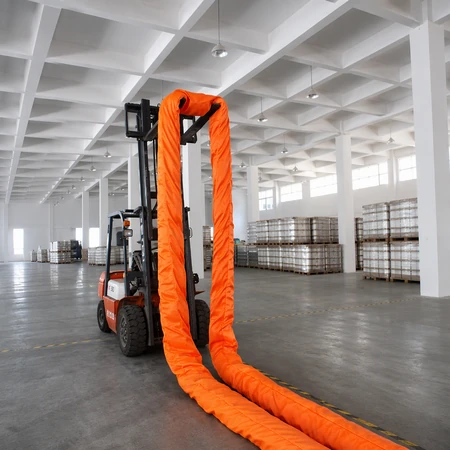
Hiki 'a e kautaha rigging 'o e sling 'oku nau ngaohi 'a e Sling takai 'oku 'ikai ngata.
Endless Round Sling — Closed-Loop Sling, 1–1000 t
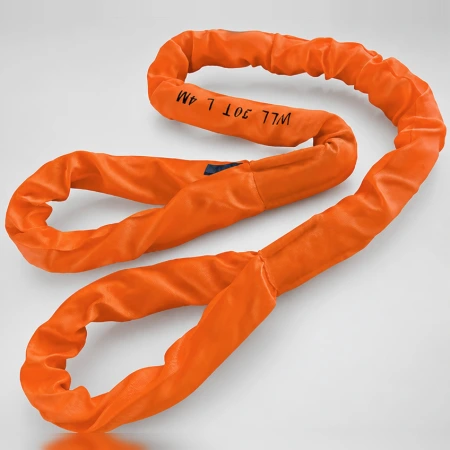
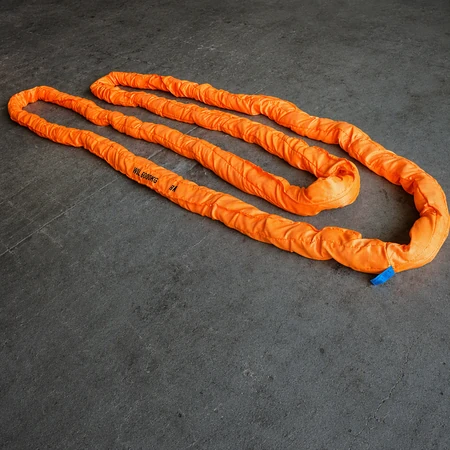
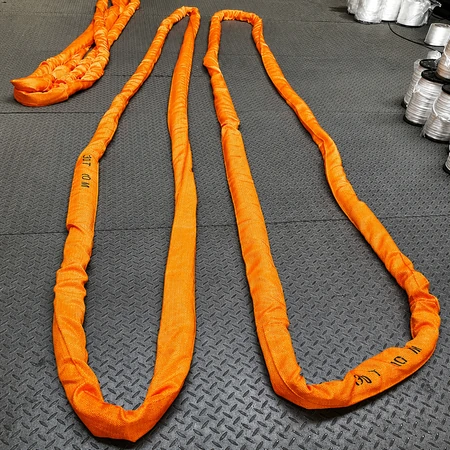
Ha sling takai ta'e ngata is a closed loop: the core runs continuously inside the sleeve and is closed on itself, so there is no eye, no thimble, no hook and no stitching anywhere in the load path. It is made in high-tenacity polyester across 27 LFTEERS articles, mei 1,000 kg ki he . 1,000,000 kg, in bodies from 0.5 m ki he . 80 m. Because the loop has no ends it can be turned, re-reeved and re-oriented after a lift — which is why it is the usual choice for basket and choke work on plant that must not be marked.
- Fakangatangata 'o e kavenga ngaue1,000 kg ki he . 1,000,000 kg
- Ngaahi fakamatala kehekeheLFTEERS-1 to LFTEERS-1000, 27 ngaahi lalahi
- Ngaahi tafa'aki 'o e sino15 × 50 mm a'u ki he 100. 610 × 1,060 mm
- Lōlōa0.5–80 m, effective or circumference
- Mamafa 'o e 'iuniti0.47 ki 226 kilo/m
- 'Ikai ha ukamea .Nothing on the sling touches the load
What “endless” changes for the rigger
Endless describes the construction of the loop, not the length of the article. Nothing is spliced, sewn or fitted into the load path, and four things follow on site.
- The loop has no direction. Both halves are the same article, so the sling can be turned end for end and re-reeved after a lift. In a basket the two legs are identical, which is not true of a sling with an eye at one end and a fitting at the other.
- Wear can be spread. The contact point moves as the sling is rotated along the loop, so the sleeve is not destroyed in one place while the rest of the body is new.
- There is nothing to mismatch. No eye has to be offered to a hook of the right shape, and no fitting has to be rated with the sling. The hook goes through the loop, or the loop goes round the load.
- The sleeve is the whole inspection. The core cannot be opened and looked at, ko ia ko e nima ko e matapa sio'ata: what it shows is what the core has been through.
Endless Round Sling specifications
| Koloa | Endless round sling — closed-loop polyester round sling, 1 t ki he . 1000 t |
|---|---|
| Fokotu'utu'u | Hokohoko atu 'a e uho 'o e filament fakafehoanaki 'i ha nima tubular lalanga, tāpuniʻi ki ha foʻi takai taʻe ngata .; no metal and no stitching in the load path |
| Tefito | High-tenacity polyester multifilament, lay fakafehoanaki, uakisi; UHMWPE or aramid to order |
| Nima 'o e sote pe kofu | Lalanga polyester ma'olunga-fefeka, tu'unga 'o e la'i 'e taha; nima ua ke 'ota |
| Fakangatangata 'o e kavenga ngaue | 1,000 kg ki he . 1,000,000 kg, va'e 'e taha 'oku tu'u hangatonu — 27 ngaahi fakamatala, LFTEERS-1 to LFTEERS-1000 |
| Motuhi 'a e kavenga | 7 × working load limit |
| Ko e meʻa malu | 7:1 ko e tu'unga; 5:1 to order for markets working to ASME B30.9 |
| Fakaloloa 'i he WLL . | Approximately 2–3 % |
| Mafana 'o e ngaue | −40 °C ki he . +100 °C, uho poliesita |
| Lōlōa | 0.5 m ki he . 80 m; minimum rises with the article, maximum is 80 m in every size |
| Lanu | Sitoka moli pe lanu pulu .; ʻI LOTO 1492-2 capacity colour applied when the order asks for the standard code |
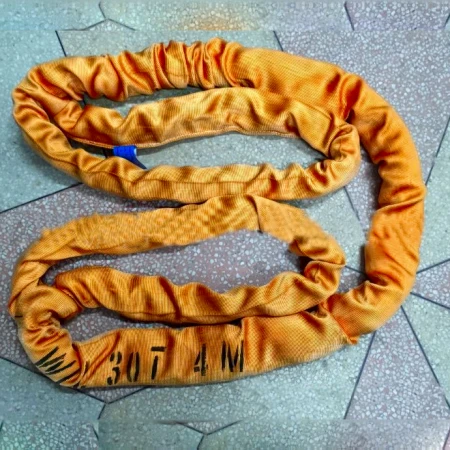
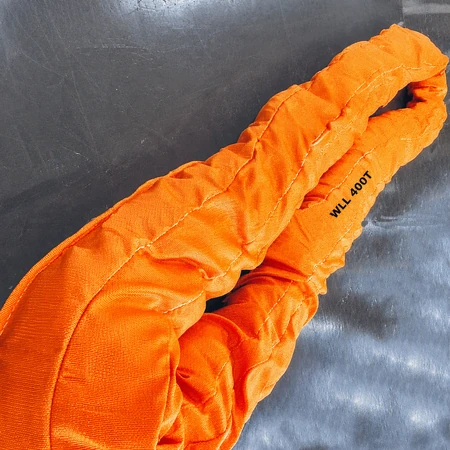
| Faka'ilonga'i | Working load limit and length printed on the sleeve; tuitui 'a e faka'ilonga mo e WLL ., lōlōa, fika hokohoko mo e tu'unga |
| Sivi | Fakamo'oni 'oku uta kimu'a pea toki 'ave; lekooti sivi 'oku fakafehoanaki ki he fika hokohoko |
| Fakapaaki | Coiled 'i ha kato poly ., kato kuo fakahingoa; paleti pe puha 'i he kole |
| Kouti HS | 630790 — hiki hake 'a e ngaahi slings 'o e ngaahi naunau tupenu . |
| MOQ / OEM | MOQ ma'ulalo ki ha 'ota 'ahi'ahi .; OEM 'i he loloa ., lanu nima, fio uho, fokotu'utu'u 'o e leipa mo e fakafonu |
Ngaahi fakamatala kehekehe: fili 'a e sipinga .
The article number carries the capacity — LFTEERS-10 is the 10,000 kg sling, LFTEERS-100 the 100,000 kg taha. Ko e matolu mo e laulahi 'oku ne fakamatala'i 'a e sino ., the two length columns give the shortest and longest body made in that article, and the unit weight is what you add to the crane load.
| Art.Fika. | WLL (kg) | WLL (t) | Matolu (mm) | Maokupu (mm) | Min (m) | Max (m) | Mamafa (kilo/m) |
|---|---|---|---|---|---|---|---|
| LFTEERS-1 | 1,000 | 1 | 15 | 50 | 0.5 | 80 | 0.47 |
| LFTEERS-2 | 2,000 | 2 | 16 | 60 | 0.5 | 80 | 0.60 |
| LFTEERS-3 | 3,000 | 3 | 18 | 70 | 0.5 | 80 | 0.82 |
| LFTEERS-4 | 4,000 | 4 | 20 | 75 | 0.5 | 80 | 1.20 |
| LFTEERS-5 | 5,000 | 5 | 25 | 80 | 0.5 | 80 | 1.47 |
| LFTEERS-6 | 6,000 | 6 | 27 | 90 | 1.0 | 80 | 1.70 |
| LFTEERS-8 | 8,000 | 8 | 28 | 100 | 1.0 | 80 | 2.20 |
| LFTEERS-10 | 10,000 | 10 | 29 | 110 | 2.0 | 80 | 3.00 |
| LFTEERS-12 | 12,000 | 12 | 30 | 125 | 2.0 | 80 | 3.40 |
| LFTEERS-15 | 15,000 | 15 | 31 | 150 | 2.0 | 80 | 4.00 |
| LFTEERS-20 | 20,000 | 20 | 32 | 180 | 2.5 | 80 | 5.60 |
| LFTEERS-25 | 25,000 | 25 | 34 | 200 | 2.5 | 80 | 6.80 |
| LFTEERS-30 | 30,000 | 30 | 68 | 220 | 2.5 | 80 | 8.20 |
| LFTEERS-40 | 40,000 | 40 | 75 | 250 | 2.5 | 80 | 10.9 |
| LFTEERS-50 | 50,000 | 50 | 86 | 270 | 2.5 | 80 | 13.8 |
| LFTEERS-60 | 60,000 | 60 | 126 | 280 | 4.0 | 80 | 16.6 |
| LFTEERS-80 | 80,000 | 80 | 138 | 300 | 4.0 | 80 | 22.0 |
| LFTEERS-100 | 100,000 | 100 | 152 | 320 | 4.0 | 80 | 27.0 |
| LFTEERS-200 | 200,000 | 200 | 230 | 460 | 5.0 | 80 | 66.0 |
| LFTEERS-300 | 300,000 | 300 | 310 | 535 | 5.0 | 80 | 82.0 |
| LFTEERS-400 | 400,000 | 400 | 380 | 680 | 5.0 | 80 | 98.0 |
| LFTEERS-500 | 500,000 | 500 | 410 | 760 | 8.0 | 80 | 116.0 |
| LFTEERS-600 | 600,000 | 600 | 460 | 830 | 8.0 | 80 | 139.0 |
| LFTEERS-700 | 700,000 | 700 | 498 | 880 | 8.0 | 80 | 155.0 |
| LFTEERS-800 | 800,000 | 800 | 520 | 940 | 9.0 | 80 | 178.0 |
| LFTEERS-900 | 900,000 | 900 | 580 | 1,000 | 9.0 | 80 | 202.0 |
| LFTEERS-1000 | 1,000,000 | 1,000 | 610 | 1,060 | 9.0 | 80 | 226.0 |
The series code is shown as supplied on the factory sheet. In that sheet the 20,000 kg article carries the code LFTEERS-15 for a second time; it is shown here as LFTEERS-20 so that the code matches the capacity ladder. Thickness and width are the body dimensions specified for the article, and the minimum length is the shortest body that can be closed and sleeved at that capacity. If your price list uses a different prefix, replace it across the table — the rest of the code is the capacity.
Capacity changes with the hitch, not with the tonnage on the sleeve
The figure printed on the sleeve is the working load limit of one leg hanging vertically. It is the number the sling is proof loaded against, and the starting point of a lifting plan — not the tonnage it will pick up in the arrangement you are actually using. Apply the factor for the hitch, and remember that a set of legs is calculated on fewer legs than it has, koe'uhi ko ha kavenga mo'oni 'oku 'ikai 'aupito ke tangutu haohaoa symmetrically ..
| Fokotu'utu'u | Fakatupunga | 5 t sling | 20 t sling |
|---|---|---|---|
| Ko e sling 'e taha ., hangatonu | × 1.0 | 5.0 t | 20.0 t |
| Ko e sling 'e taha ., kafo | × 0.8 | 4.0 t | 16.0 t |
| Ko e sling 'e taha ., basket 0–7° | × 2.0 | 10.0 t | 40.0 t |
| Ko e sling 'e taha ., basket 7–45° | × 1.4 | 7.0 t | 28.0 t |
| Ko e sling 'e taha ., basket 45–60° | × 1.0 | 5.0 t | 20.0 t |
| Va'e 'e ua ., 0–45° mei he tu’u hangatonu | × 1.4 | 7.0 t | 28.0 t |
| Va'e 'e ua ., 45–60° mei he tu’u hangatonu | × 1.0 | 5.0 t | 20.0 t |
| Vaʻe ʻe fā ., 0–45° mei he tu’u hangatonu | × 2.1 | 10.5 t | 42.0 t |
| Vaʻe ʻe fā ., 45–60° mei he tu’u hangatonu | × 1.5 | 7.5 t | 30.0 t |
Two lines in that table settle most orders. ʻuluaki, ua 5 t slings 'oku 'ikai ke nau ngaohi ha . 10 t seti: at 0–45° from vertical they carry 7 t together, and past 45° they carry 5 t. Fika ua, a four-leg set is worked on three legs, which is why the factor is 2.1 pea ʻikai . 2.8. Where the capacity is close to the limit, the honest answer is usually a pou hiki rather than a bigger sling — keeping the legs vertical recovers the factor that an open leg angle has just spent.
Lōlōa: loloa pe takai 'oku ola lelei
Ko e fo'i hele ta'e ngata 'oku 'ikai hano ngata'anga ., ko ia ko hono lōloá ‘e lava ke lave ki ai ‘i ha founga ‘e ua ., a factor of two apart. This is the most common ordering error on a round sling and the most expensive to correct, because the sling has to be remade rather than adjusted.
| Naʻe lave ki ai ko e . | Ko e me'a 'oku ke ma'u . | Faka'aonga'i ki he . | Fakatātā |
|---|---|---|---|
| Loloa ngaue ola lelei . | Ko e vaeua 'o e takai — hook hifo ki he kavenga pea foki ki 'olunga . | Ngaahi hiki tu'u mo e choked ., 'a ia 'oku 'ilo'i ai 'a e ma'olunga tautau . | 4 m EWL = 8 m loop |
| Takai | Ko e loloa 'o e loop kakato . | Ngaahi hiki kato, 'a ia 'oku faka'uli ai 'e he girth 'o e kavenga 'a e loloa . | 8 m loop = 4 m EWL |
On the slings we supply the figure printed on the sleeve is the loloa ola lelei, ko ia ‘oku feongoongoi ma‘u pē ‘a e pulusí mo e kupu‘i leá .. Mo ha kato ., fua 'a e girth 'o e kavenga ., tanaki atu 'a e headroom ki he matau ., pea lave ki he fika ko iá .: 'oku to'o 'e he sino 'a e hala loloa 'o takai 'i he kavenga ., and a sling that only just reaches forces the legs wide — the same as buying a smaller sling.
Where an endless loop earns its place
- Precast ngaahi pou mo e ngaahi konga 'o e halafakakavakava . picked in a basket at each end, where the sleeve protects the formed face and the chamfer.
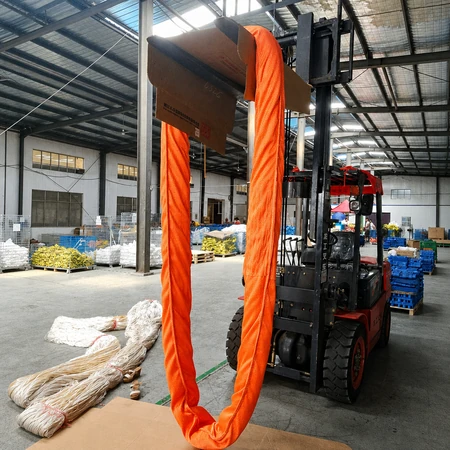
- Steel coils sitting in a basket, where the doubled body gives twice the vertical capacity and follows the curve of the coil instead of bearing on one line.
- Ngaahi meʻa liliu, generators and machine beds with small trunnions and painted surfaces — nothing metal touches the load.
- Moulds and dies whose lifting holes are drilled, not designed for a fitting, so a soft loop threaded through the hole is the whole method.
- Skids, frames and offshore baskets choked at each corner with 6–12 m bodies, the sleeve taking the corner abrasion so the core does not.
- Stage and studio work around truss and set pieces where a scratch is a re-spray.
Taʻe ngata, eye-eye or flat webbing
| Tu'unga | Sling takai ta'e ngata . | Mata-mata takai sling . | Flat endless webbing sling |
|---|---|---|---|
| Fetu'utaki mo e uta . | Round body, conforms to curves and corners | Round body with two loaded eyes | Fofonga palakū fōlahi, spreads pressure over an area |
| Lōlōa | Set by the loop; either convention can be quoted | Fixed between the eyes | Set by the sewn loop |
| Load path | Hokohoko, no termination | Hokohoko atu 'a e uho ., eyes formed by the sleeve | Sewn join in the loop |
| Reeving | Can be turned and re-reeved after a lift | One orientation only | Can be turned, but the join takes the wear |
| Lelei taha ki he | Ngaue kato mo e choke ., awkward plant, sino loloa . | Repeated lifts on the same two points | Fā lahi, flat and easily marked loads |
None of the three replaces another. For a fixed length and two known pick-up points see the eye-eye round sling; for a wide face and a visible load path see the sling uepi palakū ta'e ngata. Both round sling forms are built from the same core and sleeve, so the choice is a rigging decision rather than a capacity one. For hard service the sling takai nima ua tanaki atu ha layer tui hono ua 'i he tu'unga tatau ., for weight-critical work there is a UHMWPE 'a e 'aofi takai tefito, and for hot loads an sling takai 'alamiti.
Sivi mo e malolo .
'Oku 'ikai lava ke sio ki he uho ., so the sleeve is the record of what the sling has been through. Siviʻi kimuʻa pea toki fakaʻaongaʻi kotoa pē ., pea formally 'i he vaha'a taimi 'oku fie ma'u 'e ho'o pule'anga ..
- Check the full length of the sleeve for cuts, snags, sio'ata, melts mo e faka'uli kemikale ., and open the sleeve at the join if anything looks wrong.
- Read the print and the label. If the working load limit or the length can no longer be read, the sling cannot be verified and comes out of service.
- Ongo'i 'a e grit 'i loto 'i he nima .; 'oku ne abrades 'a e uho mei loto hili ha taimi fuoloa mei hono tafi 'o e loto'aa ..
- Retire on any cut or hole that exposes the core, sio'ata vela, ko ha uho kuo 'alu 'o fefeka pe lumpy ., 'ohofi fakakemikale, pe ko ha fakaʻilonga ʻoku puli ..
- Falekoloa coiled mo e 'ikai 'i he faliki ., mei he maama 'o e 'aho pea mama'o mei he vela ., ngaahi me'a fakamokomoko mo e spatter 'o e weld. Never store a sling wet in a closed bag.
- 'Oua 'aupito na'a ke toho ha sling kuo uta ki he tafa'aki ., and never lift on a damaged sleeve.
Ngaahi fehu'i 'oku toutou 'eke .
What is the difference between an endless round sling and a round sling with eyes?
An endless round sling is a closed loop with no termination: the core runs continuously inside the sleeve and nothing is spliced or sewn into the load path. HA fuopotopoto takai mo e mata . has two defined eyes at a fixed distance, so its length is set by the eyes and it works in one orientation.
Is the length the circumference or the effective length?
Both are used and they differ by a factor of two. Effective length is half the loop — hook down to the load and back up. Circumference is the full loop. HA 4 m loloa ola lelei ko e . 8 m loop, so the convention has to be stated on the order.
How much capacity is lost in a choker?
A choked endless round sling is rated at 0.8 of its vertical working load limit, ko ia ko ha 5 t sling 'oku ne 'oatu . 4 t. A basket raises the figure to 2.0 at 0–7°, 1.4 at 7–45° and 1.0 at 45–60°. A four-leg set is calculated on three legs, giving 2.1 at 0–45° from vertical and 1.5 at 45–60°.
What does LFTEERS-10 mean?
Ko e fika 'o e fakamatala ko e fakangatangata 'o e kavenga ngaue 'i he toni .: LFTEERS-10 is 10,000 kg fakahangatonu, LFTEERS-100 is 100,000 kg and LFTEERS-1000 is 1,000,000 kg. Ko e 'atakai 'oku muimui ki he . 1-2-3-4-5-6-8-10-12-15-20-25-30-40-50-60-80-100-200-300-400-500-600-700-800-900-1000 tu'unga, so there is no 7 t, 9 t pe . 11 t fakamatala.
How heavy is a long endless sling?
The last column of the article table is the weight per metre: 0.47 kg/m at LFTEERS-1, 3.00 kg/m at LFTEERS-10 and 226 kg/m at LFTEERS-1000. Multiply by the loop length and add the label and packing to get the figure to put against the crane. Where that number is a problem, a UHMWPE core gives the same capacity at a fraction of the weight.
Can the same sling be used in a basket and a choke?
ʻIo, and that is one of the reasons for the endless form: the same article goes round the load either way. What changes is the working figure, so the rating has to be recalculated for the hitch actually used.
How is the sling tested and documented?
Each sling is proof loaded before dispatch and the test record is matched to the serial number on the sewn label. Breaking load is 7 × the working load limit, and the factor can be varied to order where the market requires it.
Request an endless round sling quotation
Fekau'i atu 'a e kavenga ki he va'e ., the hitch and the leg angle, the distance between pick-up points and the headroom to the hook — plus the length convention and any marking or documentation your site requires. We will confirm capacity, loloa mo e nima, pea quote fale ngaohi'anga-fakahangatonu mo ha fakatata ., a proof-load record and a sample. Vakai ki he . full round sling range for the rest of the series.
Ma'u ha quote ta'etotongi mo ha sipinga .