

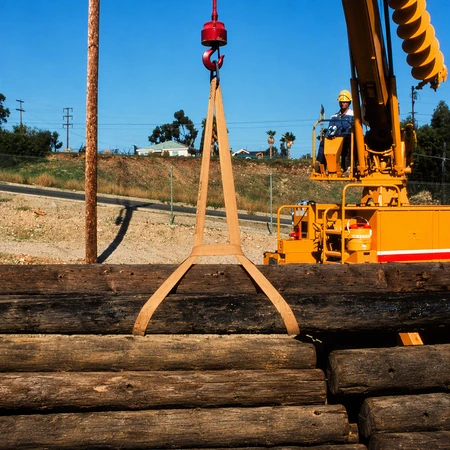
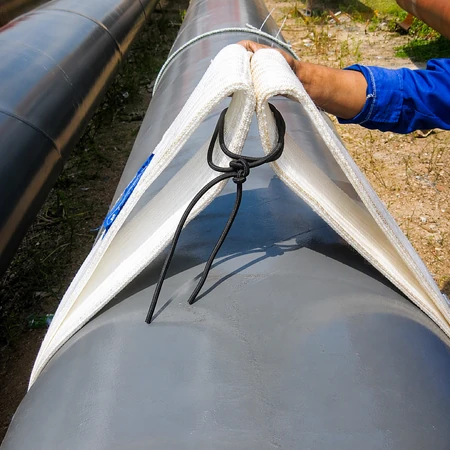
Khampani ea li-sling rigging e hlahisa mofuta o sa feleng oa Webbing Sling.
Endless Type Webbing Sling
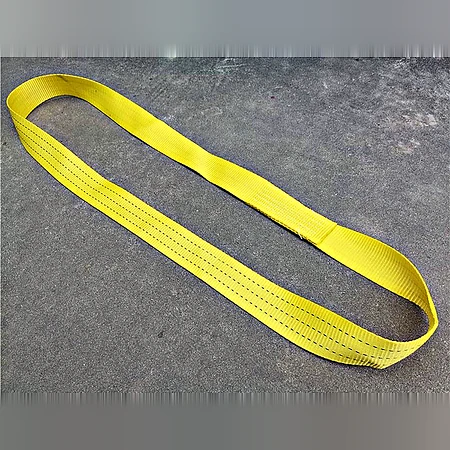
An endless type webbing sling is the form with no ends at all: a length of flat woven webbing is lapped back over itself and stitched to close the loop, so what comes off the shelf is one continuous band with no eyes to hook and no fittings to lose. Tlas'a EN 1492-1 it is the mofuta o sa feleng oa A letjeketjane le lohiloeng le sephara, e entsoeng ka lera le le leng kapa tse peli tsa tepo, rated from 1 t ho 24 t moeli oa mojaro o sebetsang. Because nothing is fixed on it, the loop can be turned after every lift, so the wear point, the hook contact point and the joint keep moving instead of staying in one place.
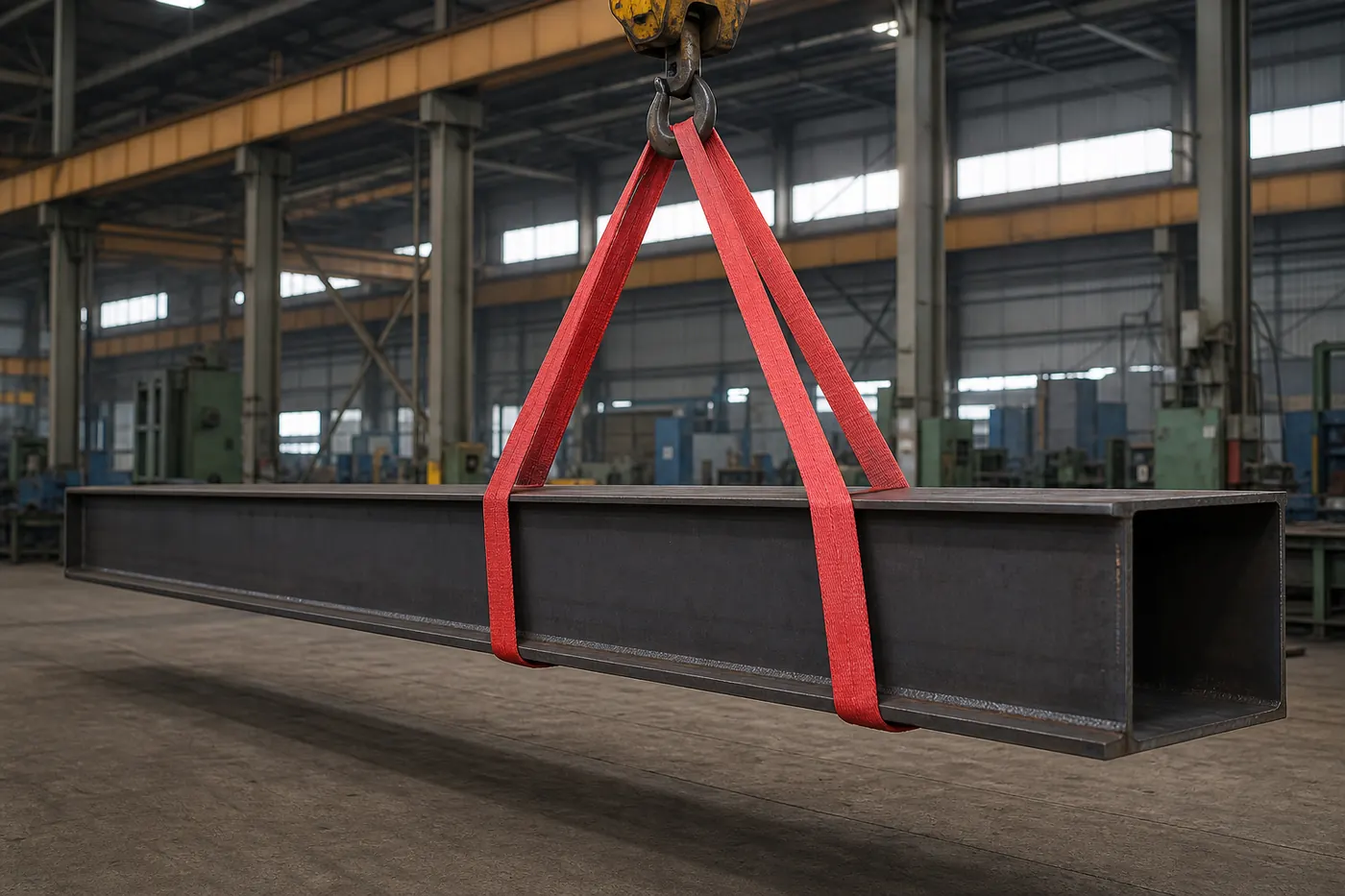
Endless Means One Joint, Not None
“E sa feleng” is used loosely in the trade, and it is worth being precise, because two very different articles answer to the word. This sling is endless in use — no ends, no fittings — but it is not seamless. It has exactly one joint: the lap where the two ends are laid over each other and closed across the full width by several dense rows of stitching, built to carry the rated load.
That single fact decides how the sling is used and inspected. The lap is the one place where the load passes through a made connection, so it earns the first thirty seconds of every inspection — every stitch row, the step at each end of the lap, and whether the two layers still lie flat and parallel. It can also be rotated out of the bearing area and out of the hook contact area, so it is not repeatedly crushed in the same spot. If you need a loop with no joint in the load path at all, ke eona letjeketjane le sa feleng, where the core is continuous and only the sleeve is a tube.
Litlhaloso tsa Tekheniki
| Paramethara | Tlhaloso |
|---|---|
| Sehlahisoa | Mofuta o sa feleng oa letjeketjane la tepo / endless type/ Letjaka le lohiloeng le bataletseng / letjeketjane la tepo |
| Standard | IN 1492-1 (7:1 letoto); AS 1353 referenced for Australian supply |
| Lintho tse bonahalang | 100% polyester e phahameng haholo; polyamide and polypropylene on request |
| WLL range | 1 t – 12 t single ply standard; 2 t – 24 t double ply; multi-ply to 50 t ka kopo |
| Ntlha ea moralo | 7:1 pedi NTWE 1492-1; 6:1 le 8:1 engineered to specification |
| Ply | Ply e le 'ngoe (7.5 limilimithara tse tepo) joalo ka maemo; habedi ply (2 × 7.5 mm = 15 mm) ka kopo |
| Bophara ba tepo | 25 mm – 300 mm, matched to the band |
| Bolelele | Quoted by circumference or by effective working length; standard to 12 m, tloaelo ho fihlela 200 m |
| Elongation | Max 3% ho WLL; max 10% at breaking load |
| Mocheso | -40 °C ho +100 °C (polyester) |
| Ho tshwaya | IN 1492-1 mmala wa bokgoni, one black stripe per tonne, sewn label: SEBELE, thepa, maemo, moetsi, bolelele, batch code |
| Wear protection | Reinforced sleeves or coatings at wear points |
| Litokomane | Sehlopha sa MTC, test reports and DoC with each shipment; CE to 2006/42/EC on the 7:1 letoto |
| Ho paka | PE bag, lebokose, pallet; linyeoe tsa mapolanka bakeng sa lihlopha tse boima kapa tse ngata tsa maoto |
Standard Sizes – Ply e le 'ngoe
Seven-and-a-half millimetre polyester webbing, one layer. Pick by the vertical WLL you need, then read across for the width, the minimum length and the weight per metre.
| Mohlala | Mmala | WLL e otlolohileng | WLL choker | WLL baskete | Bophara | Botenya | Bolelele ba bonyane | Boima ba 'mele |
|---|---|---|---|---|---|---|---|---|
| EWS-1T | Violet | 1,000 kg | 800 kg | 2,000 kg | 30 mm | 7.5 mm | 1.1 m | 0.22 kg/m |
| EWS-2T | Botala | 2,000 kg | 1,600 kg | 4,000 kg | 60 mm | 7.5 mm | 1.2 m | 0.45 kg/m |
| EWS-3T | Bosehla | 3,000 kg | 2,400 kg | 6,000 kg | 90 mm | 7.5 mm | 1.3 m | 0.71 kg/m |
| EWS-4T | Hlooho | 4,000 kg | 3,200 kg | 8,000 kg | 120 mm | 7.5 mm | 1.4 m | 1.02 kg/m |
| EWS-5T | Khubedu | 5,000 kg | 4,000 kg | 10,000 kg | 150 mm | 7.5 mm | 2 m | 1.21 kg/m |
| EWS-6T | Brown | 6,000 kg | 4,800 kg | 12,000 kg | 180 mm | 7.5 mm | 2 m | 1.42 kg/m |
| EWS-8T | Putsoa | 8,000 kg | 6,400 kg | 16,000 kg | 240 mm | 7.5 mm | 2 m | 1.89 kg/m |
| EWS-10T | namunu | 10,000 kg | 8,000 kg | 20,000 kg | 300 mm | 7.5 mm | 3 m | 2.34 kg/m |
| EWS-12T | – | 12,000 kg | 9,600 kg | 24,000 kg | 300 mm | 7.5 mm | 3 m | 2.98 kg/m |
Standard Sizes – Habeli Ply
Tse peli 7.5 mm plies sewn into a 15 mm e kopane. Double ply buys capacity at the same width, and a band that resists cutting and abrasion better — which is why it is specified where the sling runs over an edge or does repeated choker work.
| Mohlala | Mmala | WLL e otlolohileng | WLL choker | WLL baskete | Bophara | Botenya | Bolelele ba bonyane | Boima ba 'mele |
|---|---|---|---|---|---|---|---|---|
| EWSD-2T | Botala | 2,000 kg | 1,600 kg | 4,000 kg | 30 mm | 15 mm | 1.5 m | 0.50 kg/m |
| EWSD-4T | Hlooho | 4,000 kg | 3,200 kg | 8,000 kg | 60 mm | 15 mm | 1.5 m | 0.86 kg/m |
| EWSD-6T | Brown | 6,000 kg | 4,800 kg | 12,000 kg | 90 mm | 15 mm | 1.5 m | 1.50 kg/m |
| EWSD-8T | Putsoa | 8,000 kg | 6,400 kg | 16,000 kg | 120 mm | 15 mm | 2 m | 1.96 kg/m |
| EWSD-10T | namunu | 10,000 kg | 8,000 kg | 20,000 kg | 150 mm | 15 mm | 2 m | 2.62 kg/m |
| EWSD-12T | – | 12,000 kg | 9,600 kg | 24,000 kg | 180 mm | 15 mm | 3 m | 2.86 kg/m |
| EWSD-16T | – | 16,000 kg | 12,800 kg | 32,000 kg | 240 mm | 15 mm | 3 m | 4.10 kg/m |
| EWSD-20T | – | 20,000 kg | 16,000 kg | 40,000 kg | 300 mm | 15 mm | 3 m | 5.46 kg/m |
| EWSD-24T | – | 24,000 kg | 19,200 kg | 48,000 kg | 300 mm | 15 mm | 3 m | 6.10 kg/m |
WLL ea ho qetela e thehiloe bakeng sa kaho e felletseng ea letjeketjane, stitching and rated configuration. Litekanyo li bua ka 'mele o tloaelehileng oa letjeketjane; the optional protective sleeve increases the outer dimension slightly. Bolelele bo bolelele le bokhoni bo phahameng bo etselitsoe ho odara. Ka holimo 10 ke EN 1492-1 colour code no longer applies — the label and the black stripes govern.
Colour and Stripes – What the Marking Certifies
The webbing colour certifies one thing only: sehlopha sa moeli oa mosebetsi, ka phahamiso e otlolohileng. It says nothing about the material, bolelele, ntlha ya polokeho kapa boemo ba letjeketjane. Alongside it, one black transverse stripe per tonne lets the two markings be cross-checked. The label colour is separate again and tells you the fibre: blue for polyester, botala bakeng sa polyamide, brown for polypropylene — so green webbing is a 2 t band while a green label means nylon.
Hitch Mode Factors
The label figure is the straight lift. Every other arrangement is derived from it, and these factors reduce it — a basket does not give the sling a second, higher rating, it puts two parts of the same webbing into the load path.
| Khothatsa | Boemo ba mokhoa | Ka tshebetso |
|---|---|---|
| Phahamiso e otlolohileng | 1.0 | Setšoantšo sa label; loop hangs as a U, both parts on the hook |
| Qhetsoe | 0.8 | Loop passes round the load and back through itself — a 4 t load hloka a 5 t tjeka |
| Baskete, legs 0-7° | 2.0 | Two parts share the load, maoto a pela tse otlolohileng |
| Baskete, legs 7-45° | 1.4 | Tension rises as the legs open out |
| Baskete, maoto 45-60 ° | 1.0 | No more than a straight lift at this spread |
| Angled choke, 45° | 0.7 | Qhetsoe, with the legs opening away from vertical |
| Angled choke, 60° | 0.5 | The most heavily reduced arrangement in common use |
Ho Hlalosa Bolelele
Lejoe le sa feleng ha le na meeli ea ho lekanya pakeng tsa, so it is quoted one of two ways — and the two differ by about a factor of two, which is the commonest reason a sling arrives at the wrong length. Circumference is the total perimeter, i.e. the webbing in the finished sling. Bolelele bo sebetsang bo sebetsang ke bolelele bo ka sebelisoang boo o bo fumanang, roughly half the circumference, hobane sekgoqetsane se menahane habedi ha se leketla.
| Sedikadikwe se laetswe | Hoo e ka bang. working length | Tšebeliso e tloaelehileng |
|---|---|---|
| 2 m | 1 m | Ho chokes le li-lifti tse khutšoane, ho ribetsa ka thata |
| 4 m | 2 m | Boholo ba morero-kakaretso |
| 6 m | 3 m | Libaskete li phahamisa limela le lihlahisoa |
| 8 m | 4 m | Likarolo tse telele, dingata le lipeipi |
| 10 m | 5 m | Sebopeho le semela se seholo |
| 12 m | 6 m | Tekanyetso e telele ka ho fetisisa; nako e telele ho laela |
The relationship is the point, not the exact figure: it depends on ply, band thickness and bend radius. State which convention your number is in, or simply give the distance from hook to load and we will size the loop to it.
Endless or Eye and Eye?
| Thepa | Mofuta o sa feleng | Leihlo le mahlo |
|---|---|---|
| E qetella | Ha ho letho - lupu e le 'ngoe e tsoelang pele | Mahlo a mabeli a bataletseng, e le nngwe pheletsong ka nngwe |
| Bolelele | Not fixed; e ka phetoa habeli kapa ea nkeloa holimo ke mothinya o mong | Fixed between two pick-up points |
| Apara lintlha | None fixed — the whole loop rotates | The same two bearing points and eyes |
| Bophelo ba tšebeletso | Nako e telele, because wear and the joint move around the loop | E nyatseha ha lintlha tse tsitsitseng li felile |
| Molemo ka ho fetisisa bakeng sa | Lilifi tse khangoang, mangata, mosebetsi o akaretsang wa jarete le setsha | Lifts with defined, repeated pick-up points |
Most sites carry both. If the method statement has to state where the sling attaches, the letjeketjane la mahlo le mahlo e hlakisa seo; if crews rig whatever is in front of them, mofuta o sa feleng ke sengoloa se molemo ka kakaretso.
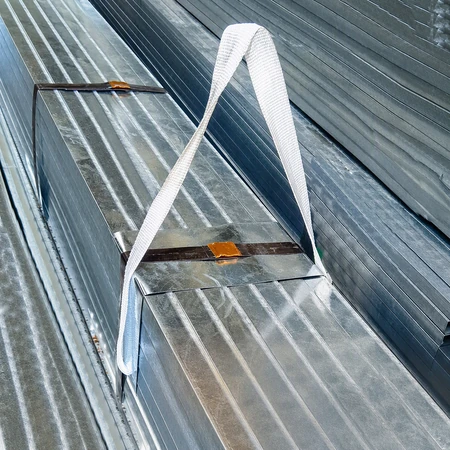
Ho tshoara, Inspection and the Rotation Habit
An endless sling is easier to inspect than a round sling, hobane tsela ea mojaro ke marang-rang ka boeona mme ntho e 'ngoe le e' ngoe eo u hlokang ho e bona e holim'a metsi. Work through it in this order.
- Motsoako oa liropeng pele - mola o mong le o mong, the step at each end, and whether the two layers still lie flat and parallel. E robehile, ho roka e monyebe kapa ho huloa ho nyatsa letjeketjane.
- Lintlha tse behang where the band has wrapped on loads — cuts, ho khopa, qhoqhoa, a worn edge.
- Sebaka sa ho kopana le hook, where the loop sits in the hook bowl and folds over itself.
- Sehlopha sohle — a flat band carries load across its full width, kahoo ho khaola kae kapa kae ho bohlokoa.
- Heat and chemical damage — shiny, stiff or discoloured fibre means it has met heat, khohlano, acid or solvent.
Fetola joalo ka leano, eseng joalo ka tokiso: turn the loop after every lift so the bearing point, ntlha ya hook le lenonyeletso di nne di tsamaye. Keep the band flat and untwisted — a flat sling twisted into a rope concentrates the load on one edge and loses the contact area that is its whole advantage. Protect the band at edges and keep it within -40 °C ho +100 °C, away from weld spatter.
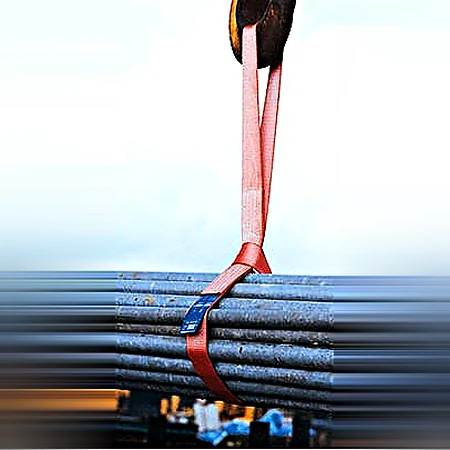
Lisebelisoa
- Choked lifts on structural steel, maballo le lintho tse entsoeng ka welded
- Baskete e phahamisa semela, mechine, skids, ho shoa le ho lahla
- Li-tubes tse ngata, phala le likarolo, khangoa kapa se phuthetsoe habeli
- Liyuniti tsa konkreite tse entsoeng esale pele moo ho nang le folete, e batsi e batloang
- Kereiti, lihlahisoa le lintho tse entsoeng ka mabokose; general yard and depot work
- Cold stores and cold-climate work down to -40 °C; wet conditions where a rust-free sling is wanted
For hot loads or sharp, unpadded edges the polyester build is the wrong choice — see the mocheso o phahameng oa tepo letjeketjane or a wire rope sling instead.
Lipotso Tse Botsoang Hangata
Mofuta o sa feleng oa letjeketjane la tepo ke eng?
Tlas'a EN 1492-1 ke mofuta o sa feleng Letjaka le lohiloeng le bataletseng: a length of webbing whose two ends are lapped back over one another and stitched to close the loop. One continuous band, no eyes to hook, no fittings to lose, one joint built to carry the rated load.
Is it really seamless?
Che. Ha e felle ka tšebeliso, but there is one made connection — the lapped and stitched joint — and it is the first thing to inspect. If you need no joint at all in the load-bearing element, that is an endless round sling.
E ka phahamisa bokae ka ho khangoa kapa serotong?
The label gives the straight lift. Ho khangoa ho isa ho eona 0.8, a basket at a narrow angle to 2.0, then 1.4 pakeng tsa 7 le 45 likhato le 1.0 pakeng tsa 45 le 60. Khatello ea mali e fokotsehile le ho feta, ho 0.7 ho 45 likhato le 0.5 ho 60. Confirm the hitch and the angle before the lift.
Ply e le 'ngoe kapa ply e habeli?
Double ply gives more capacity at the same width and better resistance to cutting and abrasion; single ply is lighter and more flexible for general duty. Pick by the WLL you need and the working conditions, not by layer count alone.
Ke lokela ho odara bolelele bofe?
Say which convention your figure is in — circumference or effective working length; they differ by about a factor of two. If you know how far the hook will be from the load, send that instead and we will size the loop to it.
Does the colour tell me everything?
Che. The webbing colour certifies the WLL band in straight lift only. The stripes give the tonne figure, and the label colour separately tells you the fibre: blue polyester, green polyamide, brown polypropylene.
Kopa Tlhahiso
Send the load and its shape, sesebelisoa seo u batlang ho se sebelisa, whether your length is a circumference or a working length, fiber, and the standard and destination market. We confirm the band, ply, bophara, bolelele, marking and test documentation before the webbing is cut — 1 t ho 24 t, ply e le 'ngoe kapa habeli, 7:1 pedi NTWE 1492-1 joalo ka maemo.
Send your lift details for an endless sling quotation
Mohala / WeChat: +86 180 6600 2268 | E-mail: 702461526@qq.com
Aterese: Lifute Industrial Park, Motse oa Taizhou, Profinseng ea Jiangsu, China