 702461526

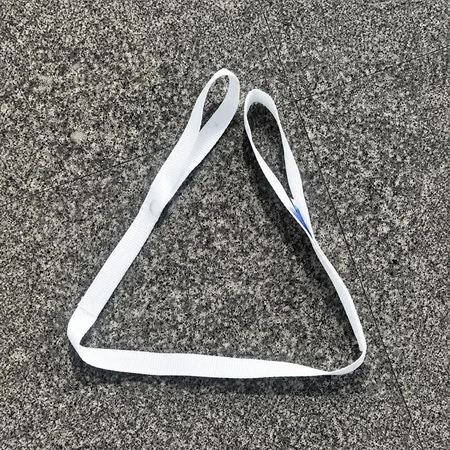
Lift sling rigging company produce Disposable One Way Sling,one-trip lifting sling,Disposable Industrial Strap,White One-Way Sling,One Way Use Sling,Polypropylene One Way Sling,Textile disposable slings for single use lifts for lifting loads.
Disposable One Way Sling
Disposable One Way Sling — One Trip, One Load, No Mark on the Finish
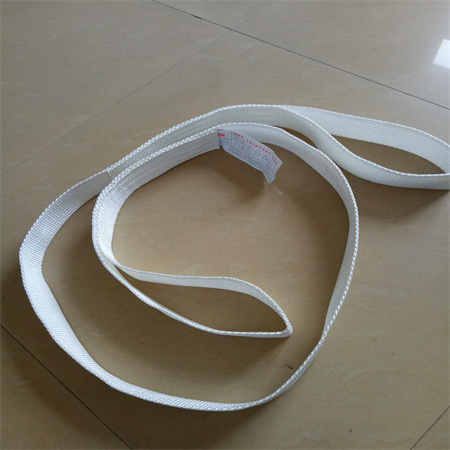
A disposable one way sling is a flat woven sling of high-strength synthetic fibre bought for a single journey. It is used together with the lifting set, goes with the load to its destination and is never collected back or used a second time. It is made for steel pipe, sawn timber, plywood and aluminium — long, dressed loads that have to arrive without a bruise on a painted, coated or mill finish — and because it is issued rather than booked out and returned, it is the cheapest way to lift a consignment that is only going one way.

1. What the Name Says: One Journey, Not One Grade
Three words in the name are doing three different jobs, and a buyer who reads them as one specification tends to order the wrong article. Disposable describes the journey: the sling has been bought for one trip and will not be brought back. One way says the same thing from the load’s point of view — the band travels with the consignment to the destination and stays there, or is discarded at the far end. And sling is the part that matters most: this is a rated lifting article, made from the same high-strength synthetic fibre as any other flat webbing sling on this site, woven and finished to the same discipline.
What disposable does not mean is a lower grade of article. The word says nothing about the fibre, the weave, the width, the safety factor or the working load limit; those are lines on your own order and they are made as stated. A one-way sling is not a weak sling and it is not an untested sling. It is a fully rated sling whose commercial life has been decided in advance, and the marking on the band carries the same figures as on any article in this factory.
In practice the sling is bought inside a set. It arrives with the load it is going to lift, it is used with the hooks, beams or spreaders of whatever lifting equipment the job already has, and it is used for the one lift and the one journey that were planned. The phrase used together with the lifting set is the whole working relationship: a one-way sling does not replace the rigging, and it is not asked to do anything the rest of the set cannot reach.
2. What a Disposable One Way Sling Is Bought For
Four loads account for nearly all of the one-way slings this factory makes, and the reason is the same in every case: the load is long, it travels as a pack or a bundle, and it is already finished when it is moved.
| The load | Why a single-trip soft band suits it | What decides the sling |
|---|---|---|
| Steel pipe and tube | Long, round and heavy, handled in joints or bundles; the pipe is usually coated, wrapped or end-capped, so the band must not damage the surface and must not let the pipe roll out of its own wrap. | The two pick positions, the outside diameter at each position, and the width the coating calls for. |
| Sawn timber and timber packs | Sharp edges and a soft face: a band that spreads the force will not crush a corner or leave a compression line on dressed stock. | The pack’s mass, its length, and the width that keeps the band off the arris. |
| Plywood and sheet panels | Flat, wide and easily marked; panels are lifted in stacks, so the band has to bear on a face rather than an edge. | Stack mass, panel length, and whether the band may touch the face or must be kept to the edges. |
| Aluminium sections and sheet | The softest of the four and the one most easily bruised; synthetic fibre is selected here precisely because it is softer than the load. | The finish (mill, anodised or painted), the extrusion length, and the widest band the job allows. |
The common thread is not weight. All four loads can be heavy, but what makes them one-way work is that they are handled between sites that do not exchange equipment. Steel pipe leaves a mill or a coating yard for a quay; timber leaves a sawmill for a joiner’s yard; plywood and aluminium leave a works for a customer’s site. In none of those movements does the lifting gear come home, and a sling that is expected back has to be chased, inspected, stored and freighted, which is a cost nothing on the load justifies.
3. Why One Way Is Cheaper Than Round Trip
The economics of the article are simple enough to write on one line: a sling that is not coming back does not have to pay for coming back. On a single journey the comparison is not between two purchase prices; it is between two totals, and the returnable sling carries four costs that the one-way band does not.
- Return freight. The band that is expected home occupies space on a vehicle or in a container travelling in the direction nobody is being paid for, or it is posted back as a parcel.
- The inspection cycle. A re-usable sling must be examined before it is re-issued and recorded afterwards. A one-way sling is checked once, at the point of issue, which is the only check that changes anything.
- The store place and the store work. Every returnable band has to be received, hung, counted, reconciled and written off somewhere. A one-way article has no second entry in the stock ledger because it never comes back.
- The chase. Sling sets that are supposed to return are the equipment most often missing when a load is ready, and the delay is paid for at the loading bay, on the day that matters.
The second half of the case is speed rather than money. A one-way sling is made to the length the pack needs and issued with the pack, which means the band is not chosen at the load. The rigger does not measure, does not look for the set that came back from the last job, and does not have to decide whether the band on the shelf is the right one; the band for this consignment is with this consignment. On repetitive work — lengths of pipe, packs of timber, stacks of panel, bundles of extrusion — that turns loading from a decision into a routine, and it is the reason the article is specified for export packing and for loaded-out goods generally.
Set against that, the one-way band is bought at the weight its job needs and no more. There is no reason to buy for a second and third journey, no reason to over-specify against future unknown work, and no reason to keep a heavier band in the store in case something comes up. The width, the length and the factor are chosen once, for this load, and this is the whole difference between a consumable and a piece of plant.
4. Soft Contact: Fibre Against a Finished Surface
Every one of the four loads on this page arrives at the lift already dressed. Pipe is coated, wrapped or lined; timber is planed or sanded; plywood is faced and edged; aluminium is mill finish, anodised or painted. A chain or a wire rope will mark all four, and the mark is not a cosmetic complaint — on a coated pipe or a faced panel it can mean a rejected length and a re-made one, which costs far more than the lifting gear involved.
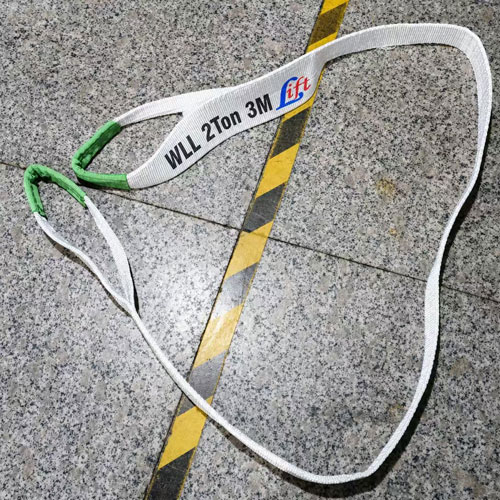
The one-way sling is made of high-strength synthetic fibre, and the reason it is chosen is a property rather than a feature: the band is softer than the loads it carries. A woven synthetic band spreads its contact force along a face rather than concentrating it on a line, and it will not bruise, gall or scratch the way steel does. Three details decide whether that softness actually reaches the load:
| The protection | How it works | What you have to write |
|---|---|---|
| Fibre | Synthetic fibre is softer than the loads it lifts and does not work-harden or burr the way steel gear does against a coated face. | The load’s finish, and whether an existing witness mark is acceptable or a rejection. |
| Band width | The same force over a wider face is a lower pressure per unit of contact, which is the single most effective protection on a soft surface. | The widest band the geometry allows; this is the line most often left off an enquiry. |
| Flat woven form | A flat band presents a face rather than an edge, so it will not print a line into a panel or a pipe coating. | Whether the band lies on a face or must be kept to the edges of a stack. |
| Protective sleeving at the ends | Sleeving keeps hardware — hooks, shackles, buckles — from abrading or cutting the weave where it is loaded hardest. | The fittings you will use at each end, and their size. |
| Dry, clean storage before issue | A band that has been lying in grit, swarf or a puddle carries the grit into the contact whether or not the fibre is soft. | Nothing — this one is discipline, and it is the cheapest protection there is. |
5. Parameters: the Standard Specification
The table below is the works’ standard specification for flat woven single-trip bands, published as it is made. It comes in two blocks — a 4 mm band from 1 t to 12 t and a 7.5 mm band from 2 t to 24 t — and the two blocks share the same ladder of band widths, so a load in the middle of the range can be lifted on either thickness and the choice is made on the job rather than on the capacity alone.
| Working load limit | Band thickness | Width at 5:1 | Width at 6:1 | Width at 7:1 | Minimum length | Maximum length | Weight per metre, 5:1 | Weight per metre, 6:1 | Weight per metre, 7:1 |
|---|---|---|---|---|---|---|---|---|---|
| 1 t | 4 mm | 25 mm | 50 mm | 30 mm | 0.5 m | 100 m | 0.16 kg | 0.18 kg | 0.20 kg |
| 2 t | 4 mm | 50 mm | 100 mm | 60 mm | 1.0 m | 100 m | 0.35 kg | 0.39 kg | 0.60 kg |
| 3 t | 4 mm | 75 mm | 150 mm | 90 mm | 1.0 m | 100 m | 0.52 kg | 0.73 kg | 0.78 kg |
| 4 t | 4 mm | 100 mm | 200 mm | 120 mm | 1.5 m | 100 m | 0.80 kg | 0.84 kg | 0.90 kg |
| 5 t | 4 mm | 125 mm | 250 mm | 150 mm | 1.5 m | 100 m | 0.85 kg | 0.96 kg | 1.14 kg |
| 6 t | 4 mm | 150 mm | 300 mm | 180 mm | 1.5 m | 100 m | 0.96 kg | 1.12 kg | 1.33 kg |
| 8 t | 4 mm | 200 mm | 200 mm | 240 mm | 2.0 m | 100 m | 1.34 kg | 1.65 kg | 1.85 kg |
| 10 t | 4 mm | 250 mm | 250 mm | 300 mm | 2.0 m | 100 m | 1.64 kg | 1.84 kg | 2.05 kg |
| 12 t | 4 mm | 300 mm | 300 mm | 300 mm | 2.0 m | 100 m | 1.86 kg | 2.06 kg | 2.70 kg |
| 2 t | 7.5 mm | 25 mm | 50 mm | 30 mm | 0.5 m | 100 m | 0.38 kg | 0.44 kg | 0.50 kg |
| 4 t | 7.5 mm | 50 mm | 100 mm | 60 mm | 1.0 m | 100 m | 0.68 kg | 0.74 kg | 0.86 kg |
| 6 t | 7.5 mm | 75 mm | 150 mm | 90 mm | 1.0 m | 100 m | 1.28 kg | 1.42 kg | 1.50 kg |
| 8 t | 7.5 mm | 100 mm | 200 mm | 120 mm | 1.5 m | 100 m | 1.61 kg | 1.80 kg | 1.96 kg |
| 10 t | 7.5 mm | 125 mm | 250 mm | 150 mm | 1.5 m | 100 m | 2.04 kg | 2.42 kg | 2.62 kg |
| 12 t | 7.5 mm | 150 mm | 300 mm | 180 mm | 1.5 m | 100 m | 2.32 kg | 2.68 kg | 2.86 kg |
| 16 t | 7.5 mm | 200 mm | 200 mm | 240 mm | 2.0 m | 100 m | 3.30 kg | 3.70 kg | 4.10 kg |
| 20 t | 7.5 mm | 250 mm | 250 mm | 300 mm | 2.0 m | 100 m | 4.62 kg | 5.02 kg | 5.46 kg |
| 24 t | 7.5 mm | 300 mm | 300 mm | 300 mm | 2.0 m | 100 m | 5.12 kg | 5.62 kg | 6.10 kg |
How to read it
Three lines of reading are worth doing before the table is used, because two of them are not obvious.
- The column that protects the finish is the width, not the thickness. The two blocks publish identical widths at every load level: a 2 t band is 50, 100 or 60 mm whether the band is 4 mm thick or 7.5. If your reason for choosing the heavy block was a delicate surface, the heavy block buys nothing at all — the width column already did the work.
- The minimum length follows the width, not the load. 25 mm takes 0.5 m, 50 and 75 mm take 1.0 m, 100 to 150 mm take 1.5 m and 200 mm and above take 2.0 m, in both blocks. So the shortest band available is a narrow one, and wanting a wide band for a soft surface means accepting a longer minimum.
- The weight column is a handling figure, not a footnote. On a one-way order the weight is paid for once in the price and once by whoever carries the bands to the load and clears them afterwards; at the top of the table a hundred metres is hundreds of kilograms, and on a single-trip job there is no second chance to arrange help.
6. What the Four Loads Change
The parameter table is the same for every one-way sling; what changes with the load is which lines of it matter. The table below is the practical reading of the four loads for the four figures that decide the article.
| The load | The figure that matters most | Why | What else to write |
|---|---|---|---|
| Coated steel pipe | Band width | Wide contact is the coating’s only protection from a band that is doing the lift. | The outside diameter and the two pick positions, measured from an end. |
| Bare or lined pipe, bundled | Working load limit for the bundle | The bundle, not the pipe, is the load; each position carries its share of the whole pack. | How the bundle is closed, and whether the band may touch a prepared end. |
| Sawn timber and packs | Band width and edge protection | A narrow band on a sharp arris is a compression line on dressed stock and a cut in the weave. | The pack’s mass as it travels, and its girth at the pick positions. |
| Plywood and panels | Length and the convention it is measured in | Panels are wide as well as long, so the band has to reach round a stack rather than a single sheet. | Whether the band may bear on the face or must stay on the edges. |
| Aluminium, mill or anodised | Fibre and width together | This is the softest load in the table and the one where a mark is most likely to be a rejection. | The finish, and whether a witness mark is acceptable. |
7. The Six Lines on an Enquiry
A one-way sling is not a catalogue number; it is a short specification, and the shortest one that works has six lines on it. Buyers who write all six receive the band they wanted the first time, and buyers who write two receive something that fits a load they were not describing.
| # | The line | What it fixes | What goes wrong without it |
|---|---|---|---|
| 1 | The load and how it is packed | Pipe, timber, panel or extrusion; single, bundled or stacked. | A band specified for one joint and delivered against a bundle. |
| 2 | The working load limit for the arrangement | The figure on the band, for the way the load will actually be slung. | A figure taken from the load’s total weight, which is not what either leg sees. |
| 3 | The safety factor: 5:1, 6:1 or 7:1 | The width that goes with the figure, as the three columns of Table 3 publish. | A factor assumed by the supplier, and a band that is wider or narrower than the job needed. |
| 4 | The length, with the convention | Reach round the load and the working angle of the legs. | The commonest dispute on a closed or doubled article, and entirely avoidable. |
| 5 | The band width and the fibre | Contact on the finish, and the duty envelope of the material. | A band that marks a coated or anodised surface, or one that is unsuitable for the place it works in. |
| 6 | The quantity, and the total weight | How many bands, and what the consignment of bands itself weighs. | An order that has to be moved by equipment nobody arranged. |
8. Using It Once: the Discipline That Makes Disposable Safe
The word on the page is a purchase decision, and the safety of the article depends on the decision being kept rather than merely intended. Used once, a one-way sling is a rated article doing exactly what it was made for. Used twice, it is an uninspected article doing a job nobody specified, and the reason it is tempting is precisely why it is dangerous: it looks as good after the first lift as it did before it.
Four rules carry the whole discipline, and none of them costs anything.
- Inspect at issue, once, properly. A one-way band has one inspection in its life and it happens before the load, when a fault can still be replaced. Look at the weave for cuts and abrasion where it meets the load, at the stitching or the sleeving at the ends, and at the label. A band that fails that check does not become a second-trip band; it is cut up and discarded.
- Do not put it back in the store. If a band returns to the rack it will be issued again, and its marking will then be stating something that is no longer true. Where a band has been used and comes back with the vehicle, segregate it and dispose of it — the store is for articles with a future, and this article has none by design.
- Mark the load, not just the band. Where the receiver will re-sling the consignment, the two pick positions are the only instruction that survives the journey. Marking them on the pipe, the pack or the stack costs a moment and prevents the most common failure in one-way pipe and panel work.
- Respect the environment the band is kept in. Synthetic fibre has a temperature range and a chemistry it works in, and a single-trip band is left in a yard, on a quay or in a hold before it is used, unlike a plant article that lives in a store. Say where the band will wait and what it will touch, and the fibre and any protection can be chosen for that place rather than for the lift alone.

9. Frequently Asked Questions
What is a disposable one way sling?
It is a flat woven lifting sling of high-strength synthetic fibre, bought for a single journey and used together with the rest of the lifting set. It is not collected back and not re-used: it goes with the load to the destination and is written off against that job. It is a rated lifting article, so the marking and the working load limit still apply.
Can a disposable one way sling be used more than once or returned to the store?
No. The one-way discipline is the point of the article. Loads such as steel pipe, timber, plywood and aluminium are frequently handled between two sites that do not exchange equipment, so a sling that is expected back is a sling that is chased, inspected, stored and freighted home. A one-way sling removes all four of those costs, and keeping a band alive for a second trip removes the saving that justified it.
Will a disposable sling damage paint or a finished surface?
The band is woven synthetic fibre, so it is soft against the load and will not bruise or scratch a painted, coated or mill finish the way a chain or a wire rope does. On a polished or newly painted surface the width of the band is the protection measure: the same force is spread over a wider face, so specify the widest band the load geometry allows and state on the order whether a witness mark on the surface is a rejection.
Which loads is a one way sling normally bought for?
Steel pipe and tube, sawn timber and timber packs, plywood and other sheet panels, and aluminium sections, extrusions and sheet. All four are long, are handled in bundles or packs, and are usually finished or dressed when they are moved, which is why a soft single-trip band suits them.
What figures do I need to send for a quote?
Six lines: the load and how it is packed, the working load limit you need for the arrangement you will use, the safety factor (5:1, 6:1 or 7:1), the length with the convention it is measured in, the band width and the fibre, and the quantity with the total weight. The length convention matters because a closed or doubled band can be quoted under more than one convention.
Is a one way sling cheaper than a returnable sling?
For a single journey it is, and the saving is not only in the purchase price. A returnable sling carries a return freight, an inspection cycle, a store place and an administration cost with it. Judged per journey delivered, the single-trip band is normally the cheaper article, which is why it is specified for export packing, for one-off shipments and for pipe and panel work that ends on a customer’s site.
How does it improve loading and shipping efficiency?
Because the bands arrive already made to the length the pack needs, they are issued with the load rather than chosen at the load. There is nothing to measure, nothing to return and nothing to reconcile, and a pack that can be slung as it is built loads faster than a pack that has to wait for returnable gear to come back from the last job.
What has to be marked on the sling?
The working load limit, the length and the identification the article was made to, printed on the band, because on a single-trip article the printed figures are the only record of what it is. Where the receiver may re-sling the load, the pick positions should also be marked on the load itself, since a mark is the only instruction that survives the journey.
10. Where Each Question Goes on This Site
A one-way sling raises questions that belong to the article, to the load and to the journey, and this site answers them on different pages rather than repeating them here.
Contact
Lift Sling Rigging Co., Ltd makes the article on this page: flat woven single-trip slings in the width, thickness, length and fibre a load needs, in the quantities a consignment takes, made to order and marked as they are made. Send the load, the two pick positions and the six lines of Table 5, and we will confirm the specification before the band is cut.
Telephone and WeChat: 18066002268
E-mail: 702461526@qq.com
Address: Lifute Industrial Park, Taizhou City, Jiangsu Province, China
HS code: 630790