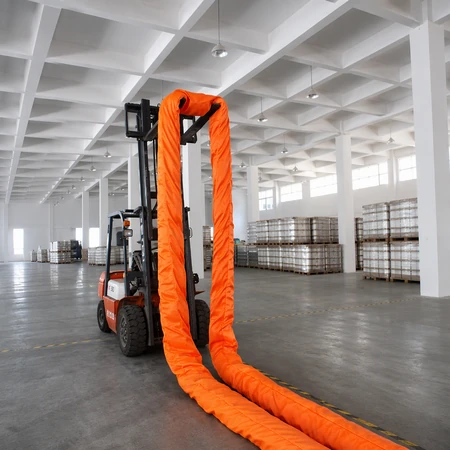
Kampani yonyamula gulaye yonyamula katundu imatulutsa Endless Round Sling.
Endless Round Sling — Closed-Loop Sling, 1-1000 t
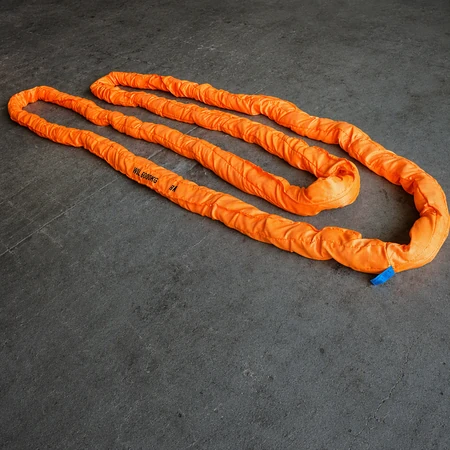
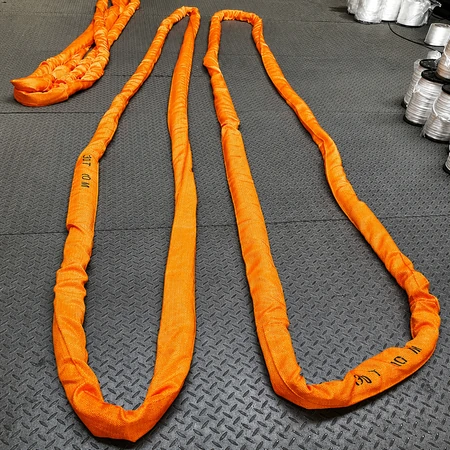
An gulaye wopanda malire is a closed loop: the core runs continuously inside the sleeve and is closed on itself, so there is no eye, no thimble, no hook and no stitching anywhere in the load path. It is made in high-tenacity polyester across 27 LFTEERS articles, kuchokera 1,000 kg ku 1,000,000 kg, in bodies from 0.5 m kuti 80 m. Because the loop has no ends it can be turned, re-reeved and re-oriented after a lift — which is why it is the usual choice for basket and choke work on plant that must not be marked.
- Malire olemetsa ogwira ntchito1,000 kg ku 1,000,000 kg
- Zolemba zosiyanasiyanaLFTEERS-1 to LFTEERS-1000, 27 kukula kwake
- Miyeso ya thupi15 × 50 mm ku 610 × 1,060 mm
- Utali0.5-80m, effective or circumference
- Kulemera kwa unit0.47 ku 226 kg/m
- Palibe zitsuloNothing on the sling touches the load
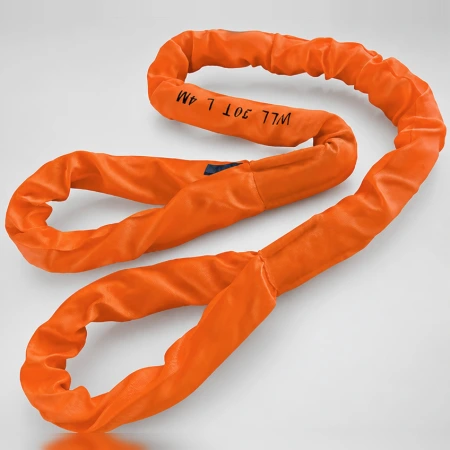
What “endless” changes for the rigger
Endless describes the construction of the loop, not the length of the article. Nothing is spliced, sewn or fitted into the load path, and four things follow on site.
- The loop has no direction. Both halves are the same article, so the sling can be turned end for end and re-reeved after a lift. In a basket the two legs are identical, which is not true of a sling with an eye at one end and a fitting at the other.
- Wear can be spread. The contact point moves as the sling is rotated along the loop, so the sleeve is not destroyed in one place while the rest of the body is new.
- There is nothing to mismatch. No eye has to be offered to a hook of the right shape, and no fitting has to be rated with the sling. The hook goes through the loop, or the loop goes round the load.
- The sleeve is the whole inspection. The core cannot be opened and looked at, kotero kuti khungu ndi chiwindi: what it shows is what the core has been through.
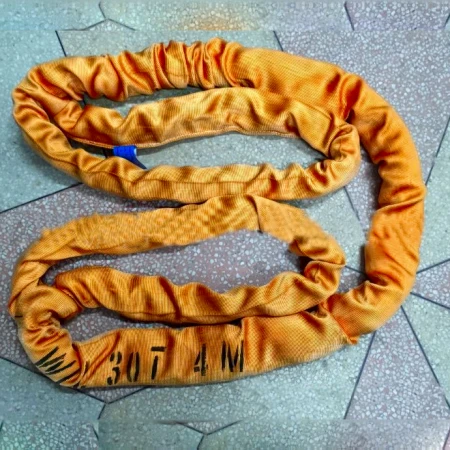
Endless Round Sling specifications
| Zogulitsa | Endless round sling — closed-loop polyester round sling, 1 t kuti 1000 t |
|---|---|
| Zomangamanga | Pakatikati mwa ulusi wopitilira muyeso wolukidwa wa tubular, kutsekedwa mu chipika chosatha; no metal and no stitching in the load path |
| Kwambiri | High-tenacity polyester multifilament, chigawo chofanana, phula; UHMWPE or aramid to order |
| Nkhono | Wopangidwa ndi polyester yapamwamba kwambiri, single layer standard; manja awiri kuyitanitsa |
| Malire olemetsa ogwira ntchito | 1,000 kg ku 1,000,000 kg, mwendo umodzi woyimirira - 27 zolemba, LFTEERS-1 to LFTEERS-1000 |
| Kuthyola katundu | 7 × working load limit |
| Chitetezo Factor | 7:1 monga muyezo; 5:1 to order for markets working to ASME B30.9 |
| Kusintha kwa WLL | Approximately 2–3 % |
| Kutentha kwa utumiki | −40 °C mpaka +100 °C, polyester pachimake |
| Utali | 0.5 m kuti 80 m; minimum rises with the article, maximum is 80 m in every size |
| Mtundu | Stock lalanje kapena buluu; MU 1492-2 capacity colour applied when the order asks for the standard code |
| Kuyika chizindikiro | Working load limit and length printed on the sleeve; sewn label ndi WLL, kutalika, serial number ndi muyezo |
| Kuyesa | Umboni udakwezedwa musanatumizidwe; mbiri yoyeserera yofananira ndi nambala ya serial |
| Kulongedza | Akulungidwa mu poly bag, katoni yolembedwa; mphasa kapena crate pakufuna |
| HS kodi | 630790 - kukweza gulaye zinthu za nsalu |
| Mtengo wa MOQ / OEM | MOQ yotsika ya oda yoyeserera; OEM pa utali, mtundu wa manja, core fiber, kapangidwe ka zilembo ndi kulongedza |
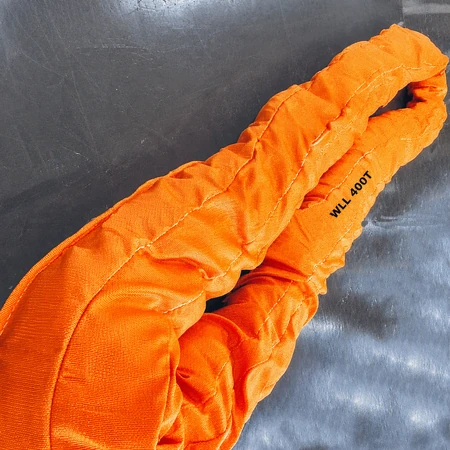
Zolemba zosiyanasiyana: sankhani chitsanzo
The article number carries the capacity — LFTEERS-10 is the 10,000 kg thumba, LFTEERS-100 the 100,000 kg imodzi. Makulidwe ndi m'lifupi zimalongosola thupi, the two length columns give the shortest and longest body made in that article, and the unit weight is what you add to the crane load.
| Art No. | WLL (kg) | WLL (t) | Makulidwe (mm) | M'lifupi (mm) | Min (m) | Max (m) | Kulemera (kg/m) |
|---|---|---|---|---|---|---|---|
| LFTEERS-1 | 1,000 | 1 | 15 | 50 | 0.5 | 80 | 0.47 |
| LFTEERS-2 | 2,000 | 2 | 16 | 60 | 0.5 | 80 | 0.60 |
| LFTEERS-3 | 3,000 | 3 | 18 | 70 | 0.5 | 80 | 0.82 |
| LFTEERS-4 | 4,000 | 4 | 20 | 75 | 0.5 | 80 | 1.20 |
| LFTEERS-5 | 5,000 | 5 | 25 | 80 | 0.5 | 80 | 1.47 |
| LFTEERS-6 | 6,000 | 6 | 27 | 90 | 1.0 | 80 | 1.70 |
| LFTEERS-8 | 8,000 | 8 | 28 | 100 | 1.0 | 80 | 2.20 |
| LFTEERS-10 | 10,000 | 10 | 29 | 110 | 2.0 | 80 | 3.00 |
| LFTEERS-12 | 12,000 | 12 | 30 | 125 | 2.0 | 80 | 3.40 |
| LFTEERS-15 | 15,000 | 15 | 31 | 150 | 2.0 | 80 | 4.00 |
| LFTEERS-20 | 20,000 | 20 | 32 | 180 | 2.5 | 80 | 5.60 |
| LFTEERS-25 | 25,000 | 25 | 34 | 200 | 2.5 | 80 | 6.80 |
| LFTEERS-30 | 30,000 | 30 | 68 | 220 | 2.5 | 80 | 8.20 |
| LFTEERS-40 | 40,000 | 40 | 75 | 250 | 2.5 | 80 | 10.9 |
| LFTEERS-50 | 50,000 | 50 | 86 | 270 | 2.5 | 80 | 13.8 |
| LFTEERS-60 | 60,000 | 60 | 126 | 280 | 4.0 | 80 | 16.6 |
| LFTEERS-80 | 80,000 | 80 | 138 | 300 | 4.0 | 80 | 22.0 |
| LFTEERS-100 | 100,000 | 100 | 152 | 320 | 4.0 | 80 | 27.0 |
| LFTEERS-200 | 200,000 | 200 | 230 | 460 | 5.0 | 80 | 66.0 |
| LFTEERS-300 | 300,000 | 300 | 310 | 535 | 5.0 | 80 | 82.0 |
| LFTEERS-400 | 400,000 | 400 | 380 | 680 | 5.0 | 80 | 98.0 |
| LFTEERS-500 | 500,000 | 500 | 410 | 760 | 8.0 | 80 | 116.0 |
| LFTEERS-600 | 600,000 | 600 | 460 | 830 | 8.0 | 80 | 139.0 |
| LFTEERS-700 | 700,000 | 700 | 498 | 880 | 8.0 | 80 | 155.0 |
| LFTEERS-800 | 800,000 | 800 | 520 | 940 | 9.0 | 80 | 178.0 |
| LFTEERS-900 | 900,000 | 900 | 580 | 1,000 | 9.0 | 80 | 202.0 |
| LFTEERS-1000 | 1,000,000 | 1,000 | 610 | 1,060 | 9.0 | 80 | 226.0 |
The series code is shown as supplied on the factory sheet. In that sheet the 20,000 kg article carries the code LFTEERS-15 for a second time; it is shown here as LFTEERS-20 so that the code matches the capacity ladder. Thickness and width are the body dimensions specified for the article, and the minimum length is the shortest body that can be closed and sleeved at that capacity. If your price list uses a different prefix, replace it across the table — the rest of the code is the capacity.
Capacity changes with the hitch, not with the tonnage on the sleeve
The figure printed on the sleeve is the working load limit of one leg hanging vertically. It is the number the sling is proof loaded against, and the starting point of a lifting plan — not the tonnage it will pick up in the arrangement you are actually using. Apply the factor for the hitch, and remember that a set of legs is calculated on fewer legs than it has, chifukwa katundu weniweni sakhala mwangwiro symmetrically.
| Kukonzekera | Factor | 5 t gula | 20 t gula |
|---|---|---|---|
| Legeni imodzi, ofukula | × 1.0 | 5.0 t | 20.0 t |
| Legeni imodzi, kutsamwitsidwa | × 0.8 | 4.0 t | 16.0 t |
| Legeni imodzi, basket 0–7° | × 2.0 | 10.0 t | 40.0 t |
| Legeni imodzi, basket 7–45° | × 1.4 | 7.0 t | 28.0 t |
| Legeni imodzi, basket 45–60° | × 1.0 | 5.0 t | 20.0 t |
| Miyendo iwiri, 0-45 ° kuchokera ofukula | × 1.4 | 7.0 t | 28.0 t |
| Miyendo iwiri, 45-60 ° kuchokera ofukula | × 1.0 | 5.0 t | 20.0 t |
| Miyendo inayi, 0-45 ° kuchokera ofukula | × 2.1 | 10.5 t | 42.0 t |
| Miyendo inayi, 45-60 ° kuchokera ofukula | × 1.5 | 7.5 t | 30.0 t |
Two lines in that table settle most orders. Choyamba, awiri 5 t gulaye sipanga a 10 t adayika: at 0–45° from vertical they carry 7 t together, and past 45° they carry 5 t. Chachiwiri, a four-leg set is worked on three legs, which is why the factor is 2.1 ndipo ayi 2.8. Where the capacity is close to the limit, the honest answer is usually a kukweza mtengo rather than a bigger sling — keeping the legs vertical recovers the factor that an open leg angle has just spent.
Utali: utali wothandiza kapena circumference
Legeni yosatha ilibe malekezero, kotero kutalika kwake kungatchulidwe njira ziwiri, a factor of two apart. This is the most common ordering error on a round sling and the most expensive to correct, because the sling has to be remade rather than adjusted.
| Wotchulidwa ngati | Zomwe mumalandira | Zogwiritsidwa ntchito | Chitsanzo |
|---|---|---|---|
| Utali wogwira ntchito | Theka la circumference - gwiritsitsani katunduyo ndikubwerera | Zokwera zoyima komanso zotsamwitsidwa, kumene kutalika kolendewera kumadziwika | 4 m EWL = 8 m lupu |
| Kuzungulira | Kutalika konse kwa loop | Basket amanyamula, kumene girth ya katundu amayendetsa kutalika | 8 m loop = 4 m EWL |
On the slings we supply the figure printed on the sleeve is the kutalika kothandiza, kotero kusindikizidwa ndi mawu ogwidwa nthawi zonse zimagwirizana. Kwa dengu, kuyeza giridi la katundu, onjezerani mutu ku mbedza, ndipo tchulani chithunzicho: thupi limatenga ulendo wautali kuzungulira katunduyo, and a sling that only just reaches forces the legs wide — the same as buying a smaller sling.
Where an endless loop earns its place
- Precast matabwa ndi zigawo mlatho picked in a basket at each end, where the sleeve protects the formed face and the chamfer.
- Zitsulo zachitsulo sitting in a basket, where the doubled body gives twice the vertical capacity and follows the curve of the coil instead of bearing on one line.
- Zosintha, jenereta ndi mabedi makina with small trunnions and painted surfaces — nothing metal touches the load.
- Amaumba ndi kufa whose lifting holes are drilled, osapangidwa kuti azikwanira, so a soft loop threaded through the hole is the whole method.
- Skids, mafelemu ndi madengu akunyanja choked at each corner with 6–12 m bodies, the sleeve taking the corner abrasion so the core does not.
- Stage and studio work around truss and set pieces where a scratch is a re-spray.
Zosatha, eye-eye or flat webbing
| Criterion | Legeni yozungulira yopanda malire | Eye-eye round sling | Flat endless webbing sling |
|---|---|---|---|
| Kulumikizana ndi katundu | Round body, conforms to curves and corners | Round body with two loaded eyes | Nkhope yotakata, spreads pressure over an area |
| Utali | Set by the loop; either convention can be quoted | Fixed between the eyes | Set by the sewn loop |
| Katundu njira | Zopitilira, no termination | Mfundo yopitilira, eyes formed by the sleeve | Sewn join in the loop |
| Reeving | Can be turned and re-reeved after a lift | One orientation only | Can be turned, but the join takes the wear |
| Zabwino kwambiri za | Basket ndi kutsamwitsa ntchito, awkward plant, matupi aatali | Repeated lifts on the same two points | Wide, flat and easily marked loads |
None of the three replaces another. For a fixed length and two known pick-up points see the diso-diso lozungulira legeni; for a wide face and a visible load path see the gulayeni yopanda malire yolumikizira. Both round sling forms are built from the same core and sleeve, so the choice is a rigging decision rather than a capacity one. For hard service the gulaye yozungulira ya manja awiri imawonjezera gawo lachiwiri lovala pamlingo womwewo, for weight-critical work there is a UHMWPE gulaye yozungulira pachimake, and for hot loads an gulaye ya aramid yozungulira.
Kuyang'anira ndi kusiya ntchito
Pakatikati sichikuwoneka, so the sleeve is the record of what the sling has been through. Yang'anani musanagwiritse ntchito, ndipo mwamwambo panthawi yomwe boma lanu likufuna.
- Check the full length of the sleeve for cuts, snags, glazing, amasungunuka ndi kudetsa mankhwala, and open the sleeve at the join if anything looks wrong.
- Read the print and the label. If the working load limit or the length can no longer be read, gulaye sichingatsimikizidwe ndikutuluka ntchito.
- Khalani ndi grit mkati mwa manja; imachotsa pachimake mkati mwa nthawi yayitali bwalo litasesedwa.
- Retire on any cut or hole that exposes the core, kutentha glazing, pachimake chomwe chalimba kapena chotupa, chemical attack, kapena chizindikiro chosowa.
- Sungani zophimbidwa ndi kuchoka pansi, kunja kwa usana ndi kutali ndi kutentha, solvents ndi weld spatter. Never store a sling wet in a closed bag.
- Osakokera legeni yodzaza cham'mbali, and never lift on a damaged sleeve.
Mafunso omwe amafunsidwa pafupipafupi
What is the difference between an endless round sling and a round sling with eyes?
An endless round sling is a closed loop with no termination: the core runs continuously inside the sleeve and nothing is spliced or sewn into the load path. A chozungulira chozungulira ndi maso has two defined eyes at a fixed distance, so its length is set by the eyes and it works in one orientation.
Is the length the circumference or the effective length?
Both are used and they differ by a factor of two. Effective length is half the loop — hook down to the load and back up. Circumference is the full loop. A 4 m kutalika kwamphamvu ndi 8 m lupu, so the convention has to be stated on the order.
How much capacity is lost in a choker?
A choked endless round sling is rated at 0.8 of its vertical working load limit, kuti a 5 t gulaye imapereka 4 t. A basket raises the figure to 2.0 at 0–7°, 1.4 at 7–45° and 1.0 at 45–60°. A four-leg set is calculated on three legs, giving 2.1 at 0–45° from vertical and 1.5 at 45–60°.
What does LFTEERS-10 mean?
Nambala ya nkhaniyo ndi malire a katundu omwe amagwira ntchito mu matani: LFTEERS-10 is 10,000 kg ofuku, LFTEERS-100 is 100,000 kg and LFTEERS-1000 is 1,000,000 kg. osiyanasiyana amatsatira 1-2-3-4-5-6-8-10-12-15-20-25-30-40-50-60-80-100-200-300-400-500-600-700-800-900-1000 makwerero, so there is no 7 t, 9 t kapena 11 t nkhani.
How heavy is a long endless sling?
The last column of the article table is the weight per metre: 0.47 kg/m at LFTEERS-1, 3.00 kg/m at LFTEERS-10 and 226 kg/m at LFTEERS-1000. Multiply by the loop length and add the label and packing to get the figure to put against the crane. Where that number is a problem, a UHMWPE core gives the same capacity at a fraction of the weight.
Can the same sling be used in a basket and a choke?
Inde, and that is one of the reasons for the endless form: the same article goes round the load either way. What changes is the working figure, so the rating has to be recalculated for the hitch actually used.
How is the sling tested and documented?
Each sling is proof loaded before dispatch and the test record is matched to the serial number on the sewn label. Breaking load is 7 × the working load limit, and the factor can be varied to order where the market requires it.
Request an endless round sling quotation
Tumizani katundu pa mwendo uliwonse, the hitch and the leg angle, the distance between pick-up points and the headroom to the hook — plus the length convention and any marking or documentation your site requires. Titsimikizira kuchuluka, utali ndi manja, ndi kutchula fakitale molunjika ndi chojambula, a proof-load record and a sample. Onani full round sling range for the rest of the series.
Pezani mtengo waulere ndi zitsanzo