 702461526


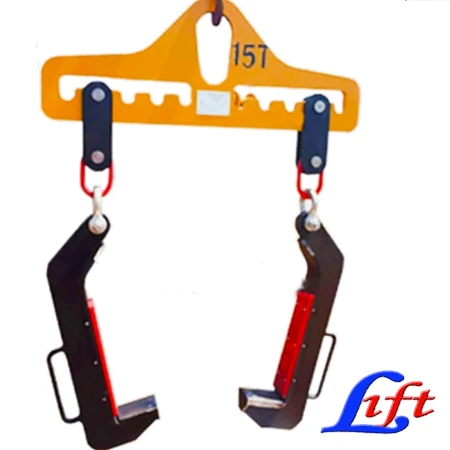
Lift sling rigging company produce C Hooks Crane and Lifting Coils,C-Hook Coil Lifters,Coil Lifting Tongs.
C Hooks Crane and Lifting Coils
A crane C hook is the fastest way to lift a steel coil. The hook is slipped through the eye of the coil, the crane takes the load, and the coil is lifted, stacked or loaded onto a truck, a rail wagon or into a container — no sling to wrap, no lifting points to fit, no one underneath the load. Lift Sling Rigging Co., Ltd. (Lifet) has been manufacturing crane C hooks and coil lifting devices in Taizhou, Jiangsu for nearly thirty years, in capacities of 5 t, 10 t, 15 t and 20 t and in three body styles: standard, counterweight (balance-ball) and long-throat container type.

What a C hook does in coil handling
A C hook is a rigid, C-shaped lifting device that hangs from the crane hook and carries the coil on its lower arm. The throat of the C passes through the coil’s inner bore, so the coil is supported from the inside rather than by an external sling. That single design decision is why C hooks dominate coil handling:
- Nothing touches the coil surface — no belt, no chain, no wrapping, so the strip edge and the coil face are not marked or scratched.
- One-person operation — the crane operator positions the hook and lifts; no rigger needs to go under or beside the load.
- Repetitive work, task after task — the same hook lifts the same coil size hundreds of times a shift, which is exactly what a service centre, coil warehouse, port terminal or steel mill needs.
- Works where slings cannot — coils stacked tightly against a wall, coils on a truck bed, coils in a container’s narrow space.
C hooks are used for eye-to-sky (horizontal) coils of steel, stainless, aluminium, galvanised and coated strip, and for paper rolls and wire coils handled the same way.
C hook types we build
Standard C hook
A single welded steel plate body with a machined lifting eye (or a shackle plate) on top and a flat or slightly tapered lower arm. The workhorse for coil storage, coil-to-truck loading and machine feeding. Capacities of 5 t, 10 t, 15 t and 20 t.
Counterweight / balance-ball C hook
The same body with an adjustable counterweight or a ballasting head that keeps the empty hook upright and level on the crane hook. The operator can place the hook into the next coil without fighting a tilted hook — the preferred style where coils are lifted repeatedly in quick succession.
Long-throat container C hook
A deep-throat version for loading coils and bundled steel into containers and other confined spaces, where a standard hook cannot reach the load or be withdrawn after landing. See the container C-type lifting device for the container-specific design.
Coil lifting devices that go beyond the C hook
Where the coil must be lifted on its side, automatically clamped, or handled in very high tonnages, a C hook is no longer the right tool. Our range includes steel coil lifting devices such as coil lifters, coil tongs, self-closing vertical coil clamps and the weighted C-shaped steel coil lifting device with balance ball.

Technical parameters
Every C hook we make is built to the coil you handle, so the dimensional parameters of the hook — throat opening, hook depth, arm width and self weight — are fixed at the order stage and recorded on the approval drawing. The tables below give the capacity range we manufacture and the data we need from you before production.
| Rated capacity (WLL) | Standard C hook | Balance-ball / counterweight C hook | Long-throat container C hook |
|---|---|---|---|
| 5 t | Yes | On request | On request |
| 10 t | Yes | On request | On request |
| 15 t | Yes | On request | On request |
| 20 t | Yes | On request | On request |
| over 20 t | Built to drawing | Built to drawing | Built to drawing |
| Parameter | Unit | Why it decides the hook |
|---|---|---|
| Coil inside diameter (ID) | mm | The throat of the C must pass through the coil eye with clearance; the ID also sets the lower arm thickness and the surface finish of the contact area. |
| Coil outside diameter (OD) | mm | Sets the hook depth (reach) so the coil is fully supported and does not bind against the body. |
| Coil width | mm | Sets the throat length and the arm width; wide coils need a wider, stiffer arm. |
| Coil weight | kg or t | The rated capacity must cover the heaviest coil you will ever lift, including any future coil size in the same bay. |
| Coil condition | — | Hot, cold, oiled, wet or wrapped coils change the material and the contact details; state the working temperature for hot coils. |
| Crane hook or shackle | — | The lifting eye, bow or ring is machined to sit on your actual hook; send the hook type, opening and the hook’s rated capacity. |
| Lifting height and headroom | m | Confirms the C hook’s own height fits between the crane hook and the coil stack. |
| Number of coils per lift | pcs | Single coil, double coil or a bundle changes the arm length and the balance of the hook. |
| Standard and documentation | — | Tell us which standard or site rule applies, and we manufacture and document the hook to it, with a test certificate and a permanent capacity plate. |
Related coil and steel handling devices
The same workshop builds the devices that normally sit beside a C hook on the same crane, so a full coil handling set can be ordered, tested and packed together:
| Device | Capacity range | Typical duty |
|---|---|---|
| C hook (this page) | 5 / 10 / 15 / 20 t | Horizontal (eye-to-sky) coil lifting, stacking and loading |
| Coil lifter / coil tong — DJQ series | 5 / 10 / 15 t | Horizontal coil handling with mechanical clamping |
| Self-closing vertical coil clamp | 21 / 28 / 36 / 45 t | Coils lifted on their side, self-closing on lift |
| Billet and bloom lifting device — DGP series | 8–30 t (billet), 8–31 t (bloom) | Square and rectangular sections in the steel mill |
| Round bar lifting device | 2 / 3 / 4 / 5 / 6 / 8 t | Round bar, rebar and bar bundles |
| Coil mandrel clamp | Built to drawing | Coil handling on the mandrel and at the line |
How to choose the right C hook
- Start from the heaviest coil in the bay, not the average one. The rated capacity (WLL) must cover the worst case you will ever ask the crane to lift.
- Measure the coil eye (inside diameter) — it is the single most important dimension, because the throat of the C hook has to pass through it and come out cleanly.
- Check the stacking pattern. Coils standing tight against a wall or a truck headboard need a longer throat or a hooked profile so the arm can be withdrawn after the coil is landed.
- Decide whether the empty hook must hang straight. If the crane moves fast between coils, the balance-ball or counterweight version saves a rigger every cycle.
- Match the lift to the crane hook. The lifting eye, bow or ring is made for your hook type and capacity — the crane must never lift more than its own rated load.
Applications
- Steel mills and coil processing lines — coil transfer between the line, the storage bay and the truck.
- Steel service centres and coil warehouses — stacking and retrieving coils of steel, stainless, galvanised and coated strip.
- Ports, terminals and rail sidings — coil loading and unloading where cycle time decides the day’s tonnage.
- Container loading — long-throat container C hooks for coils and bundled steel, replacing manual loading inside the box.
- Aluminium, copper and paper roll handling — C hooks and C clamps in the same shape family for non-ferrous coils, aluminium coils and paper reels.
Safe use and inspection
- Inspect the C hook before each shift: cracked or deformed welds, worn or hook-lipped lifting eye, bent arms, worn contact faces, missing or illegible capacity plate.
- Never lift more than the marked capacity, and never lift a coil the hook was not made for.
- Keep the coil seated fully in the throat — no partial engagement, no lifting from the coil’s edge.
- Never repair a lifting device by welding, heating or bending; cracked or distorted hooks go out of service.
- Never lift people with a C hook, and keep everyone clear of the suspended load.
- Store C hooks off the ground on a rack so the arms and the eye are not damaged by traffic.
Why buy C hooks from Lift
- Manufacturer, not a trader — our own workshop, tooling and quality control in Taizhou, Jiangsu, with nearly thirty years in the lifting industry.
- Made to your coil — the drawing is built around your coil ID, OD, width and weight, then approved before production.
- Documentation — test certificate and permanent capacity plate per unit; declaration of conformity to the standard your site applies, when you tell us which standard it is.
- One supplier for the whole coil bay — C hooks, coil lifters, coil tongs, vertical coil clamps, billet and round bar devices, lifting beams, lifting hooks, lifting chains and wire rope slings.
- Export packing — crated and strapped for sea freight, with OEM marking on request.

Frequently asked questions
- How does a C hook lift a steel coil?
- The crane lowers the C hook until the lower arm passes through the coil’s inner bore. The arm takes the coil’s weight from inside, the coil hangs on the arm, and the crane travels. Nothing is wrapped around the coil, so the strip surface is untouched.
- What capacity C hook do I need for my coils?
- Match the hook’s rated capacity (WLL) to the heaviest coil you will ever lift in that bay — including any larger coil size you plan to buy later. We build 5 t, 10 t, 15 t and 20 t as standard and heavier hooks to drawing.
- Can a C hook handle coils standing on their side?
- No. A C hook is for horizontal (eye-to-sky) coils. Coils lifted standing on their side need a vertical coil clamp or a self-closing coil tong — see our steel coil lifting devices.
- What is the difference between a C hook and a coil tong?
- A C hook carries the coil from inside through the eye. A coil tong or coil clamp grips the coil from outside on the OD. The C hook needs no clamping force and no coil surface grip; the tong can pick a coil that is lying flat.
- Do you supply the C hook with a test certificate?
- Yes. Each hook can be supplied with its own test certificate and a permanent capacity plate, plus the declaration of conformity for the standard your site applies — tell us which standard you work to.
- What information do you need for a quotation?
- Coil inside diameter, outside diameter, width and weight; coil condition (cold, hot, oiled); crane hook or shackle data; lifting height and headroom; the number of coils per lift; and your documentation or standard requirement.
Request a C hook quotation
Send us the coil size, the coil weight and the crane hook data — a photo of the coil and the hook is enough to start. Our engineers will come back with the recommended C hook geometry, rated capacity and an itemised quotation, and we can produce a sample hook for trial before a batch order.
Lift Sling Rigging Co., Ltd. (Lifet) — Lifute Industrial Park, Taizhou City, Jiangsu Province, China
Tel: +86 180 6600 2268 | E-mail: 702461526@qq.com
Web: wp.xulft.com | Send an enquiry | Contact details
Related pages: Steel coil lifting device · Lifting beam · Lifting hook · Wire rope sling · Lifting chain · Lifting devices