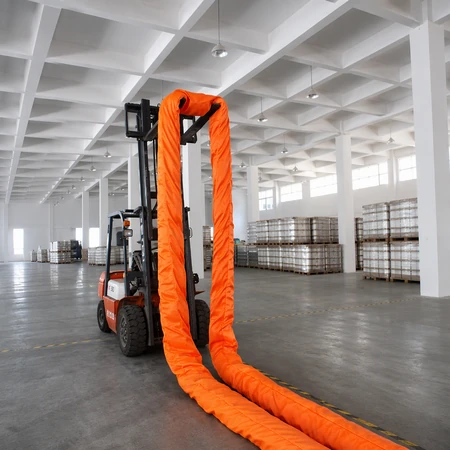
Pargîdaniya hilanîna slingê Hilbera Endless Round Sling hilberîne.
Endless Round Sling — Closed-Loop Sling, 1– 1000 t
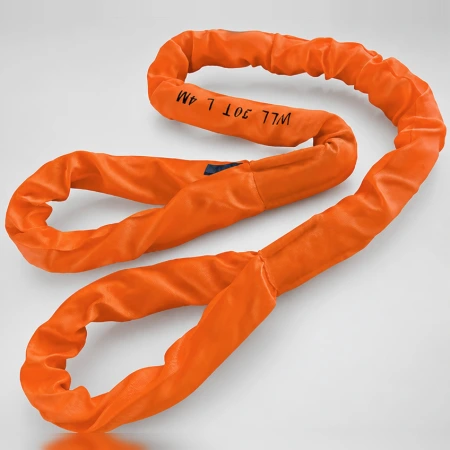
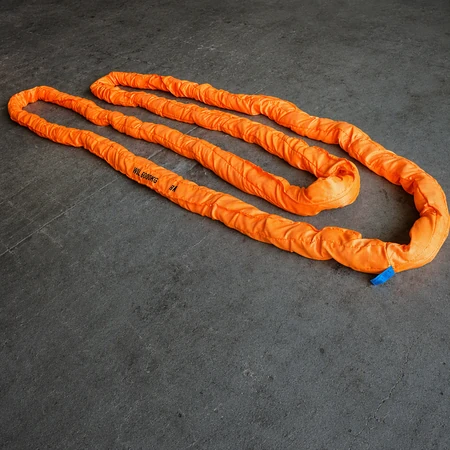
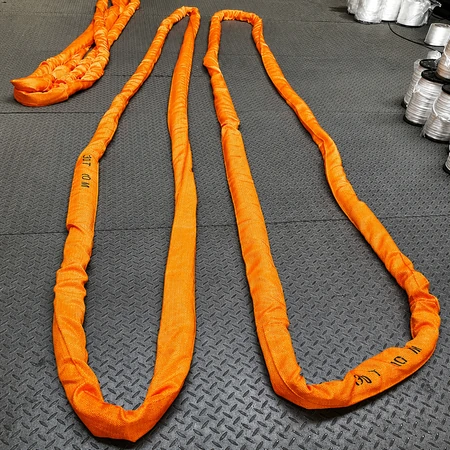
An sling dora bêdawî is a closed loop: the core runs continuously inside the sleeve and is closed on itself, so there is no eye, tilikê tune, no hook and no stitching anywhere in the load path. It is made in high-tenacity polyester across 27 LFTEERS articles, ji 1,000 kg ku 1,000,000 kg, in bodies from 0.5 m to 80 m. Because the loop has no ends it can be turned, re-reeved and re-oriented after a lift — which is why it is the usual choice for basket and choke work on plant that must not be marked.
- Sînorê barê xebatê1,000 kg ku 1,000,000 kg
- range gotaraLFTEERS-1 to LFTEERS-1000, 27 sizes
- Pîvanên laş15 × 50 mm heta 610 × 1,060 mm
- Dirêjî0.5-80 m, effective or circumference
- Giraniya yekîneyê0.47 ber 226 kg/m
- Metal tuneNothing on the sling touches the load
What “endless” changes for the rigger
Endless describes the construction of the loop, not the length of the article. Nothing is spliced, sewn or fitted into the load path, and four things follow on site.
- The loop has no direction. Both halves are the same article, so the sling can be turned end for end and re-reeved after a lift. In a basket the two legs are identical, which is not true of a sling with an eye at one end and a fitting at the other.
- Wear can be spread. The contact point moves as the sling is rotated along the loop, so the sleeve is not destroyed in one place while the rest of the body is new.
- There is nothing to mismatch. No eye has to be offered to a hook of the right shape, and no fitting has to be rated with the sling. The hook goes through the loop, or the loop goes round the load.
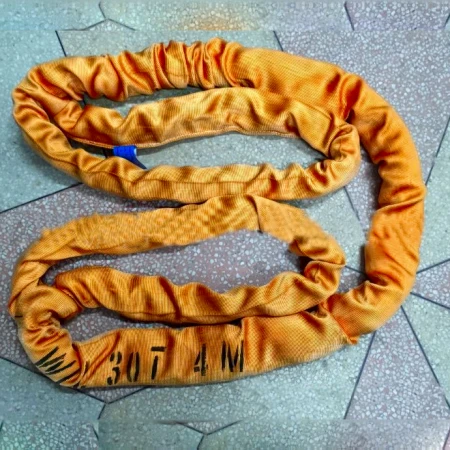
- The sleeve is the whole inspection. The core cannot be opened and looked at, ji ber vê yekê qalik pencere ye: what it shows is what the core has been through.
Endless Round Sling specifications
| Mal | Endless round sling — closed-loop polyester round sling, 1 t to 1000 t |
|---|---|
| Avahî | Navika fîlamentê ya paralel a domdar di qalikek tubular a tevnîkî de, girtî di nav xelekek bêdawî de; no metal and no stitching in the load path |
| Navik | High-tenacity polyester multifilament, danîna paralel, waxed; UHMWPE or aramid to order |
| Pî | Polyesterê bi xweragiriya bilind, standard yek layer; sleeve du qat ji bo emir |
| Sînorê barê xebatê | 1,000 kg ku 1,000,000 kg, yek lingê vertical - 27 articles, LFTEERS-1 to LFTEERS-1000 |
| Şikandina load | 7 × working load limit |
| Faktora ewlehiyê | 7:1 wek standard; 5:1 to order for markets working to ASME B30.9 |
| Dirêjbûn li WLL | Approximately 2–3 % |
| Germahiya xizmetê | -40 °C heta +100 °C, core polester |
| Dirêjî | 0.5 m to 80 m; minimum rises with the article, maximum is 80 m in every size |
| Reng | Stock orange an şîn; LI 1492-2 capacity colour applied when the order asks for the standard code |
| Nîşankirin | Working load limit and length printed on the sleeve; etîketa dirûtinê bi WLL, dirêjî, hejmara serial û standard |
| Testing | Delîl berî şandinê hatî barkirin; qeyda testê bi jimareya serialê re têkildar e |
| Bixçe | Di tûrikek polî de tê kelandin, kartonê etîketkirî; palet an kaxez li ser daxwazê |
| Koda HS | 630790 - rakirina slingên materyalên tekstîlê |
| MOQ / OEM | Ji bo fermanek ceribandinê MOQ kêm; OEM li ser dirêjahiya, rengê destikê, fiber bingehîn, layout label û pakkirinê |
range gotara: modelê hilbijêre
The article number carries the capacity — LFTEERS-10 is the 10,000 kîlo sling, LFTEERS-100 the 100,000 kg yek. Qûrahî û firehiya laş diyar dike, the two length columns give the shortest and longest body made in that article, and the unit weight is what you add to the crane load.
| Huner.No. | WLL (kg) | WLL (t) | Qewîtî (mm) | Berî (mm) | Min (m) | Max (m) | Pîvan (kg/m) |
|---|---|---|---|---|---|---|---|
| LFTEERS-1 | 1,000 | 1 | 15 | 50 | 0.5 | 80 | 0.47 |
| LFTEERS-2 | 2,000 | 2 | 16 | 60 | 0.5 | 80 | 0.60 |
| LFTEERS-3 | 3,000 | 3 | 18 | 70 | 0.5 | 80 | 0.82 |
| LFTEERS-4 | 4,000 | 4 | 20 | 75 | 0.5 | 80 | 1.20 |
| LFTEERS-5 | 5,000 | 5 | 25 | 80 | 0.5 | 80 | 1.47 |
| LFTEERS-6 | 6,000 | 6 | 27 | 90 | 1.0 | 80 | 1.70 |
| LFTEERS-8 | 8,000 | 8 | 28 | 100 | 1.0 | 80 | 2.20 |
| LFTEERS-10 | 10,000 | 10 | 29 | 110 | 2.0 | 80 | 3.00 |
| LFTEERS-12 | 12,000 | 12 | 30 | 125 | 2.0 | 80 | 3.40 |
| LFTEERS-15 | 15,000 | 15 | 31 | 150 | 2.0 | 80 | 4.00 |
| LFTEERS-20 | 20,000 | 20 | 32 | 180 | 2.5 | 80 | 5.60 |
| LFTEERS-25 | 25,000 | 25 | 34 | 200 | 2.5 | 80 | 6.80 |
| LFTEERS-30 | 30,000 | 30 | 68 | 220 | 2.5 | 80 | 8.20 |
| LFTEERS-40 | 40,000 | 40 | 75 | 250 | 2.5 | 80 | 10.9 |
| LFTEERS-50 | 50,000 | 50 | 86 | 270 | 2.5 | 80 | 13.8 |
| LFTEERS-60 | 60,000 | 60 | 126 | 280 | 4.0 | 80 | 16.6 |
| LFTEERS-80 | 80,000 | 80 | 138 | 300 | 4.0 | 80 | 22.0 |
| LFTEERS-100 | 100,000 | 100 | 152 | 320 | 4.0 | 80 | 27.0 |
| LFTEERS-200 | 200,000 | 200 | 230 | 460 | 5.0 | 80 | 66.0 |
| LFTEERS-300 | 300,000 | 300 | 310 | 535 | 5.0 | 80 | 82.0 |
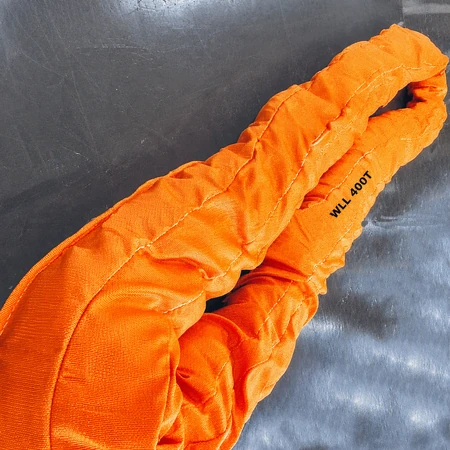
| LFTEERS-400 | 400,000 | 400 | 380 | 680 | 5.0 | 80 | 98.0 |
| LFTEERS-500 | 500,000 | 500 | 410 | 760 | 8.0 | 80 | 116.0 |
| LFTEERS-600 | 600,000 | 600 | 460 | 830 | 8.0 | 80 | 139.0 |
| LFTEERS-700 | 700,000 | 700 | 498 | 880 | 8.0 | 80 | 155.0 |
| LFTEERS-800 | 800,000 | 800 | 520 | 940 | 9.0 | 80 | 178.0 |
| LFTEERS-900 | 900,000 | 900 | 580 | 1,000 | 9.0 | 80 | 202.0 |
| LFTEERS-1000 | 1,000,000 | 1,000 | 610 | 1,060 | 9.0 | 80 | 226.0 |
The series code is shown as supplied on the factory sheet. In that sheet the 20,000 kg article carries the code LFTEERS-15 for a second time; it is shown here as LFTEERS-20 so that the code matches the capacity ladder. Thickness and width are the body dimensions specified for the article, and the minimum length is the shortest body that can be closed and sleeved at that capacity. If your price list uses a different prefix, replace it across the table — the rest of the code is the capacity.
Capacity changes with the hitch, not with the tonnage on the sleeve
The figure printed on the sleeve is the working load limit of one leg hanging vertically. It is the number the sling is proof loaded against, and the starting point of a lifting plan — not the tonnage it will pick up in the arrangement you are actually using. Apply the factor for the hitch, and remember that a set of legs is calculated on fewer legs than it has, ji ber ku barek rastîn qet bi tevahî simetrîk rûnenişte.
| Ferman | Faktor | 5 t sling | 20 t sling |
|---|---|---|---|
| Yek sling, çikanî | × 1.0 | 5.0 t | 20.0 t |
| Yek sling, xeniqîn | × 0.8 | 4.0 t | 16.0 t |
| Yek sling, basket 0–7° | × 2.0 | 10.0 t | 40.0 t |
| Yek sling, basket 7–45° | × 1.4 | 7.0 t | 28.0 t |
| Yek sling, basket 45–60° | × 1.0 | 5.0 t | 20.0 t |
| Du ling, 0-45 ° ji vertical | × 1.4 | 7.0 t | 28.0 t |
| Du ling, 45-60 ° ji vertical | × 1.0 | 5.0 t | 20.0 t |
| Çar ling, 0-45 ° ji vertical | × 2.1 | 10.5 t | 42.0 t |
| Çar ling, 45-60 ° ji vertical | × 1.5 | 7.5 t | 30.0 t |
Two lines in that table settle most orders. Yekem, du 5 t slingan nakin a 10 t set: at 0–45° from vertical they carry 7 t together, and past 45° they carry 5 t. Duyem, a four-leg set is worked on three legs, which is why the factor is 2.1 û ne 2.8. Where the capacity is close to the limit, the honest answer is usually a tîrêjê hilgirtinê rather than a bigger sling — keeping the legs vertical recovers the factor that an open leg angle has just spent.
Dirêjî: dirêjahiya bandor an dora
Slingek bêdawî bê dawî ye, ji ber vê yekê dirêjahiya wê dikare bi du awayan were binav kirin, a factor of two apart. This is the most common ordering error on a round sling and the most expensive to correct, because the sling has to be remade rather than adjusted.
| Wek tê gotin | Tiştê ku hûn distînin | Ji bo bikaranîn | Mînak |
|---|---|---|---|
| Dirêjahiya xebatê ya bi bandor | Half the circumference — hook down to the load and back up | Asansorên vertîkal û xeniqî, ku bilindahiya daliqandinê tê zanîn | 4 m EWL = 8 m loop |
| Hawirdor | Dirêjahiya lûkê ya tevahî | Lifts basket, cihê ku giravê bar dirêjiyê dimeşîne | 8 m loop = 4 m EWL |
On the slings we supply the figure printed on the sleeve is the dirêjahiya bi bandor, ji ber vê yekê çap û binavkirin her gav li hev dikin. Ji bo selikek, measure the girth of the load, serê hêlînê lê zêde bike, û wê hejmarê binivîsin: laş riya dirêj li dora barkirinê digire, and a sling that only just reaches forces the legs wide — the same as buying a smaller sling.
Where an endless loop earns its place
- Tîrêjên pêşîn û beşên pirê picked in a basket at each end, where the sleeve protects the formed face and the chamfer.
- Coils pola sitting in a basket, where the doubled body gives twice the vertical capacity and follows the curve of the coil instead of bearing on one line.
- Transformers, jenerator û nivînên makîneyê with small trunnions and painted surfaces — nothing metal touches the load.
- Qelibîne û dimire whose lifting holes are drilled, ne ji bo guncan hatî çêkirin, so a soft loop threaded through the hole is the whole method.
- Skids, çarçove û selikên deryayê choked at each corner with 6–12 m bodies, the sleeve taking the corner abrasion so the core does not.
- Stage and studio work around truss and set pieces where a scratch is a re-spray.
Bêdawî, eye-eye or flat webbing
| Pîvan | Sling dora bêdawî | Slingê dora çav-çev | Flat endless webbing sling |
|---|---|---|---|
| Bi barkirinê re têkilî daynin | Round body, conforms to curves and corners | Round body with two loaded eyes | Rûyê fereh, spreads pressure over an area |
| Dirêjî | Set by the loop; either convention can be quoted | Fixed between the eyes | Set by the sewn loop |
| Rêya barkirinê | Bêbirrînî, no termination | Berdewamiya bingehîn, eyes formed by the sleeve | Sewn join in the loop |
| Reeving | Can be turned and re-reeved after a lift | One orientation only | Can be turned, but the join takes the wear |
| Ji bo çêtirîn | Basket û çokê dixebitin, awkward plant, bedenên dirêj | Repeated lifts on the same two points | Bi ber, flat and easily marked loads |
None of the three replaces another. For a fixed length and two known pick-up points see the slingê dor-çav; for a wide face and a visible load path see the slingê tevna daîreya bêdawî. Both round sling forms are built from the same core and sleeve, so the choice is a rigging decision rather than a capacity one. For hard service the sling dora du qat di heman rêjeyê de qatek cilê duyemîn zêde dike, for weight-critical work there is a UHMWPE sling dora navik, and for hot loads an sling dora aramid.
Kontrolkirin û teqawidbûn
Bingeh nayê dîtin, so the sleeve is the record of what the sling has been through. Berî her karanîna kontrol bikin, û bi awayekî fermî di navberê de ku rejîma we hewce dike.
- Check the full length of the sleeve for cuts, snags, glazing, helandin û rengkirina kîmyewî, and open the sleeve at the join if anything looks wrong.
- Read the print and the label. If the working load limit or the length can no longer be read, sling nikare were verast kirin û ji karûbarê derdikeve.
- Di hundurê qalikê de hestiyar bikin; piştî ku hewş hat şûştin, navikê ji hundurê xwe dişewitîne.
- Retire on any cut or hole that exposes the core, şûştina germê, navikek ku hişk an qels bûye, êrîşa kîmyewî, an labelê wenda.
- Firoşgeh bi hevûdu û ji erdê, ji ronahiya rojê û ji germê dûr, çareserker û şûştina weldê. Never store a sling wet in a closed bag.
- Qet tixûbek barkirî bi alîkî nekêşin, and never lift on a damaged sleeve.
Pirsên pir caran têne pirsîn
What is the difference between an endless round sling and a round sling with eyes?
An endless round sling is a closed loop with no termination: the core runs continuously inside the sleeve and nothing is spliced or sewn into the load path. YEK slingê dor bi çavan has two defined eyes at a fixed distance, so its length is set by the eyes and it works in one orientation.
Is the length the circumference or the effective length?
Both are used and they differ by a factor of two. Effective length is half the loop — hook down to the load and back up. Circumference is the full loop. YEK 4 m dirêjahiya bandor an e 8 m loop, so the convention has to be stated on the order.
How much capacity is lost in a choker?
A choked endless round sling is rated at 0.8 of its vertical working load limit, wisa a 5 t sling dide 4 t. A basket raises the figure to 2.0 at 0–7°, 1.4 at 7–45° and 1.0 at 45–60°. A four-leg set is calculated on three legs, giving 2.1 at 0–45° from vertical and 1.5 at 45–60°.
What does LFTEERS-10 mean?
Hejmara gotarê sînorê barê xebatê bi ton e: LFTEERS-10 is 10,000 kg vertical, LFTEERS-100 is 100,000 kg and LFTEERS-1000 is 1,000,000 kg. Rêje li dû ye 1-2-3-4-5-6-8-10-12-15-20-25-30-40-50-60-80-100-200-300-400-500-600-700-800-900-1000 serok, so there is no 7 t, 9 t or 11 t gotara.
How heavy is a long endless sling?
The last column of the article table is the weight per metre: 0.47 kg/m at LFTEERS-1, 3.00 kg/m at LFTEERS-10 and 226 kg/m at LFTEERS-1000. Multiply by the loop length and add the label and packing to get the figure to put against the crane. Where that number is a problem, a UHMWPE core gives the same capacity at a fraction of the weight.
Can the same sling be used in a basket and a choke?
Erê, and that is one of the reasons for the endless form: the same article goes round the load either way. What changes is the working figure, so the rating has to be recalculated for the hitch actually used.
How is the sling tested and documented?
Each sling is proof loaded before dispatch and the test record is matched to the serial number on the sewn label. Breaking load is 7 × the working load limit, and the factor can be varied to order where the market requires it.
Request an endless round sling quotation
Barkirina her lingê bişînin, the hitch and the leg angle, the distance between pick-up points and the headroom to the hook — plus the length convention and any marking or documentation your site requires. We will confirm capacity, dirêjî û qalik, û bi xêzkirinê re fabrîka-rasterast binivîsin, a proof-load record and a sample. Binêre full round sling range for the rest of the series.
Gotar û nimûneyek belaş bistînin