

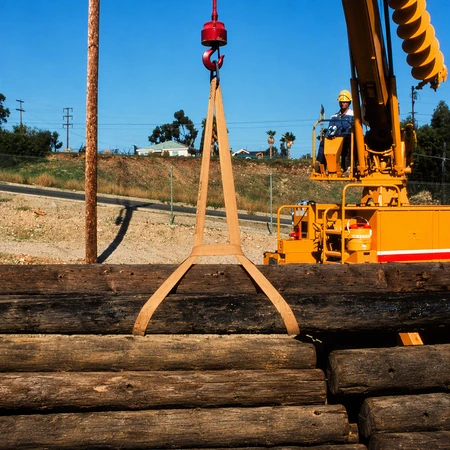
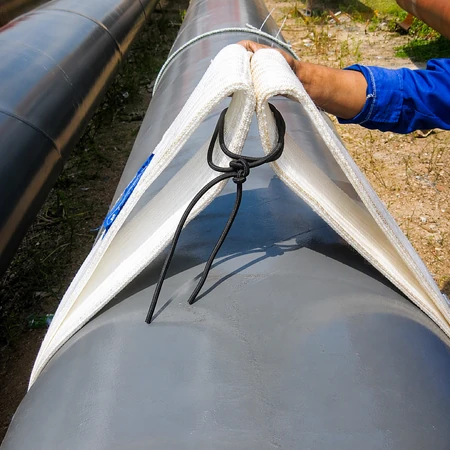
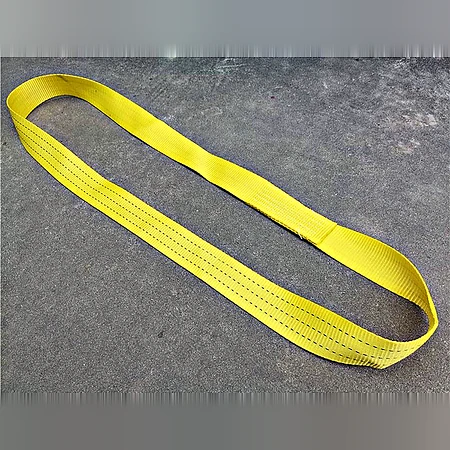
Lift sling rigging company produce Endless Type Webbing Sling.
Endless Type Webbing Sling
An endless type webbing sling is the form with no ends at all: a length of flat woven webbing is lapped back over itself and stitched to close the loop, so what comes off the shelf is one continuous band with no eyes to hook and no fittings to lose. N'okpuru EN 1492-1 it is the endless type A èbè dị larịị kpara akpa, made from one or two layers of webbing, gosiri site na 1 t ka 24 t oke ibu ọrụ. Because nothing is fixed on it, the loop can be turned after every lift, so the wear point, the hook contact point and the joint keep moving instead of staying in one place.
Endless Means One Joint, Not None
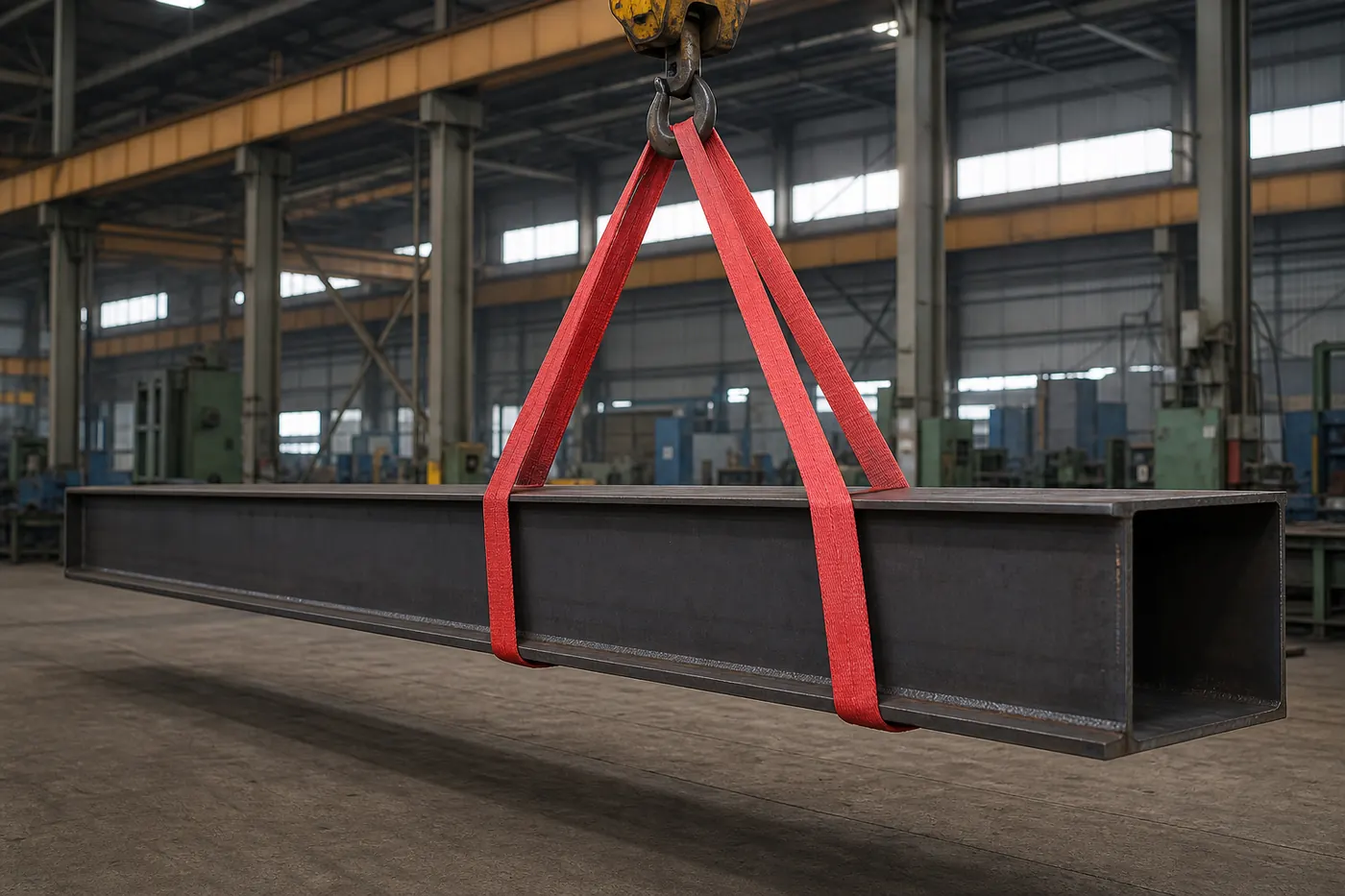
“Enweghị ngwụcha” is used loosely in the trade, and it is worth being precise, because two very different articles answer to the word. This sling is endless in use — no ends, no fittings — but it is not seamless. It has exactly one joint: the lap where the two ends are laid over each other and closed across the full width by several dense rows of stitching, built to carry the rated load.
That single fact decides how the sling is used and inspected. The lap is the one place where the load passes through a made connection, so it earns the first thirty seconds of every inspection — every stitch row, the step at each end of the lap, and whether the two layers still lie flat and parallel. It can also be rotated out of the bearing area and out of the hook contact area, so it is not repeatedly crushed in the same spot. If you need a loop with no joint in the load path at all, nke ahụ bụ èbè okirikiri adịghị agwụ agwụ, ebe isi na-aga n'ihu na naanị aka uwe bụ tube.
Nkọwa nka nka
| Oke | Nkọwapụta |
|---|---|
| Ngwaahịa | èbè na-adịghị agwụ agwụ ụdị webbing / ụdị adịghị agwụ agwụ A kpara akpa kpara akpa èbè / circular webbing sling |
| Ọkọlọtọ | N'ime 1492-1 (7:1 usoro); AS 1353 referenced for Australian supply |
| Ihe onwunwe | 100% polyester dị elu; polyamide and polypropylene on request |
| WLL range | 1 t – 12 t single ply standard; 2 t – 24 t okpukpu abụọ; multi-ply to 50 t na arịrịọ |
| Nhazi ihe | 7:1 abụọ OTU 1492-1; 6:1 na 8:1 engineered to specification |
| Ply | Otu mpempe akwụkwọ (7.5 mm webbing) dị ka ọkọlọtọ; okpukpu abụọ (2 × 7.5 mm = 15 mm) na arịrịọ |
| Obosara webụ | 25 mm – 300 mm, matched to the band |
| Ogologo | Quoted by circumference or by effective working length; standard to 12 m, omenala ruo 200 m |
| Ogologo oge | Oke 3% na WLL; max 10% at breaking load |
| Okpomọkụ | -40 °C ka +100 Celsius C (polyester) |
| Ịka akara | N'ime 1492-1 agba agba, one black stripe per tonne, sewn label: WLL, ihe, ọkọlọtọ, onye na-eme ihe, ogologo, batch code |
| Wear protection | Reinforced sleeves or coatings at wear points |
| Akwụkwọ | Ọnụ ego MTC, test reports and DoC with each shipment; CE to 2006/42/EC on the 7:1 usoro |
| Nkwakọ ngwaahịa | PE bag, katọn, pallet; osisi ikpe maka arọ ma ọ bụ multi-ụkwụ set |
Standard Sizes – Otu mpempe akwụkwọ
Seven-and-a-half millimetre polyester webbing, one layer. Pick by the vertical WLL you need, then read across for the width, the minimum length and the weight per metre.
| Nlereanya | Agba | WLL vetikal | WLL choker | WLL nkata | Obosara | Ọkpụrụkpụ | Ogologo nkeji | Ibu |
|---|---|---|---|---|---|---|---|---|
| EWS-1T | Violet | 1,000 n'arọ | 800 n'arọ | 2,000 n'arọ | 30 mm | 7.5 mm | 1.1 m | 0.22 n'arọ/m |
| EWS-2T | Akwụkwọ ndụ akwụkwọ ndụ | 2,000 n'arọ | 1,600 n'arọ | 4,000 n'arọ | 60 mm | 7.5 mm | 1.2 m | 0.45 n'arọ/m |
| EWS-3T | Odo | 3,000 n'arọ | 2,400 n'arọ | 6,000 n'arọ | 90 mm | 7.5 mm | 1.3 m | 0.71 n'arọ/m |
| EWS-4T | Agba ntụ | 4,000 n'arọ | 3,200 n'arọ | 8,000 n'arọ | 120 mm | 7.5 mm | 1.4 m | 1.02 n'arọ/m |
| EWS-5T | Uhie | 5,000 n'arọ | 4,000 n'arọ | 10,000 n'arọ | 150 mm | 7.5 mm | 2 m | 1.21 n'arọ/m |
| EWS-6T | Agba aja aja | 6,000 n'arọ | 4,800 n'arọ | 12,000 n'arọ | 180 mm | 7.5 mm | 2 m | 1.42 n'arọ/m |
| EWS-8T | Acha anụnụ anụnụ | 8,000 n'arọ | 6,400 n'arọ | 16,000 n'arọ | 240 mm | 7.5 mm | 2 m | 1.89 n'arọ/m |
| EWS-10T | oroma | 10,000 n'arọ | 8,000 n'arọ | 20,000 n'arọ | 300 mm | 7.5 mm | 3 m | 2.34 n'arọ/m |
| EWS-12T | – | 12,000 n'arọ | 9,600 n'arọ | 24,000 n'arọ | 300 mm | 7.5 mm | 3 m | 2.98 n'arọ/m |
Standard Sizes – Mpịaji okpukpu abụọ
Abụọ 7.5 mm plies sewn into a 15 mm mejupụtara. Double ply buys capacity at the same width, and a band that resists cutting and abrasion better — which is why it is specified where the sling runs over an edge or does repeated choker work.
| Nlereanya | Agba | WLL vetikal | WLL choker | WLL nkata | Obosara | Ọkpụrụkpụ | Ogologo nkeji | Ibu |
|---|---|---|---|---|---|---|---|---|
| EWSD-2T | Akwụkwọ ndụ akwụkwọ ndụ | 2,000 n'arọ | 1,600 n'arọ | 4,000 n'arọ | 30 mm | 15 mm | 1.5 m | 0.50 n'arọ/m |
| EWSD-4T | Agba ntụ | 4,000 n'arọ | 3,200 n'arọ | 8,000 n'arọ | 60 mm | 15 mm | 1.5 m | 0.86 n'arọ/m |
| EWSD-6T | Agba aja aja | 6,000 n'arọ | 4,800 n'arọ | 12,000 n'arọ | 90 mm | 15 mm | 1.5 m | 1.50 n'arọ/m |
| EWSD-8T | Acha anụnụ anụnụ | 8,000 n'arọ | 6,400 n'arọ | 16,000 n'arọ | 120 mm | 15 mm | 2 m | 1.96 n'arọ/m |
| EWSD-10T | oroma | 10,000 n'arọ | 8,000 n'arọ | 20,000 n'arọ | 150 mm | 15 mm | 2 m | 2.62 n'arọ/m |
| EWSD-12T | – | 12,000 n'arọ | 9,600 n'arọ | 24,000 n'arọ | 180 mm | 15 mm | 3 m | 2.86 n'arọ/m |
| EWSD-16T | – | 16,000 n'arọ | 12,800 n'arọ | 32,000 n'arọ | 240 mm | 15 mm | 3 m | 4.10 n'arọ/m |
| EWSD-20T | – | 20,000 n'arọ | 16,000 n'arọ | 40,000 n'arọ | 300 mm | 15 mm | 3 m | 5.46 n'arọ/m |
| EWSD-24T | – | 24,000 n'arọ | 19,200 n'arọ | 48,000 n'arọ | 300 mm | 15 mm | 3 m | 6.10 n'arọ/m |
Emebere WLL ikpeazụ maka owuwu èbè zuru oke, stitching and rated configuration. Akụkụ na-ezo aka na ahụ ọkọlọtọ ọkọlọtọ; the optional protective sleeve increases the outer dimension slightly. A na-emezi ogologo ogologo na ikike dị elu iji nye iwu. N'elu 10 t nke EN 1492-1 colour code no longer applies — the label and the black stripes govern.
Colour and Stripes – What the Marking Certifies
The webbing colour certifies one thing only: a working load limit band, na elu kwụ ọtọ. It says nothing about the material, ogologo, the safety factor or the condition of the sling. Alongside it, one black transverse stripe per tonne lets the two markings be cross-checked. The label colour is separate again and tells you the fibre: blue for polyester, green for polyamide, brown for polypropylene — so green webbing is a 2 t band while a green label means nylon.
Hitch Mode Factors
The label figure is the straight lift. Every other arrangement is derived from it, and these factors reduce it — a basket does not give the sling a second, higher rating, it puts two parts of the same webbing into the load path.
| Hitch | Ụdị ihe kpatara ya | Na omume |
|---|---|---|
| ebuli kwụ ọtọ | 1.0 | Nọmba akara; loop hangs as a U, both parts on the hook |
| Nkpagbu | 0.8 | Loop passes round the load and back through itself — a 4 t ibu choro a 5 t èbè |
| Nkata, legs 0-7° | 2.0 | Two parts share the load, ụkwụ dị nso na vetikal |
| Nkata, legs 7-45° | 1.4 | Tension rises as the legs open out |
| Nkata, ụkwụ 45-60 ° | 1.0 | No more than a straight lift at this spread |
| Angled choke, 45Celsius | 0.7 | Nkpagbu, with the legs opening away from vertical |
| Angled choke, 60Celsius | 0.5 | The most heavily reduced arrangement in common use |
Na-akọwapụta Ogologo
Ebè na-adịghị agwụ agwụ enweghị nsọtụ iji tụọ n'etiti, so it is quoted one of two ways — and the two differ by about a factor of two, which is the commonest reason a sling arrives at the wrong length. Circumference is the total perimeter, i.e. the webbing in the finished sling. Effective working length is the usable height you actually get, ihe dị ka ọkara gburugburu, n'ihi na loop na-agbaji okpukpu abụọ mgbe ọ kwụwara.
| Enyere iwu okirikiri | Ihe ruru. working length | Ojiji a na-ahụkarị |
|---|---|---|
| 2 m | 1 m | Chokes na obere ebuli, mgbanaka siri ike |
| 4 m | 2 m | The izugbe-ebumnobi nha |
| 6 m | 3 m | Nkata na-ebuli elu na ihe ọkụkụ na imepụta ihe |
| 8 m | 4 m | Ogologo ngalaba, ngwugwu na pipework |
| 10 m | 5 m | Ọdịdị na nnukwu osisi |
| 12 m | 6 m | Ọkọlọtọ kacha ogologo; ogologo ịtụ |
The relationship is the point, not the exact figure: it depends on ply, band thickness and bend radius. State which convention your number is in, or simply give the distance from hook to load and we will size the loop to it.
Enweghị ngwụcha ma ọ bụ anya na anya?
| Ngwongwo | Ụdị adịghị agwụ agwụ | Anya na anya |
|---|---|---|
| Akwụsị | None — one continuous loop | Two flat eyes, otu na njedebe ọ bụla |
| Ogologo | Not fixed; can be doubled or taken up by another turn | Fixed between two pick-up points |
| Wear points | None fixed — the whole loop rotates | The same two bearing points and eyes |
| Ndụ ọrụ | Longer, because wear and the joint move around the loop | Condemned when the fixed points wear out |
| Kachasị mma maka | Ihe ebuli elu, ngwugwu, general yard and site work | Lifts with defined, repeated pick-up points |
Most sites carry both. If the method statement has to state where the sling attaches, nke eye and eye webbing sling makes that explicit; if crews rig whatever is in front of them, the endless type is the better general-purpose article.
Ijikwa, Inspection and the Rotation Habit
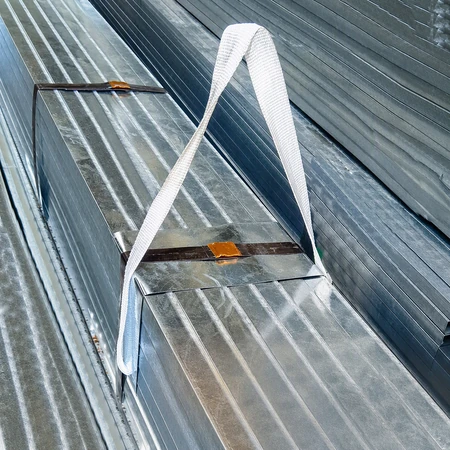
An endless sling is easier to inspect than a round sling, because the load path is the webbing itself and everything you need to see is on the surface. Work through it in this order.
- Njikọ ụkwụ mbụ — every stitch row, the step at each end, and whether the two layers still lie flat and parallel. Agbajiri, Ịdị nwayọọ ma ọ bụ dọkpụrụ adọkpụ na-akatọ èbè.
- Ihe na-ebute ya where the band has wrapped on loads — cuts, abrasion, glazing, a worn edge.
- Mpaghara kọntaktị nko, where the loop sits in the hook bowl and folds over itself.
- The dum gbalaga — a flat band carries load across its full width, ya mere ịkpụ ebe ọ bụla dị mkpa.
- Heat and chemical damage — shiny, stiff or discoloured fibre means it has met heat, esemokwu, acid or solvent.
Tụgharịa dị ka amụma, ọ bụghị dị ka mmezi: turn the loop after every lift so the bearing point, the hook point and the joint keep moving. Keep the band flat and untwisted — a flat sling twisted into a rope concentrates the load on one edge and loses the contact area that is its whole advantage. Protect the band at edges and keep it within -40 °C ka +100 Celsius C, away from weld spatter.
Ngwa
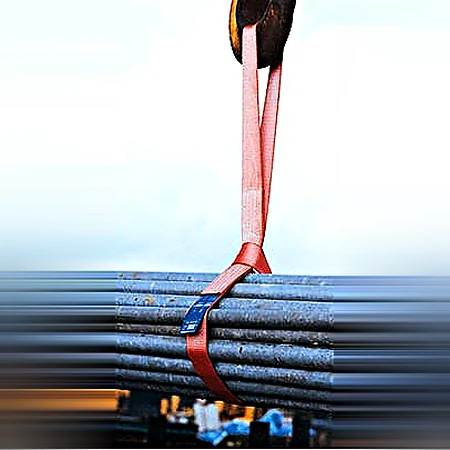
- Choked lifts on structural steel, ibé na welded ụgha
- Basket lifts on plant, igwe, skids, anwụ na nkedo
- Ngwunye tube, ọkpọkọ na ngalaba, kpagbuo ma ọ bụ kechie okpukpu abụọ
- Precast concrete units where a flat, broad bearing is wanted
- Crates, stillages na igbe igbe; general yard and depot work
- Cold stores and cold-climate work down to -40 Celsius C; wet conditions where a rust-free sling is wanted
For hot loads or sharp, unpadded edges the polyester build is the wrong choice — see the elu okpomọkụ webbing èbè or a wire rope sling instead.
Ajụjụ a na-ajụkarị
What is an endless type webbing sling?
N'okpuru EN 1492-1 it is the endless type A flat woven webbing sling: a length of webbing whose two ends are lapped back over one another and stitched to close the loop. One continuous band, no eyes to hook, no fittings to lose, one joint built to carry the rated load.
Is it really seamless?
Mba. Eji ya eme ihe adịghị agwụ agwụ, but there is one made connection — the lapped and stitched joint — and it is the first thing to inspect. If you need no joint at all in the load-bearing element, that is an endless round sling.
Ego ole ka ọ ga-ebuli na nkpagbu ma ọ bụ nkata?
The label gives the straight lift. A choke takes it to 0.8, a basket at a narrow angle to 2.0, then 1.4 between 7 na 45 ogo na 1.0 between 45 na 60. A na-ebelata mkpakọ nke akụkụ, ka 0.7 na 45 ogo na 0.5 na 60. Confirm the hitch and the angle before the lift.
Single ply or double ply?
Double ply gives more capacity at the same width and better resistance to cutting and abrasion; single ply is lighter and more flexible for general duty. Pick by the WLL you need and the working conditions, not by layer count alone.
Ogologo ole ka m kwesịrị ịtụ?
Say which convention your figure is in — circumference or effective working length; they differ by about a factor of two. If you know how far the hook will be from the load, send that instead and we will size the loop to it.
Does the colour tell me everything?
Mba. The webbing colour certifies the WLL band in straight lift only. The stripes give the tonne figure, and the label colour separately tells you the fibre: blue polyester, green polyamide, brown polypropylene.
Rịọ nkwupụta
Zipu ibu na udi ya, ihe mgbochi ị chọrọ iji, whether your length is a circumference or a working length, eriri ahụ, and the standard and destination market. We confirm the band, pịpị, obosara, ogologo, marking and test documentation before the webbing is cut — 1 t ka 24 t, otu ma ọ bụ okpukpu abụọ, 7:1 abụọ OTU 1492-1 dị ka ọkọlọtọ.
Send your lift details for an endless sling quotation
Ekwentị / WeChat: +86 180 6600 2268 | E-mail: 702461526@qq.com
Adreesị: Ụlọ ọrụ Lifute Industrial Park, Obodo Taizhou, Jiangsu Province, China