

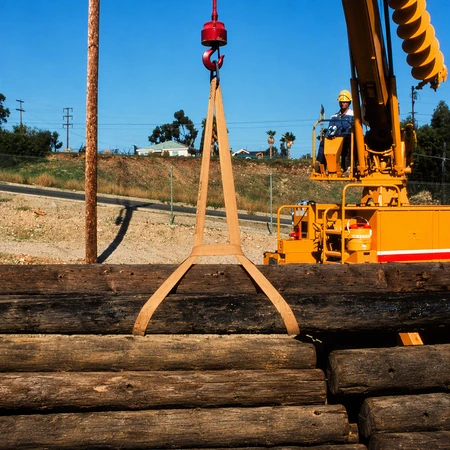
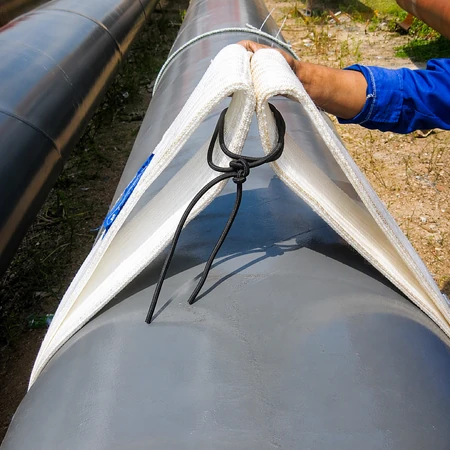
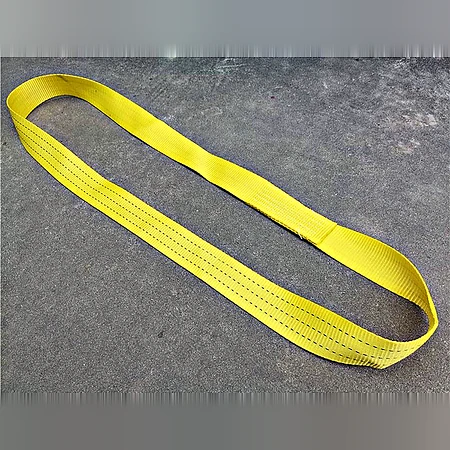
Lift sling rigging company produce Endless Type Webbing Sling.
ʻO ka maʻa pūnaewele ʻano pau ʻole
An endless type webbing sling is the form with no ends at all: a length of flat woven webbing is lapped back over itself and stitched to close the loop, so what comes off the shelf is one continuous band with no eyes to hook and no fittings to lose. Ma lalo o EN 1492-1 it is the endless type A maʻa palahalaha i ulana ʻia, made from one or two layers of webbing, helu ʻia mai 1 t i ka 24 t palena haawe hana. Because nothing is fixed on it, the loop can be turned after every lift, so the wear point, the hook contact point and the joint keep moving instead of staying in one place.
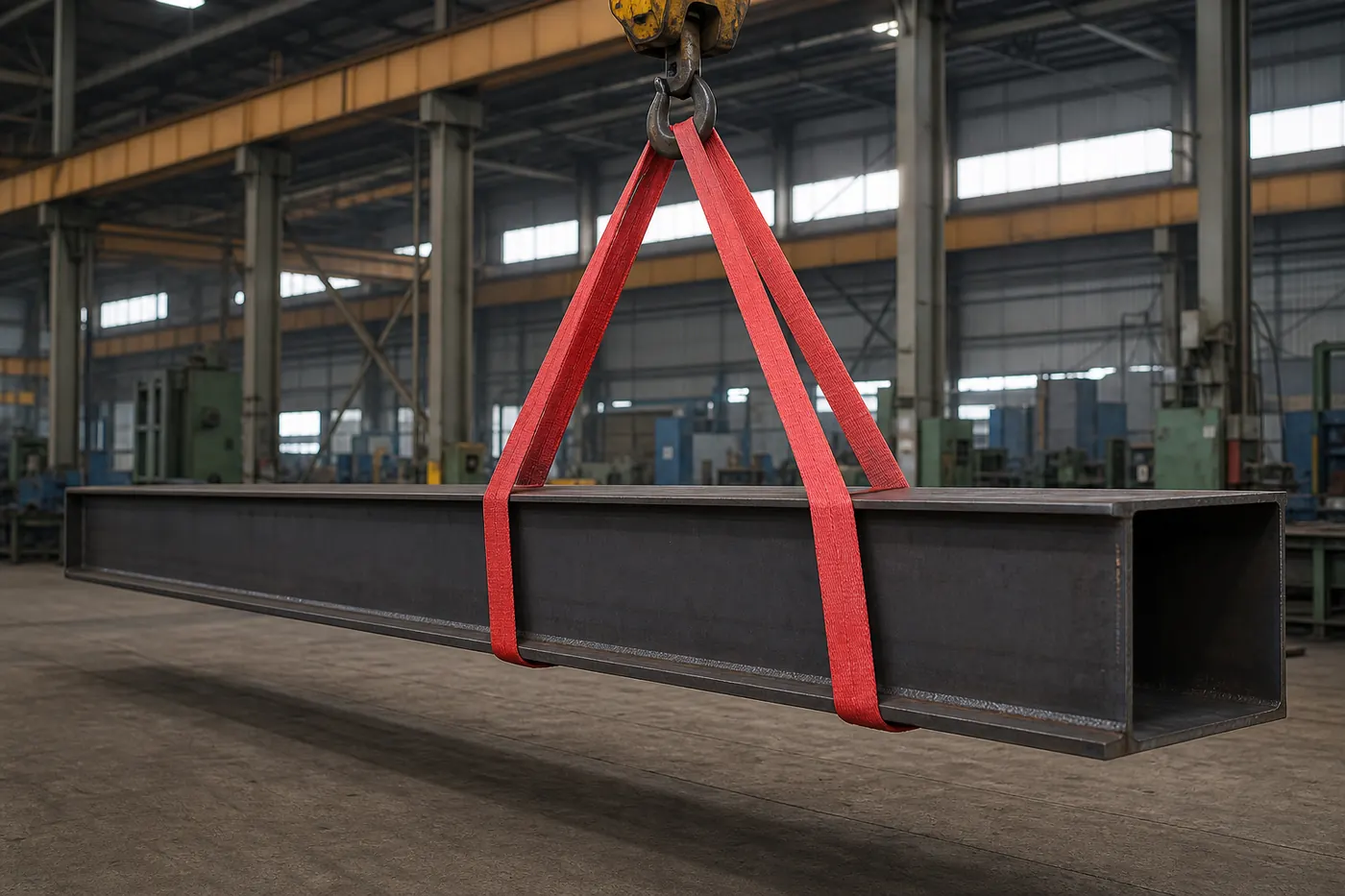
Endless Means One Joint, Not None
“pau ole” is used loosely in the trade, and it is worth being precise, because two very different articles answer to the word. This sling is endless in use — no ends, no fittings — but it is not seamless. It has exactly one joint: the lap where the two ends are laid over each other and closed across the full width by several dense rows of stitching, built to carry the rated load.
That single fact decides how the sling is used and inspected. The lap is the one place where the load passes through a made connection, so it earns the first thirty seconds of every inspection — every stitch row, the step at each end of the lap, and whether the two layers still lie flat and parallel. It can also be rotated out of the bearing area and out of the hook contact area, so it is not repeatedly crushed in the same spot. If you need a loop with no joint in the load path at all, ʻo ia ka maa poepoe pau ole, where the core is continuous and only the sleeve is a tube.
Nā Kūlana ʻenehana
| ʻĀpana | Hōʻike |
|---|---|
| Huahana | maʻa pūnaewele ʻano pau ʻole / ʻano pau ʻole He maʻa palahalaha i ulana ʻia / circular webbing sling |
| Kūlana | IN 1492-1 (7:1 moʻo); AS 1353 referenced for Australian supply |
| Mea waiwai | 100% polyester kiʻekiʻe-tenacity; polyamide a me ka polypropylene ma ke noi |
| WLL laula | 1 t – 12 t single ply standard; 2 t – 24 t papalua; multi-ply to 50 t ma ke noi |
| Mea hoʻolālā | 7:1 elua KEKAHI 1492-1; 6:1 a 8:1 engineered to specification |
| Ply | Paʻi hoʻokahi (7.5 mm punawelewele) e like me ke kūlana; double ply (2 × 7.5 mm = 15 mm) ma ke noi |
| Laulā pūnaewele | 25 mm – 300 mm, matched to the band |
| Ka lōʻihi | Quoted by circumference or by effective working length; standard to 12 m, maʻamau a hiki i 200 m |
| ʻO ka lōʻihi | Max 3% at WLL; max 10% at breaking load |
| Mahana | -40 °C i +100 °C (poliester) |
| Hoailona | IN 1492-1 kala kala, one black stripe per tonne, lepili humuhumu: WLL, mea waiwai, maʻamau, mea hana, lōʻihi, batch code |
| ʻAʻahu pale | Reinforced sleeves or coatings at wear points |
| Palapala | Hui MTC, test reports and DoC with each shipment; CE to 2006/42/EC on the 7:1 moʻo |
| Hoʻopili | PE bag, pahu pahu, pallet; nā pahu lāʻau no nā pūʻulu kaumaha a nui paha |
Standard Sizes – Hoʻokahi Ply
Seven-and-a-half millimetre polyester webbing, one layer. Pick by the vertical WLL you need, then read across for the width, the minimum length and the weight per metre.
| Hoʻohālike | kalakala | WLL kū pololei | WLL choker | Hīnaʻi WLL | Laulā | mānoanoa | Min length | Kaumaha |
|---|---|---|---|---|---|---|---|---|
| EWS-1T | Violet | 1,000 kg | 800 kg | 2,000 kg | 30 mm | 7.5 mm | 1.1 m | 0.22 kg/m |
| EWS-2T | ʻōmaʻomaʻo | 2,000 kg | 1,600 kg | 4,000 kg | 60 mm | 7.5 mm | 1.2 m | 0.45 kg/m |
| EWS-3T | Melemele | 3,000 kg | 2,400 kg | 6,000 kg | 90 mm | 7.5 mm | 1.3 m | 0.71 kg/m |
| EWS-4T | Hinahina | 4,000 kg | 3,200 kg | 8,000 kg | 120 mm | 7.5 mm | 1.4 m | 1.02 kg/m |
| EWS-5T | ʻulaʻula | 5,000 kg | 4,000 kg | 10,000 kg | 150 mm | 7.5 mm | 2 m | 1.21 kg/m |
| EWS-6T | Palaunu | 6,000 kg | 4,800 kg | 12,000 kg | 180 mm | 7.5 mm | 2 m | 1.42 kg/m |
| EWS-8T | Polū | 8,000 kg | 6,400 kg | 16,000 kg | 240 mm | 7.5 mm | 2 m | 1.89 kg/m |
| EWS-10T | Alani | 10,000 kg | 8,000 kg | 20,000 kg | 300 mm | 7.5 mm | 3 m | 2.34 kg/m |
| EWS-12T | – | 12,000 kg | 9,600 kg | 24,000 kg | 300 mm | 7.5 mm | 3 m | 2.98 kg/m |
Standard Sizes – Pāpālua
ʻelua 7.5 mm plies sewn into a 15 mm hui. Double ply buys capacity at the same width, and a band that resists cutting and abrasion better — which is why it is specified where the sling runs over an edge or does repeated choker work.
| Hoʻohālike | kalakala | WLL kū pololei | WLL choker | Hīnaʻi WLL | Laulā | mānoanoa | Min length | Kaumaha |
|---|---|---|---|---|---|---|---|---|
| EWSD-2T | ʻōmaʻomaʻo | 2,000 kg | 1,600 kg | 4,000 kg | 30 mm | 15 mm | 1.5 m | 0.50 kg/m |
| EWSD-4T | Hinahina | 4,000 kg | 3,200 kg | 8,000 kg | 60 mm | 15 mm | 1.5 m | 0.86 kg/m |
| EWSD-6T | Palaunu | 6,000 kg | 4,800 kg | 12,000 kg | 90 mm | 15 mm | 1.5 m | 1.50 kg/m |
| EWSD-8T | Polū | 8,000 kg | 6,400 kg | 16,000 kg | 120 mm | 15 mm | 2 m | 1.96 kg/m |
| EWSD-10T | Alani | 10,000 kg | 8,000 kg | 20,000 kg | 150 mm | 15 mm | 2 m | 2.62 kg/m |
| EWSD-12T | – | 12,000 kg | 9,600 kg | 24,000 kg | 180 mm | 15 mm | 3 m | 2.86 kg/m |
| EWSD-16T | – | 16,000 kg | 12,800 kg | 32,000 kg | 240 mm | 15 mm | 3 m | 4.10 kg/m |
| EWSD-20T | – | 20,000 kg | 16,000 kg | 40,000 kg | 300 mm | 15 mm | 3 m | 5.46 kg/m |
| EWSD-24T | – | 24,000 kg | 19,200 kg | 48,000 kg | 300 mm | 15 mm | 3 m | 6.10 kg/m |
Hoʻokumu ʻia ka WLL hope no ka hana maʻa piha, stitching and rated configuration. Nānā nā ana i ke kino maʻa maʻamau; the optional protective sleeve increases the outer dimension slightly. ʻO nā lōʻihi lōʻihi a me nā mana kiʻekiʻe e hana ʻia e kauoha. Maluna 10 t ka EN 1492-1 colour code no longer applies — the label and the black stripes govern.
Colour and Stripes – What the Marking Certifies
The webbing colour certifies one thing only: a working load limit band, i ka hapai pololei. It says nothing about the material, ka lōʻihi, the safety factor or the condition of the sling. Alongside it, one black transverse stripe per tonne lets the two markings be cross-checked. The label colour is separate again and tells you the fibre: blue for polyester, green for polyamide, brown for polypropylene — so green webbing is a 2 t band while a green label means nylon.
Hitch Mode Factors
The label figure is the straight lift. Every other arrangement is derived from it, and these factors reduce it — a basket does not give the sling a second, higher rating, it puts two parts of the same webbing into the load path.
| Hoʻopaʻa | Kumu kumu | Ma ka hana |
|---|---|---|
| Hapai pololei | 1.0 | ʻO ke kiʻi lepili; loop hangs as a U, both parts on the hook |
| Kuʻi ʻia | 0.8 | Loop passes round the load and back through itself — a 4 t haawe pono a 5 t maa |
| hīnaʻi, legs 0-7° | 2.0 | Two parts share the load, nā wāwae kokoke i ke kū pololei |
| hīnaʻi, legs 7-45° | 1.4 | Tension rises as the legs open out |
| hīnaʻi, wāwae 45-60° | 1.0 | No more than a straight lift at this spread |
| Angled choke, 45° | 0.7 | Kuʻi ʻia, with the legs opening away from vertical |
| Angled choke, 60° | 0.5 | The most heavily reduced arrangement in common use |
Specifying the Length
ʻAʻohe hopena o ka maʻa pau ʻole e ana ma waena, so it is quoted one of two ways — and the two differ by about a factor of two, which is the commonest reason a sling arrives at the wrong length. Circumference is the total perimeter, i.e. the webbing in the finished sling. Effective working length is the usable height you actually get, ma kahi o ka hapalua o ke anapuni, no ka mea, ua palua ka puka lou ke kau.
| Ua kauoha ʻia ka pōʻai | Ma kahi o. working length | Hoʻohana maʻamau |
|---|---|---|
| 2 m | 1 m | ʻO nā kī a me nā hāpai pōkole, hoʻopaʻa paʻa |
| 4 m | 2 m | Ka nui kumu nui |
| 6 m | 3 m | Hāpai ka hīnaʻi ma luna o nā mea kanu a me nā mea hana |
| 8 m | 4 m | Māhele lōʻihi, puolo a me ka paipu |
| 10 m | 5 m | ʻO ka hale a me ka mea kanu nui |
| 12 m | 6 m | Kūlana lōʻihi loa; lōʻihi e kauoha |
The relationship is the point, not the exact figure: it depends on ply, band thickness and bend radius. State which convention your number is in, or simply give the distance from hook to load and we will size the loop to it.
Endless or Eye and Eye?
| Waiwai | Endless type | Maka a me ka maka |
|---|---|---|
| Hoʻopau | None — one continuous loop | Two flat eyes, hoʻokahi ma kēlā me kēia hopena |
| Ka lōʻihi | Not fixed; can be doubled or taken up by another turn | Fixed between two pick-up points |
| Wear points | None fixed — the whole loop rotates | The same two bearing points and eyes |
| Ola lawelawe | ʻOi aku ka lōʻihi, because wear and the joint move around the loop | Condemned when the fixed points wear out |
| ʻOi loa no | Hoʻokiʻekiʻe ʻia, pūʻolo, general yard and site work | Lifts with defined, repeated pick-up points |
Most sites carry both. If the method statement has to state where the sling attaches, ka eye and eye webbing sling makes that explicit; if crews rig whatever is in front of them, the endless type is the better general-purpose article.
Ka lawelawe ʻana, Inspection and the Rotation Habit
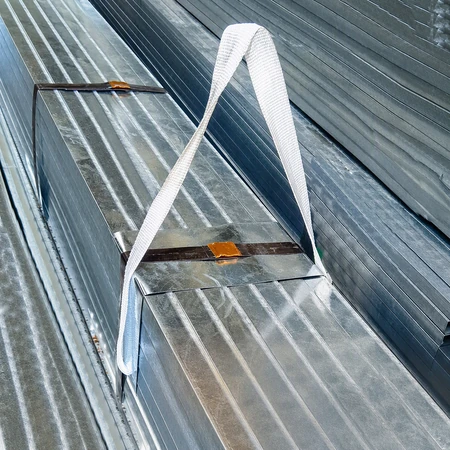
An endless sling is easier to inspect than a round sling, because the load path is the webbing itself and everything you need to see is on the surface. Work through it in this order.
- ʻO ka hui mua - kēlā me kēia lālani humuhumu, the step at each end, and whether the two layers still lie flat and parallel. Nahaha, hoʻohewa ka humuhumu ʻana a huki ʻia paha i ka maʻa.
- ʻO nā kiko pili where the band has wrapped on loads — cuts, abrasion, ʻōniʻoniʻo, a worn edge.
- ʻO ka wahi pili makau, where the loop sits in the hook bowl and folds over itself.
- ʻO ka hui holoʻokoʻa — a flat band carries load across its full width, no laila he mea nui ka ʻoki ʻana ma nā wahi a pau.
- Heat and chemical damage — shiny, stiff or discoloured fibre means it has met heat, paio, acid or solvent.
Hoʻololi e like me ke kulekele, ʻaʻole e like me ka hoʻoponopono: turn the loop after every lift so the bearing point, e nee mau ana ka lae makau a me ka ami. Keep the band flat and untwisted — a flat sling twisted into a rope concentrates the load on one edge and loses the contact area that is its whole advantage. Protect the band at edges and keep it within -40 °C i +100 °C, away from weld spatter.
Nā noi
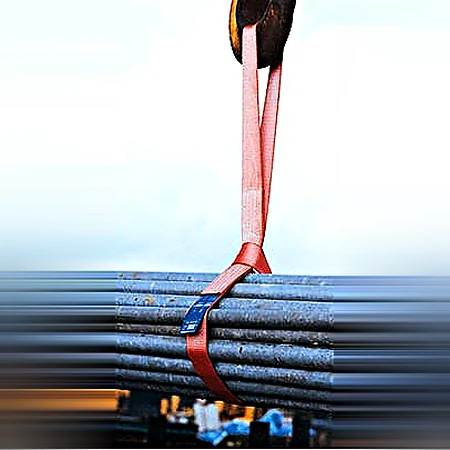
- Choked lifts on structural steel, nā kaola a me nā hana welded
- Basket lifts on plant, nā mīkini, kaʻe ʻana, dies and castings
- Puʻupuʻu paipu, paipu a me na pauku, ʻoki ʻia a ʻōwili pālua ʻia
- Precast concrete units where a flat, broad bearing is wanted
- Nā pahu, stillages and boxed goods; general yard and depot work
- Cold stores and cold-climate work down to -40 °C; wet conditions where a rust-free sling is wanted
For hot loads or sharp, unpadded edges the polyester build is the wrong choice — see the kiʻekiʻe wela webbing maʻa or a wire rope sling instead.
Nīnau pinepine
What is an endless type webbing sling?
Ma lalo o EN 1492-1 ʻo ia ke ʻano pau ʻole ʻo A maʻa palahalaha i ulana ʻia: a length of webbing whose two ends are lapped back over one another and stitched to close the loop. One continuous band, no eyes to hook, no fittings to lose, one joint built to carry the rated load.
Is it really seamless?
ʻAʻole. It is endless in use, but there is one made connection — the lapped and stitched joint — and it is the first thing to inspect. If you need no joint at all in the load-bearing element, that is an endless round sling.
ʻEhia ka nui o ka hiki ke hāpai i loko o kahi ʻoki a i ʻole ka hīnaʻi?
The label gives the straight lift. A choke takes it to 0.8, a basket at a narrow angle to 2.0, then 1.4 ma waena 7 a 45 degere a 1.0 ma waena 45 a 60. Hoʻemi hou ʻia kahi choke angled, i 0.7 ma 45 degere a 0.5 ma 60. Confirm the hitch and the angle before the lift.
ʻO ka pā hoʻokahi a i ʻole ka pā pālua?
Double ply gives more capacity at the same width and better resistance to cutting and abrasion; single ply is lighter and more flexible for general duty. Pick by the WLL you need and the working conditions, not by layer count alone.
He aha ka lōʻihi e kauoha ai au?
Say which convention your figure is in — circumference or effective working length; they differ by about a factor of two. If you know how far the hook will be from the load, send that instead and we will size the loop to it.
Does the colour tell me everything?
ʻAʻole. The webbing colour certifies the WLL band in straight lift only. The stripes give the tonne figure, and the label colour separately tells you the fibre: blue polyester, green polyamide, brown polypropylene.
Noi i ka olelo
E hoʻouna i ka ukana a me kona ʻano, ʻo ka pahu āu i manaʻo ai e hoʻohana, whether your length is a circumference or a working length, ka pulupulu, and the standard and destination market. We confirm the band, pāʻani, laula, lōʻihi, marking and test documentation before the webbing is cut — 1 t i ka 24 t, pakahi a papalua paha, 7:1 elua KEKAHI 1492-1 e like me ke kūlana.
Send your lift details for an endless sling quotation
Kelepona / WeChat: +86 180 6600 2268 | leka uila: 702461526@qq.com
Heluhelu: Pāka ʻOihana Lifute, Kulanakauhale o Taizhou, ʻĀpana ʻo Jiangsu, Kina