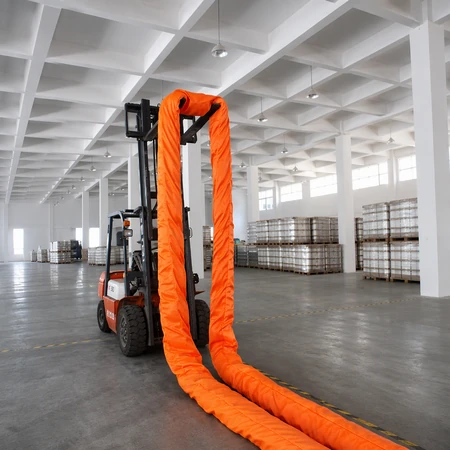
Tõstmistroppide taglase ettevõte toodab lõputut ümmargust tropi.
Endless Round Sling — Closed-Loop Sling, 1-1000 t
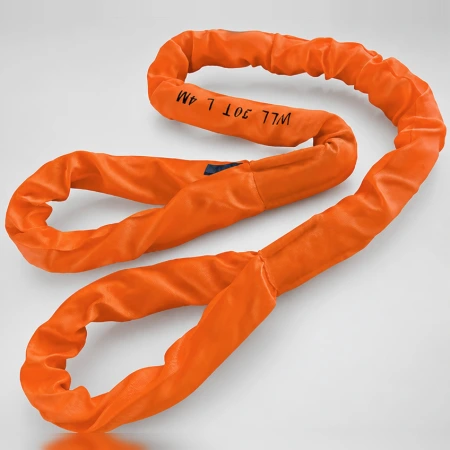
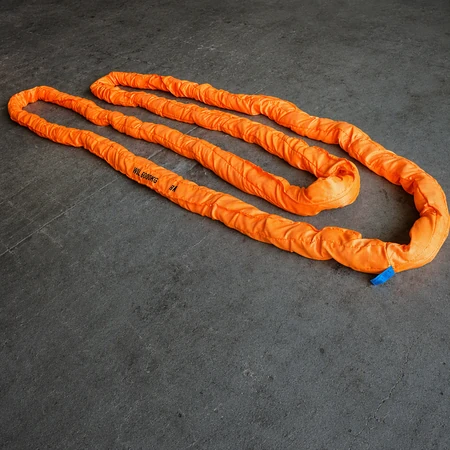
An lõputu ümmargune tropp is a closed loop: the core runs continuously inside the sleeve and is closed on itself, so there is no eye, sõrmkübarat pole, no hook and no stitching anywhere in the load path. It is made in high-tenacity polyester across 27 LFTEERS articles, alates 1,000 kg kuni 1,000,000 kg, in bodies from 0.5 m kuni 80 m. Because the loop has no ends it can be turned, re-reeved and re-oriented after a lift — which is why it is the usual choice for basket and choke work on plant that must not be marked.
- Töökoormuse piirang1,000 kg kuni 1,000,000 kg
- Artiklite vahemikLFTEERS-1 to LFTEERS-1000, 27 suurused
- Kere mõõtmed15 × 50 mm kuni 610 × 1,060 mm
- Pikkus0.5-80 m, effective or circumference
- Ühiku kaal0.47 juurde 226 kg/m
- Ei mingit metalliNothing on the sling touches the load
What “endless” changes for the rigger
Endless describes the construction of the loop, not the length of the article. Nothing is spliced, sewn or fitted into the load path, and four things follow on site.
- The loop has no direction. Both halves are the same article, so the sling can be turned end for end and re-reeved after a lift. In a basket the two legs are identical, which is not true of a sling with an eye at one end and a fitting at the other.
- Wear can be spread. The contact point moves as the sling is rotated along the loop, so the sleeve is not destroyed in one place while the rest of the body is new.
- There is nothing to mismatch. No eye has to be offered to a hook of the right shape, and no fitting has to be rated with the sling. The hook goes through the loop, or the loop goes round the load.
- The sleeve is the whole inspection. The core cannot be opened and looked at, nii et varrukas on aken: what it shows is what the core has been through.
Endless Round Sling specifications
| Toode | Endless round sling — closed-loop polyester round sling, 1 t kuni 1000 t |
|---|---|
| Ehitus | Pidev paralleelne filament südamik kootud torukujulises hülsis, suletakse lõputusse ahelasse; no metal and no stitching in the load path |
| Tuum | High-tenacity polyester multifilament, paralleelne asetamine, vahatatud; UHMWPE or aramid to order |
| Varrukas | Kootud ülitugev polüester, ühekihiline standard; kahekordne varrukas tellimisel |
| Töökoormuse piirang | 1,000 kg kuni 1,000,000 kg, vertikaalne üks jalg - 27 artiklid, LFTEERS-1 to LFTEERS-1000 |
| Murdev koormus | 7 × working load limit |
| Ohutusfaktor | 7:1 standardina; 5:1 to order for markets working to ASME B30.9 |
| WLL-i pikenemine | Approximately 2–3 % |
| Kasutustemperatuur | −40 °C kuni +100 °C, polüester südamik |
| Pikkus | 0.5 m kuni 80 m; minimum rises with the article, maximum is 80 m in every size |
| Värv | Laos oranž või sinine; IN 1492-2 capacity colour applied when the order asks for the standard code |
| Märgistus | Working load limit and length printed on the sleeve; õmmeldud silt WLL-iga, pikkus, seerianumber ja standard |
| Testimine | Tõend laaditi enne saatmist; seerianumbrile vastav katseprotokoll |
| Pakkimine | Keritud polü-kotti, märgistatud karp; kaubaalus või kast nõudmisel |
| HS kood | 630790 — tekstiilmaterjalist tõstetropid |
| MOQ / OEM | Madal MOQ proovitellimuse jaoks; OEM pikkuse järgi, varruka värv, tuum kiud, sildi paigutus ja pakkimine |
Artiklite vahemik: vali mudel
The article number carries the capacity — LFTEERS-10 is the 10,000 kg tropp, LFTEERS-100 the 100,000 kg üks. Paksus ja laius kirjeldavad korpust, the two length columns give the shortest and longest body made in that article, and the unit weight is what you add to the crane load.
| Art.nr. | WLL (kg) | WLL (t) | Paksus (mm) | Laius (mm) | Min (m) | Max (m) | Kaal (kg/m) |
|---|---|---|---|---|---|---|---|
| LFTEERS-1 | 1,000 | 1 | 15 | 50 | 0.5 | 80 | 0.47 |
| LFTEERS-2 | 2,000 | 2 | 16 | 60 | 0.5 | 80 | 0.60 |
| LFTEERS-3 | 3,000 | 3 | 18 | 70 | 0.5 | 80 | 0.82 |
| LFTEERS-4 | 4,000 | 4 | 20 | 75 | 0.5 | 80 | 1.20 |
| LFTEERS-5 | 5,000 | 5 | 25 | 80 | 0.5 | 80 | 1.47 |
| LFTEERS-6 | 6,000 | 6 | 27 | 90 | 1.0 | 80 | 1.70 |
| LFTEERS-8 | 8,000 | 8 | 28 | 100 | 1.0 | 80 | 2.20 |
| LFTEERS-10 | 10,000 | 10 | 29 | 110 | 2.0 | 80 | 3.00 |
| LFTEERS-12 | 12,000 | 12 | 30 | 125 | 2.0 | 80 | 3.40 |
| LFTEERS-15 | 15,000 | 15 | 31 | 150 | 2.0 | 80 | 4.00 |
| LFTEERS-20 | 20,000 | 20 | 32 | 180 | 2.5 | 80 | 5.60 |
| LFTEERS-25 | 25,000 | 25 | 34 | 200 | 2.5 | 80 | 6.80 |
| LFTEERS-30 | 30,000 | 30 | 68 | 220 | 2.5 | 80 | 8.20 |
| LFTEERS-40 | 40,000 | 40 | 75 | 250 | 2.5 | 80 | 10.9 |
| LFTEERS-50 | 50,000 | 50 | 86 | 270 | 2.5 | 80 | 13.8 |
| LFTEERS-60 | 60,000 | 60 | 126 | 280 | 4.0 | 80 | 16.6 |
| LFTEERS-80 | 80,000 | 80 | 138 | 300 | 4.0 | 80 | 22.0 |
| LFTEERS-100 | 100,000 | 100 | 152 | 320 | 4.0 | 80 | 27.0 |
| LFTEERS-200 | 200,000 | 200 | 230 | 460 | 5.0 | 80 | 66.0 |
| LFTEERS-300 | 300,000 | 300 | 310 | 535 | 5.0 | 80 | 82.0 |
| LFTEERS-400 | 400,000 | 400 | 380 | 680 | 5.0 | 80 | 98.0 |
| LFTEERS-500 | 500,000 | 500 | 410 | 760 | 8.0 | 80 | 116.0 |
| LFTEERS-600 | 600,000 | 600 | 460 | 830 | 8.0 | 80 | 139.0 |
| LFTEERS-700 | 700,000 | 700 | 498 | 880 | 8.0 | 80 | 155.0 |
| LFTEERS-800 | 800,000 | 800 | 520 | 940 | 9.0 | 80 | 178.0 |
| LFTEERS-900 | 900,000 | 900 | 580 | 1,000 | 9.0 | 80 | 202.0 |
| LFTEERS-1000 | 1,000,000 | 1,000 | 610 | 1,060 | 9.0 | 80 | 226.0 |
The series code is shown as supplied on the factory sheet. In that sheet the 20,000 kg article carries the code LFTEERS-15 for a second time; it is shown here as LFTEERS-20 so that the code matches the capacity ladder. Thickness and width are the body dimensions specified for the article, and the minimum length is the shortest body that can be closed and sleeved at that capacity. If your price list uses a different prefix, replace it across the table — the rest of the code is the capacity.
Capacity changes with the hitch, not with the tonnage on the sleeve
The figure printed on the sleeve is the working load limit of one leg hanging vertically. It is the number the sling is proof loaded against, and the starting point of a lifting plan — not the tonnage it will pick up in the arrangement you are actually using. Apply the factor for the hitch, and remember that a set of legs is calculated on fewer legs than it has, sest tõeline koorem ei istu kunagi ideaalselt sümmeetriliselt.
| Korraldus | tegur | 5 t tropp | 20 t tropp |
|---|---|---|---|
| Üks tropp, vertikaalne | × 1.0 | 5.0 t | 20.0 t |
| Üks tropp, lämbunud | × 0.8 | 4.0 t | 16.0 t |
| Üks tropp, basket 0–7° | × 2.0 | 10.0 t | 40.0 t |
| Üks tropp, basket 7–45° | × 1.4 | 7.0 t | 28.0 t |
| Üks tropp, basket 45–60° | × 1.0 | 5.0 t | 20.0 t |
| Kaks jalga, 0–45° vertikaalselt | × 1.4 | 7.0 t | 28.0 t |
| Kaks jalga, 45–60° vertikaalselt | × 1.0 | 5.0 t | 20.0 t |
| Neli jalga, 0–45° vertikaalselt | × 2.1 | 10.5 t | 42.0 t |
| Neli jalga, 45–60° vertikaalselt | × 1.5 | 7.5 t | 30.0 t |
Two lines in that table settle most orders. Esiteks, kaks 5 t tropid ei tee a 10 t seatud: at 0–45° from vertical they carry 7 t together, and past 45° they carry 5 t. Teiseks, a four-leg set is worked on three legs, which is why the factor is 2.1 and not 2.8. Where the capacity is close to the limit, the honest answer is usually a tõstetala rather than a bigger sling — keeping the legs vertical recovers the factor that an open leg angle has just spent.
Pikkus: efektiivne pikkus või ümbermõõt
Lõputul tropul pole otsad, nii et selle pikkust saab tsiteerida kahel viisil, a factor of two apart. This is the most common ordering error on a round sling and the most expensive to correct, because the sling has to be remade rather than adjusted.
| Tsiteeritud kui | Mida saate | Kasutatud | Näide |
|---|---|---|---|
| Efektiivne tööpikkus | Pool ümbermõõtu — haake koorma külge ja tagasi üles | Vertikaalsed ja lämbunud tõstukid, kus on teada riputuskõrgus | 4 m EWL = 8 m silmus |
| Ümbermõõt | Kogu silmuse pikkus | Korvtõstukid, kus koormuse ümbermõõt juhib pikkust | 8 m loop = 4 m EWL |
On the slings we supply the figure printed on the sleeve is the efektiivne pikkus, nii et trükk ja tsitaat langevad alati kokku. Korvi jaoks, mõõta koormuse ümbermõõt, lisage konksule pearuumi, ja tsiteerida seda arvu: keha võtab koormuse ümber pika tee, and a sling that only just reaches forces the legs wide — the same as buying a smaller sling.
Where an endless loop earns its place
- Monteeritavad talad ja silla segmendid picked in a basket at each end, where the sleeve protects the formed face and the chamfer.
- Terasrullid sitting in a basket, where the doubled body gives twice the vertical capacity and follows the curve of the coil instead of bearing on one line.
- Trafod, generaatorid ja masinavoodid with small trunnions and painted surfaces — nothing metal touches the load.
- Vormib ja sureb whose lifting holes are drilled, pole mõeldud liitmiku jaoks, so a soft loop threaded through the hole is the whole method.
- Libisemised, raamid ja avamerekorvid choked at each corner with 6–12 m bodies, the sleeve taking the corner abrasion so the core does not.
- Stage and studio work around truss and set pieces where a scratch is a re-spray.
Lõputu, eye-eye or flat webbing
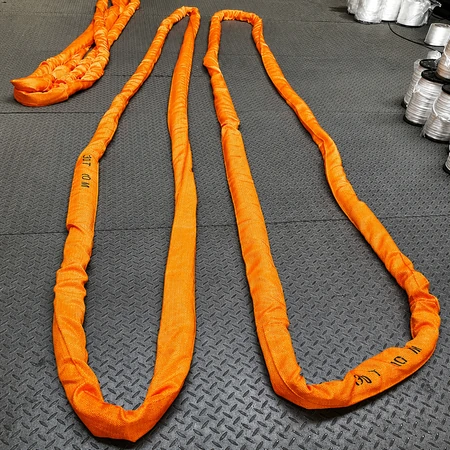
| Kriteerium | Lõputu ümmargune tropp | Eye-eye round sling | Flat endless webbing sling |
|---|---|---|---|
| Kontakt koormaga | Round body, conforms to curves and corners | Round body with two loaded eyes | Lai lame nägu, spreads pressure over an area |
| Pikkus | Set by the loop; either convention can be quoted | Fixed between the eyes | Set by the sewn loop |
| Laadimistee | Pidev, no termination | Pidev tuum, eyes formed by the sleeve | Sewn join in the loop |
| Reeving | Can be turned and re-reeved after a lift | One orientation only | Can be turned, but the join takes the wear |
| Parim jaoks | Korvi ja õhuklapi töö, awkward plant, pikad kehad | Repeated lifts on the same two points | Lai, flat and easily marked loads |
None of the three replaces another. For a fixed length and two known pick-up points see the silma-silma ümmargune tropp; for a wide face and a visible load path see the lõputu lame rihmaga tropp. Both round sling forms are built from the same core and sleeve, so the choice is a rigging decision rather than a capacity one. For hard service the kahe varrukaga ümmargune tropp lisab sama reitinguga teise kulumiskihi, for weight-critical work there is a UHMWPE ümmargune tropp tuum, and for hot loads an aramiid ümmargune tropp.
Ülevaatus ja pensionile jäämine
Südamikku pole näha, so the sleeve is the record of what the sling has been through. Kontrollige enne iga kasutamist, ja formaalselt teie režiim nõuab.
- Check the full length of the sleeve for cuts, tõrked, klaasimine, sulab ja keemiline värvimine, and open the sleeve at the join if anything looks wrong.
- Read the print and the label. If the working load limit or the length can no longer be read, troppi ei saa kontrollida ja see on kasutusest väljas.
- Tundke varruka sees tera; see hõõrub südamikku seestpoolt kaua pärast õue pühkimist.
- Retire on any cut or hole that exposes the core, heat glazing, südamik, mis on muutunud jäigaks või tükkideks, keemiline rünnak, või puudub silt.
- Hoida keritult ja põrandast eemal, päevavalgusest ja kuumusest eemal, lahustid ja keevisõmbluse pritsmed. Never store a sling wet in a closed bag.
- Ärge kunagi lohistage laaditud troppi külili, and never lift on a damaged sleeve.
Korduma kippuvad küsimused
What is the difference between an endless round sling and a round sling with eyes?
An endless round sling is a closed loop with no termination: the core runs continuously inside the sleeve and nothing is spliced or sewn into the load path. A silmadega ümmargune tropp has two defined eyes at a fixed distance, so its length is set by the eyes and it works in one orientation.
Is the length the circumference or the effective length?
Both are used and they differ by a factor of two. Effective length is half the loop — hook down to the load and back up. Circumference is the full loop. A 4 m efektiivne pikkus on an 8 m silmus, so the convention has to be stated on the order.
How much capacity is lost in a choker?
A choked endless round sling is rated at 0.8 of its vertical working load limit, nii et a 5 t tropp annab 4 t. A basket raises the figure to 2.0 at 0–7°, 1.4 at 7–45° and 1.0 at 45–60°. A four-leg set is calculated on three legs, giving 2.1 at 0–45° from vertical and 1.5 at 45–60°.
What does LFTEERS-10 mean?
Artikli number on töökoormuse piirang tonnides: LFTEERS-10 is 10,000 kg vertikaalselt, LFTEERS-100 is 100,000 kg and LFTEERS-1000 is 1,000,000 kg. Vahemik järgib 1-2-3-4-5-6-8-10-12-15-20-25-30-40-50-60-80-100-200-300-400-500-600-700-800-900-1000 redel, so there is no 7 t, 9 t või 11 t artikkel.
How heavy is a long endless sling?
The last column of the article table is the weight per metre: 0.47 kg/m at LFTEERS-1, 3.00 kg/m at LFTEERS-10 and 226 kg/m at LFTEERS-1000. Multiply by the loop length and add the label and packing to get the figure to put against the crane. Where that number is a problem, a UHMWPE core gives the same capacity at a fraction of the weight.
Can the same sling be used in a basket and a choke?
Jah, and that is one of the reasons for the endless form: the same article goes round the load either way. What changes is the working figure, so the rating has to be recalculated for the hitch actually used.
How is the sling tested and documented?
Each sling is proof loaded before dispatch and the test record is matched to the serial number on the sewn label. Breaking load is 7 × the working load limit, and the factor can be varied to order where the market requires it.
Request an endless round sling quotation
Saada koorem jala kohta, the hitch and the leg angle, the distance between pick-up points and the headroom to the hook — plus the length convention and any marking or documentation your site requires. Kinnitame võimsuse, pikkus ja varrukas, ja tsiteerida tehasest otse koos joonisega, a proof-load record and a sample. Vaadake full round sling range for the rest of the series.
Hankige tasuta hinnapakkumine ja näidis