 702461526

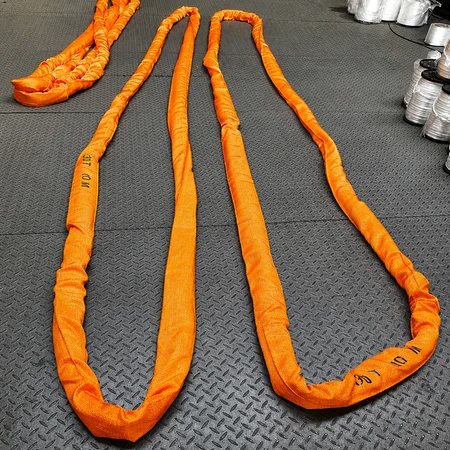
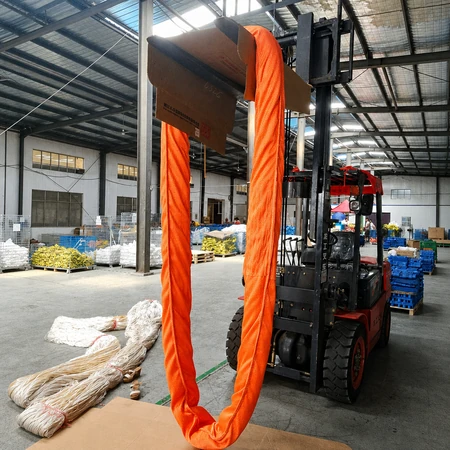


Lift sling rigging company produce Endless Round Sling.
Endless Round Sling
One Continuous Woven Loop — No Ends, No Stitching, No Join, and a Loop You Can Turn
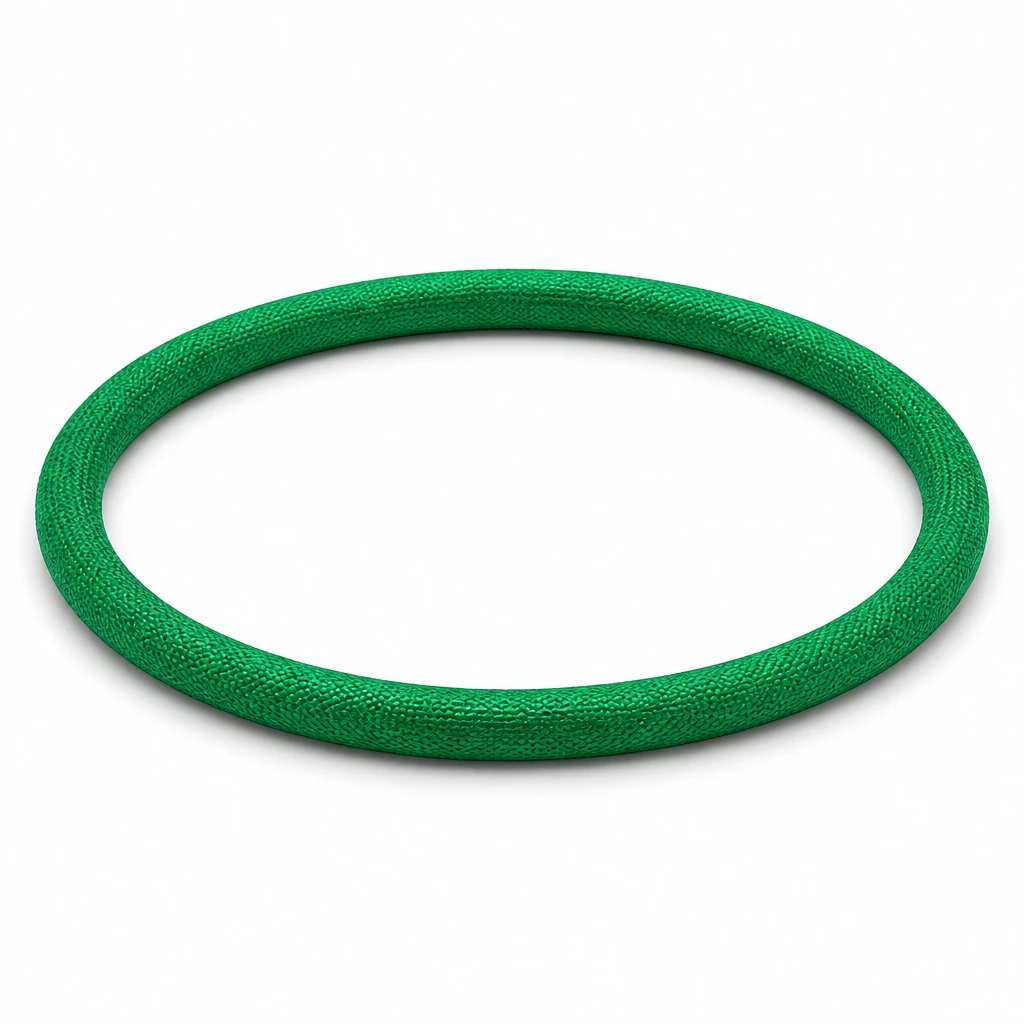
An endless round sling is the purest form of a round sling: a load-bearing core of parallel fibres inside a woven sleeve, closed into a continuous loop with no ends at all. There is no stitching, no joint, no eye and no hardware anywhere on it — the tube is woven as one unbroken piece and the load is carried by a complete, uninterrupted circuit of fibre. We build it on a full weaving process in which not a single joint can be found anywhere in the finished sling, and the load-bearing body is a complete loop through and through. That is what gives the endless round sling its two defining advantages: a load path with no weak point in it, and the freedom to rotate the whole loop so that wear moves instead of accumulating in one place.
- No join, no stitching — nothing on the sling to fail but the fibre itself
- Rotate the loop — move the wear instead of wearing out one spot
- Rigs any way you need — vertical, choke, basket and double wrap from one sling
- Soft, slim and strong — high capacity without the width of a flat sling

Key Features
Nothing to Fail but the Fibre
A sling with ends has a termination, and a termination is where it fails. An endless sling has no termination — the load circuit is continuous.
Rotate the Loop to Spread Wear
When the sleeve starts to show wear at the bearing point, turn the sling and the worn section moves away from the load. This is the single biggest reason an endless sling lasts.
Four Rigs, One Sling
Vertical, choke, basket and double wrap all come from the same loop, so one size on the shelf covers the whole job.
Soft Bearing, No Marking
The woven sleeve conforms to the load. It will not bruise a machined shaft, a coating or a polished surface the way chain or wire rope will.
Sleeve Protects the Core
Abrasion is taken by the woven sleeve so the load-bearing core beneath it is not touched. The sleeve is a wear layer, not the strength.
Light, Safe to Handle
A sling of this capacity weighs a fraction of the chain or wire rope it replaces. It is safer to handle, and a shock load is not stored in it.
How the Length of an Endless Round Sling Is Specified
This is the one thing that most often goes wrong when an endless round sling is ordered, and it is worth reading before you ask for a price.
An endless round sling has no ends, so there is nothing to measure from end to end. Instead, the sling is sized by its circumference — the length of the fibre if you were to lay the whole loop out in a straight line. The length you can actually use is the effective working length, and because the loop is doubled when it hangs, that works out at roughly half the circumference.
A closed loop labelled with its circumference, and the same loop hanging as a U labelled with its effective working length, which is about half the circumference. 1 · How it is ordered — the circumference One closed loop — the woven tube is unbroken all the way round. C = circumference = the length of fibre in the loop. C 2 · What you actually get — the working length both legs to the hook EWL ≈ C ÷ 2 Hung as a loop, the fibre is doubled — so the usable height is about half the circumference you ordered.
Schematic. The relationship is the point: an endless round sling is sized by its circumference, and gives roughly half that as usable height.
| Circumference ordered | Approx. effective working length | Typical use |
|---|---|---|
| 1 m | 0.5 m | Chokes and short basket lifts, tight rigging |
| 2 m | 1 m | The common general-purpose size |
| 3 m | 1.5 m | Basket lifts on small plant and fabrications |
| 4 m | 2 m | Two-leg and multi-leg assemblies |
| 6 m | 3 m | Pipes, tubes and long loads |
| 8 m | 4 m | Long bundles and awkward shapes |
| 10 m | 5 m | Large plant and structural work |
| 12 m | 6 m | Longest standard size; above this to order |
Rigging the Loop — Vertical, Choke, Basket and Double Wrap
The whole point of an endless sling is that one loop does all of these. Which one you use decides how much of the labelled capacity is available, so it is worth knowing the differences.
- Vertical / straight. Both legs gathered onto the hook so the loop hangs as a U. This is the arrangement the label figures on, and the arrangement that gives the most capacity.
- Choke. The loop is passed around the load and back through itself so it grips as it takes the weight. Choking applies a squeeze, and the capacity is reduced to 0.8 times the vertical figure.
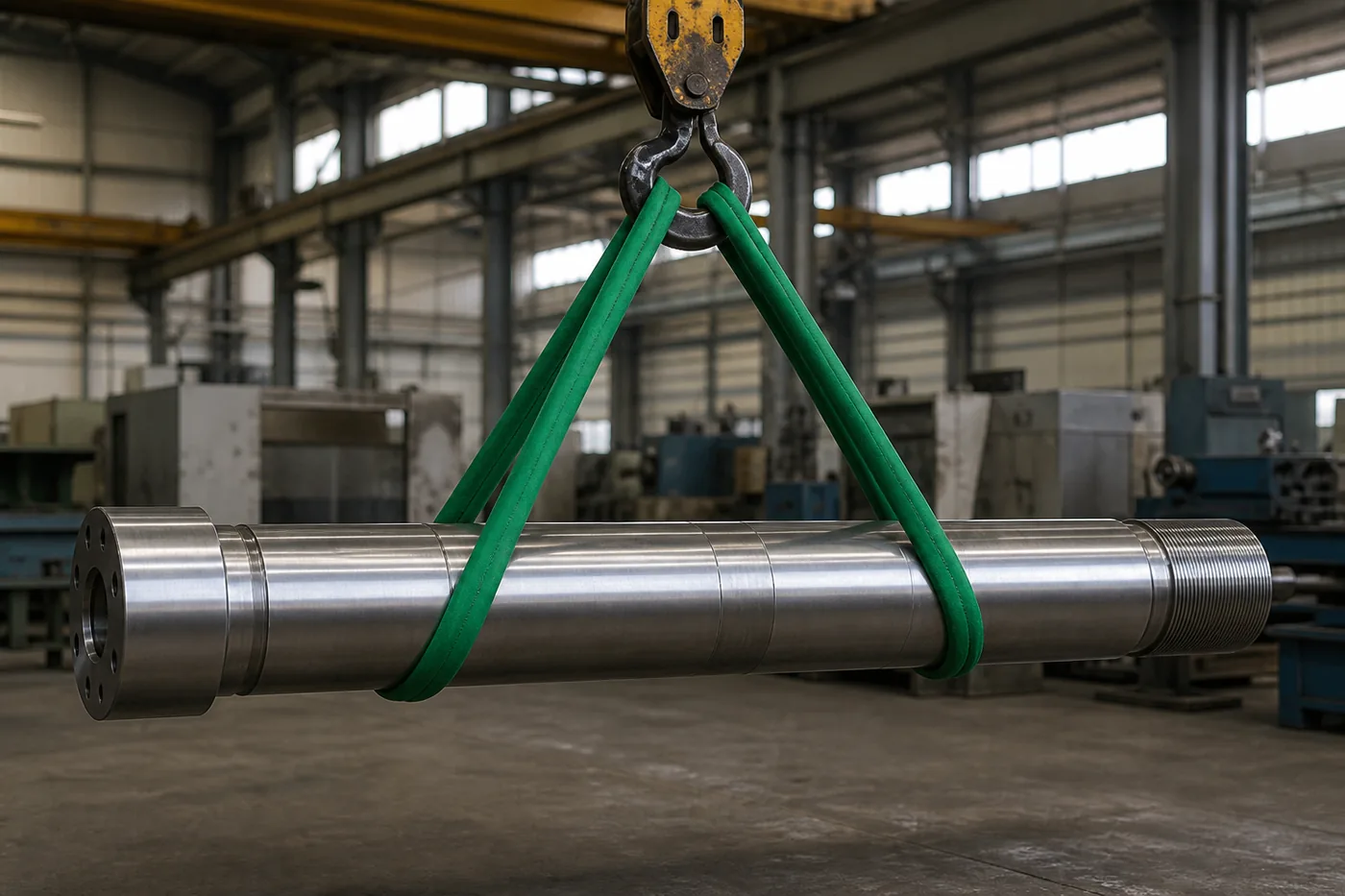
- Basket. The loop runs under the load with both legs up to the hook. At a narrow angle the load is shared between two legs and the capacity rises to 2 times the vertical figure — but as the legs open out, that advantage falls away. Under a curved load such as a pipe or a roll, the basket also spreads the bearing, which is where an endless round sling is at its best.
- Double wrap. The loop is wrapped twice around the load before being passed through itself. A double wrap is treated as two chokes, which roughly doubles the choked figure and — just as usefully — grips a smooth or slippery load where a single wrap would slip. Confirm the arrangement with us before you rely on it.

Rotating the Loop to Distribute Wear
This is the quiet advantage of an endless round sling, and over a few years of service it is worth more than any other feature on this page.
Every sling wears where it bears. On a sling with fixed ends, the bearing points are always the same points — the eyes, and the same two sections of body — so wear concentrates there and eventually condemns the sling while the rest of it is still perfectly sound. On an endless loop, none of that is fixed. When the sleeve begins to show wear at the bearing point, you simply re-position the sling so that a fresh section of the loop takes the load instead. The worn area is left out of the working path, and the sling carries on.
Sleeve Construction and Protection Options
The sleeve is not the strength of the sling — it is the armour. The core carries the load; the sleeve takes the abrasion, the contact and the environment. Two constructions are standard, and protective layers can be added where the sling meets something hard.
| Construction | What it gives you | Choose it for |
|---|---|---|
| Single wall sleeve | The standard woven tube over the core — lighter, more flexible, thinner in the hook | General lifting, machinery, fabrication, most everyday work |
| Double wall sleeve | An extra woven layer over the core — markedly better abrasion and cut resistance | Rough or abrasive loads, gritty sites, foundries, castings |
| Sliding protective sleeve | A separate sleeve that slides over the loop to a chosen position, and can be replaced | One known sharp or abrasive bearing point that stays in the same place |
| Edge protector (separate) | A loose protector placed between the sling and a sharp edge | Sheared plate, machined edges and any edge that could cut |
Endless Round Sling vs Wire Rope Sling vs Chain Sling
In most lifting work the real alternative to an endless round sling is not another soft sling — it is steel. Here is the honest comparison.
| Property | Endless round sling | Wire rope sling | Chain sling |
|---|---|---|---|
| Weight for the same capacity | Lightest — a fraction of the steel | Heavy | Heaviest |
| Effect on the load surface | Soft — will not mark or bruise | Will scratch and can crush thin sections | Hard contact, marks and dents |
| Shock loading | Absorbs some shock; does not store it | Little absorption | No absorption; transmits it |
| Work-hardening / fatigue | Fibre — no metal fatigue mechanism | Fatigue, broken wires, work-hardening | Link wear, elongation, cracking |
| High temperature | Limited; heat resistant versions available | Good | Excellent |
| Sharp edges | Needs protection | Needs protection | Largely tolerant |
| Corrosion | Unaffected by water; resistant to rot and mildew | Rust; needs inspection and lubrication | Rust; needs inspection |
| Inspection | Visual — wear on the sleeve is easy to see | Broken wires and internal corrosion are hard to find | Link-by-link inspection and measurement |
| Electrical conductivity | Non-conductive | Conductive | Conductive |
| Choose it for | Soft bearing, light handling, wet or corrosive sites, and any lift where the load must not be marked | Heat, sharp loads, and where a steel sling is specified | Heavy service, high temperature and the most abusive sites |
Working Load Limit, Colour Code and Configuration
The figure on the sewn label is the vertical working load limit. Every other arrangement is derived from it by a mode factor.
| WLL (vertical) | EN 1492-2 colour | Choked (× 0.8) | Basket 0–7° (× 2.0) | Basket 7–45° (× 1.4) | Basket 45–60° (× 1.0) |
|---|---|---|---|---|---|
| 1 t | Purple | 0.8 t | 2.0 t | 1.4 t | 1.0 t |
| 2 t | Green | 1.6 t | 4.0 t | 2.8 t | 2.0 t |
| 3 t | Yellow | 2.4 t | 6.0 t | 4.2 t | 3.0 t |
| 4 t | Grey | 3.2 t | 8.0 t | 5.6 t | 4.0 t |
| 5 t | Red | 4.0 t | 10.0 t | 7.0 t | 5.0 t |
| 6 t | Brown | 4.8 t | 12.0 t | 8.4 t | 6.0 t |
| 8 t | Blue | 6.4 t | 16.0 t | 11.2 t | 8.0 t |
| 10 t | Orange | 8.0 t | 20.0 t | 14.0 t | 10.0 t |
| 12 t | Orange | 9.6 t | 24.0 t | 16.8 t | 12.0 t |
The colour code runs from 1 t to 10 t, with 12 t also orange. Above 12 t the colour no longer identifies the sling, so the working load limit printed on the sewn label is the figure that governs — read it, do not read the colour.
Technical Specifications
| Product name | Endless round sling / round sling / endless lifting sling / circular sling / endless loop sling |
|---|---|
| Construction | Continuous parallel core inside a woven tubular sleeve, closed into an endless loop — fully woven, with no join, no seam and no stitching anywhere in the finished sling |
| Core material | High-tenacity polyester parallel yarn as standard; aramid, UHMWPE and other fibres available on request |
| Sleeve material | Woven high-tenacity polyester, single or double wall; heat resistant and other sleeves to order |
| Working load limit | 1 t to 100 t, in the standard steps 1 · 2 · 3 · 4 · 5 · 6 · 8 · 10 · 12 · 15 · 20 · 25 · 30 · 40 · 50 · 100 t |
| Safety factor | EN 1492-2 practice is 7:1; 6:1 and 8:1 produced to order where your market requires them |
| Circumference | 1 m to 12 m as standard; longer lengths and specific working lengths produced to order |
| Elongation | Low — around 3% at working load, so the sling does not stretch out of shape or lose headroom |
| Colour | Standard sleeve colours with the EN 1492-2 capacity mark; custom sleeve colours to order |
| Marking | Sewn label with working load limit, circumference or working length, and batch |
| Packing | Coil in a poly bag or carry bag, labelled carton, custom export packing |
| MOQ & OEM | Low MOQ for trial orders; full OEM — capacity, circumference, sleeve colour and fibre, sleeve construction, label layout and packing |
Handling, Inspection and Limitations
An endless round sling has one advantage and one difficulty when it comes to inspection. The advantage is that there is no termination to fail — nothing is riveted, stitched or joined. The difficulty is that the core is hidden inside the sleeve, so the sleeve is what you read the condition of the sling from.
- Look for cuts and abrasion. A broken or cut sleeve yarn matters — if the sleeve has been cut through, the core behind it may be damaged too.
- Look for glazing and hardening. A sleeve that has become shiny, stiff or hard has met heat or sustained friction. That is a sign the fibre has been affected, not just marked.
- Watch for core exposure. Any place where the core shows or bulges through the sleeve takes the sling out of service immediately.
- Check the ends of the wear. Where the weave has polished or furred, note it — this is the sling telling you to rotate the loop.
- Rotate as policy, not as repair. Turning the sling at every lift is what keeps the wear even. Leaving it in the same place and rotating only once it is worn is too late.
- Never use a loop that has been overloaded, shock-loaded or damaged as a temporary sling. A soft sling can be damaged internally without visible external signs.
- Do not drag a loaded sling. Of all the ways to shorten a sling’s life, dragging is the fastest.
- Record it. Log the lifts, the loads, the arrangements used and any damage, so the pattern of wear is visible before it becomes a failure.
Applications
- Pipes, tubes and pipe bundles — the loop conforms around the curve and grips without crushing
- Machined shafts, rolls and polished work where the surface must not be marked
- Basket lifts on plant, machinery, dies and castings
- Choke hitches on fabricated steel, beams and structural components
- Wet, marine, port and wash-down sites where the sling is unaffected by water
- Places where electrical conductivity is not wanted
- Rigging where one sling has to serve several different lifts, and re-rigging has to be quick
- Any lift where a sling with fixed ends keeps wearing out at the same two points

Customisation and OEM Service
Because the circumference is part of the specification and the loop carries no hardware, an endless round sling is straightforward to build to order.
- Capacity — 1 t to 100 t, including intermediate steps between the standard sizes
- Circumference — 1 m to 12 m as standard, and longer lengths on request
- Working length — tell us the usable height you need and we will size the circumference to suit
- Core fibre — polyester as standard; aramid for heat, UHMWPE for weight and cut resistance
- Sleeve — single or double wall, in the standard capacity colours or your own colour
- Protection — sliding protective sleeves and separate edge protectors
- Marking and related items — your label layout and language; matching eye and eye round slings and flat webbing slings for the same lift
Quality Control
Every core is checked for filament count and lay before the sleeve is closed; the sleeve is checked for weave density and colour; and every finished sling is checked on the continuity of the loop, the working load limit marking, the length and the label before packing. We have manufactured slings, webbing and rope products for industrial, safety and export customers for close to three decades, and we keep the process visible: on request we supply the fibre certificate, the batch test figures and a sample sling for you to handle and test before volume production begins.
Frequently Asked Questions
What is an endless round sling?
A round sling made as a continuous closed loop: a load-bearing core of parallel fibres inside a woven sleeve, woven as one unbroken tube with no ends, no eyes, no stitching and no join anywhere on it. The load is carried by a complete uninterrupted circuit of fibre, and the whole loop can be rigged vertically, choked, in a basket or double-wrapped.
How do I specify the length of an endless round sling?
By its circumference — the length of fibre in the loop. Because the loop is doubled when it hangs, the usable height is roughly half the circumference: a 2 m round sling gives about 1 m of effective working length, a 4 m sling about 2 m, and so on. In practice, tell us the working height you need and the arrangement you intend to rig and we will size the circumference for you. The exact figure depends on sleeve thickness and bend radius, so it is worth confirming against your lift.
Should I choose an endless round sling or an eye and eye round sling?
Choose endless if you want maximum versatility and the longest life from one sling: it goes round anything, rigs in four different ways, and the whole loop can be rotated so wear spreads instead of concentrating at two fixed points. Choose an eye and eye round sling if you need a sling of defined length with two defined pick-up points, which is easier to hook, shackle and hand over between shifts. Both are made from the same sleeve and core, at the same capacities.
Why does rotating the loop matter so much?
Because every sling wears where it bears, and on a sling with fixed ends that is always the same two points. On an endless loop you can re-position the sling as soon as you see the weave begin to polish, so a fresh section takes the load and the worn section is left out of the working path. Instead of one sling wearing out at two points, you get a loop wearing out evenly — which is a substantially longer service life from the same purchase.
How much can it lift in a choke or a basket?
The label gives the vertical working load limit. A choke reduces it to 0.8 times that figure; a basket at a narrow angle increases it to 2 times, falling to 1.4 times between 7 and 45 degrees and to 1 times between 45 and 60 degrees. A double wrap is treated as two chokes. Always confirm the arrangement and the angle before the lift.
Can I get a custom circumference, capacity and colour?
Yes. We build from 1 t to 100 t, in circumferences from 1 m to 12 m as standard and longer on request, with the standard EN 1492-2 capacity colours or your own, in single or double wall sleeve, with polyester, aramid or UHMWPE core. Tell us the marking or certification your market requires and we will confirm what can be provided before the order.
Request a Quote for Endless Round Slings
Send us the capacity, the working height or arrangement you intend to rig, the load and the environment — plus any marking or certification your market requires. We will come back with a circumference, a sleeve, a sample and a factory-direct price.